
Politics
German government descends into crisis mode

German government descends into crisis mode
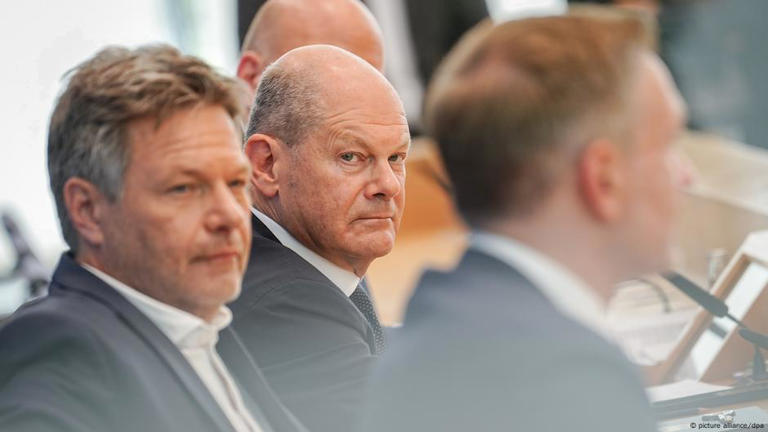
Chancellor Olaf Scholz is trying to hold his coalition government together. But the three partners, SPD, Greens and FDP, seem unable to stop the infighting, although they depend on each other to stay in power.
Give up or rescue what can still be saved? This is the choice faced by the center-left government of Social Democrats (SPD), Greens and neoliberal Free Democrats (FDP) which has been in office for almost three years. The three parties have always been at loggerheads because many of their core policies are substantially different: The SPD and Greens believe in strong state and debt-financed policies. The FDP takes the opposite view.
Initial common ground was quickly exhausted. The give and take that is necessary for a coalition is now becoming increasingly difficult.
The situation has recently escalated around economic and budgetary policy. A ruling by the Federal Constitutional Court around a year agoexposed the rifts between the coalition partners. Back then, Germany’s highest court ruled against the government’s plans to reallocate money earmarked but never spent from a cache of debt taken out to mitigate the fallout of the COVID-19 pandemic. The money was instead earmarked for the government’s climate action budget. The court ruling left the budget €60 billion ($65 bio) short.
Since then, all three coalition partners have been trying to raise their own profile at the expense of the others, publicizing proposals that had not even been discussed with their partners.
Now, Germany is in a recession and tax revenues have fallen, which will tear an additional hole into state coffers.
Last month, Chancellor Olaf Scholz (SPD) held an industry summit with leading entrepreneurs and industrial trade union members but did not invite his Vice-Chancellor, the Green Party’s Economy Minister Robert Habeck or Finance Minister Christian Lindner, who is also chairman of the business-oriented FDP.
Linder then organized his own meeting with other business representatives, Habeck responded by proposing a billion-euro, debt-financed fund to promote investment by companies.
FDP calls for a change of direction
Habeck’s proposal is not reconcilable with the positions of the FDP, which insists on compliance with the debt brake — Germany’s strict rules against a ballooning deficit limiting fresh debt to 1% of GDP per year, a provision enshrined in the constitution.
However, a veto was apparently not enough for Lindner. In an 18-page policy paper, he called for a change of direction in the economy. The paper reads like a policy election campaign program for the FDP, which has been underperforming dramatically in opinion polls and regional elections.
Lindner calls for far-reaching tax relief for companies and top earners. He wants to scrap ambitious climate protection targets and reduce welfare
These positions are unacceptable to the SPD and the Greens and contradict the coalition agreement. This is why Lindner’s partners in government are speaking of a provocation and are wondering whether Lindner’s intention is to be kicked out of the coalition hoping this move would give him enough credit with conservative voters to boost the FDP beyond the five percent threshold for representation in parliament.
The popularity ratings of the coalition government have hit rock bottom. The outlook is grim for the three parties, but for the FDP it is now a matter of survival.
The Chancellor is holding on
However, without the FDP, Chancellor Olaf Scholz (SPD) would no longer have a majority in parliament. This would not automatically mean that there would be new elections. The SPD and Greens could also continue as a minority government and attempt to seek changing majorities in the Bundestag for their plans. The strongest opposition force, the center-right bloc of Christian Democratic Union (CDU) and Christian Social Union (CSU) is currently unable to form a Bundestag majority against the SPD and Greens.
However, Chancellor Scholz wants to avert the coalition break-up at all costs. He has been holding crisis talks in the Chancellery since the weekend. First with the SPD’s party leaders, then with FDP leader Lindner on Sunday evening. On Monday, government spokesperson Steffen Hebestreit announced that several three-way meetings between Scholz, Habeck and Lindner were planned over the next few days.
“A lot is currently happening under high pressure,” emphasized Hebestreit. The aim, he said, is to develop “an overall concept” based on the various proposals on economic policy.
“The government will do its job,” said Scholz when he was asked by journalists on the sidelines of a meeting with NATO Secretary General Mark Rutte in Berlin on Monday whether his government was unstable. “I am the chancellor, it’s about pragmatism and not ideology,” Scholz said stiffly.
The steps ahead
Several closed-door meetings will culminate in a session of coalition representatives on Wednesday (November 6). Then, for the first time in weeks, the leaders of all three parties and their parliamentary groups will be sitting at the same table. They will have to look each other in the eye and clarify what they can still agree on.
There is considerable time pressure, as the 2025 budget is due to be passed in the Bundestag at the end of November. The so-called adjustment meeting of the Budget Committee, in which the package is finalized, is scheduled for November 14. The draft budget still has a shortfall of several billion euros.
In his economic paper, Linder proposed cutting the welfare payments called “citizens’ allowance.” To fill holes in the budget he also suggested using the ten billion euros originally intended as a subsidy for a new Intel chip company which has since been put on hold.
The SPD and the Greens, however, would like to see that money remain in the Climate and Transformation Fund to promote climate projects and the development of new technologies. The construction of the Intel factory has only been postponed, SPD leader Saskia Esken emphasized. “That is why it would not be expedient to let these funds disappear somewhere in the cracks of the budget,” she said.
On Monday, Esken was keen to defuse the tension.“It’s not about a showdown,” she said. “We have absolutely no inclination to let the coalition fail, we need a responsible government,” she said.
The Greens are also warning against a break-up. “VW is going down the drain, there is an election in the US, Spain is suffering from massive flooding and the Russians are breaking through one front after another in Ukraine,” said Green Party leader Omid Nouripour. “This requires a whole new level of seriousness and we are also demanding this from this coalition.”
This article was originally written in German.
While you’re here: Every Tuesday, DW editors round up what is happening in German politics and society. You can sign up here for the weekly email newsletter Berlin Briefing.
Author: Sabine Kinkartz





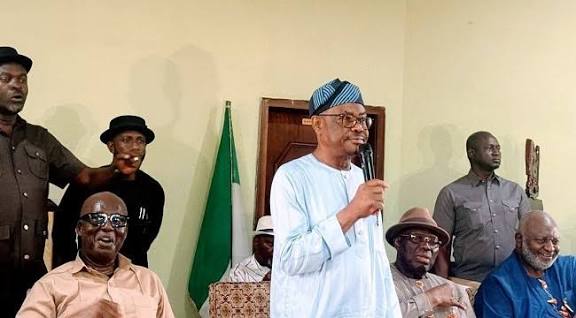
FCT Minister and former governor of Rivers state, Nyesom Wike, has said that any senator, House of Representatives Member, Minister, or governor who supports betrayers will suffer betrayal in their lives and that such person will join their creator when they experience their own betrayal.
Wike who is currently in a running battle with his godson and incumbent governor of Rivers state, Sim Fubara, said this while speaking at a public function in the state today February 6.
Speaking to the crowd at the public function, Wike said
‘’Wether you are a Senator, House of Reps member, a Minister or Governor, and you support betrayers, people will continue to betray you in life. You see people who betray and support them, betrayal is your portion! Betrayal is your portion! and that day you will not have mouth to say anything and there you will collapse and there you will go and they will announce such person has died because that is the seed you have planted because whatever you plant, you reap and so since you are sowing betrayal, betrayal will always follow you.
Watch! Every governor who is doing his second term and has ambition to put a successor and is supporting betrayals, you will never survive it. Betrayal will follow you. From the day your successor comes in. My own took so many months, your own will start immediately the person has been inaugurated. That is what the gods of the land have told me to tell all of you’’
https://www.instagram.com/reel/DUdaCp1jD01/?igsh=MWVnZXoyaGNmOGJ5dA==
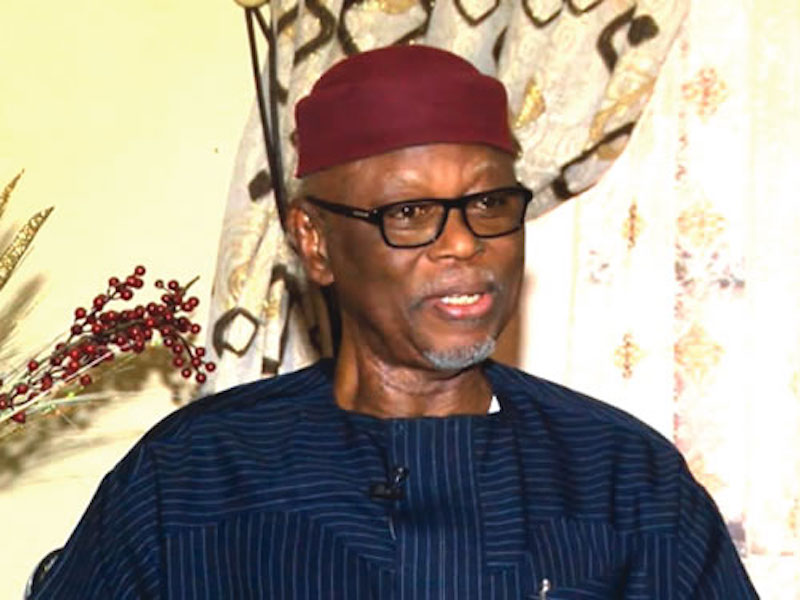
Chairman, Policy Manifesto Committee of the African Democratic Congress, ADC, John Odigie-Oyegun, says former president Muhammadu Buhari gave him the shock of his life, six months into his administration as Nigeria’s leader.
Oyegun made this disclosure on Friday when he featured in an interview on Arise Television’s ‘Prime Time’.
He revealed that as National Chairman of the All Progressives Congress, APC, he went to tell Buhari that he was not delivering his election promises to Nigerians but that the late president told him he would not rule with strictness, but rather wanted to show Nigerians that he is a true civilian president.
The former APC National Chairman lamented that it became business as usual, from there.
“I was national chairman of the APC. Six months or less into our assuming office, fairly alarmed, I went to the late President Buhari for a one-on-one talk. I said Mr President, this is not what the people were expecting. They wanted a bit of the old president Buhari.
“And he explained to me, Mr Chairman, I have learned my lesson. I was shocked. And don’t forget at that time, a lot of prominent Nigerians took their holidays abroad, just to be sure and see what this new sheriff in town will be.
“Buhari told me he wants to now show the people that he’s a true civilian president in Agbada. And by the time we finished the conversation, I said Oh God, we are finished. Because, if he’s not ready to be strict, what’s the point?
“Weeks later, months later, years later, I was proven correct. And of course, it became business as usual, only that they are a new set of tenants in Aso Rock. That was a shocker,” he said.
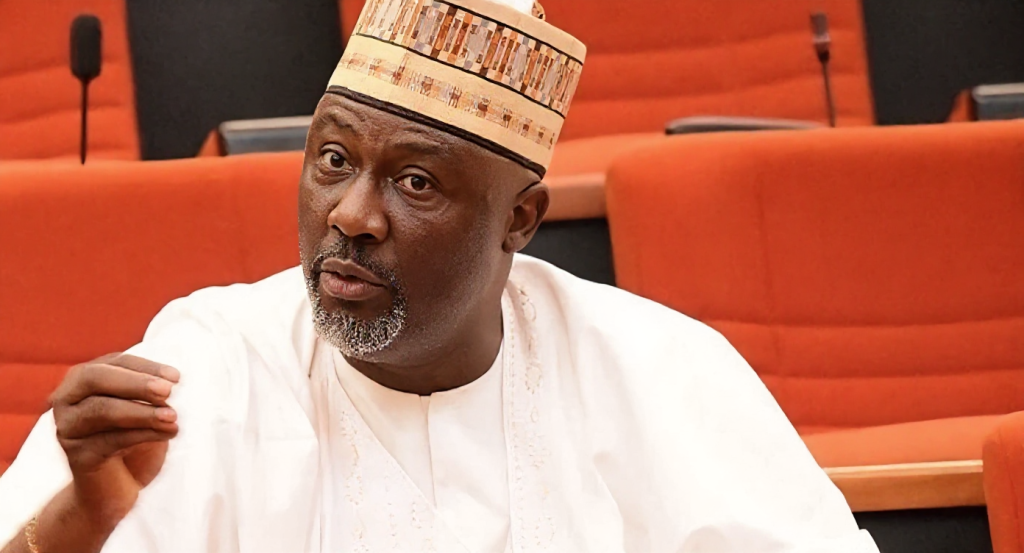
Former lawmaker, Dino Melaye Esq, has raised concerns over the Senate’s reported rejection of the electronic transmission of election results.
The move, according to Melaye, is a clear endorsement of election rigging and an indication of a sinister plan to rig the 2027 elections.
In a statement on Friday, the former lawmaker criticized the Senate’s decision, stating that it undermines the credibility of the electoral process.
The African Democratic Congress, ADC chieftain, also stated that the move opens the door for electoral manipulation and fraud.
He further warned that the rejection of electronic transmission of results is a step backwards for democracy in Nigeria.
Melaye called on lawmakers and citizens to stand up against “this blatant attempt to undermine the will of the people and ensure that future elections are free, fair, and transparent”.

Audu Innocent Ogbeh: Scholar, Legislator, and Federal Minister

Nyesom Wike wishes de@th on any politician supporting ‘’betrayers’

How Buhari shocked me 6 months into his administration – Oyegun

-
Business1 year ago
US court acquits Air Peace boss, slams Mayfield $4000 fine
-

 Trending1 year ago
NYA demands release of ‘abducted’ Imo chairman, preaches good governance
-

 Politics1 year ago
Mexico’s new president causes concern just weeks before the US elections
-

 Politics1 year ago
Putin invites 20 world leaders
-

 Politics1 year ago
Russia bans imports of agro-products from Kazakhstan after refusal to join BRICS
-
Entertainment1 year ago
Bobrisky falls ill in police custody, rushed to hospital
-
Entertainment1 year ago
Bobrisky transferred from Immigration to FCID, spends night behind bars
-
Education1 year ago
GOVERNOR FUBARA APPOINTS COUNCIL MEMBERS FOR KEN SARO-WIWA POLYTECHNIC BORI