
News
I found secret tunnels below Egypt’s Giza pyramids… and they may lead to a forgotten underworld


On the northeastern edge of the Giza Plateau, I discovered three perfectly cut shafts hidden beneath the sands.
They sit in the triangle between the Great Sphinx, Khufu’s Pyramid and Khafre’s Pyramid, and may open into a long-forgotten underground world.
These are not water wells. They bear no inscriptions, no signs of casual digging, and their geometry is too precise, their walls too smooth, their design too deliberate.
Could these shafts be the keys to the network of hidden chambers the Greek philosopher Herodotus once whispered about, possibly connected to the Nile?
Herodotus described a massive ‘labyrinth’ in Egyptwith 3,000 chambers, many hidden below ground, which included and a large underground pyramid.
Explorers in the 1800s, like Giovanni Caviglia and Henry Salt, recorded strange wells near the Sphinx and Khafre’s causeway.
French archaeologist Pierre-Jean Mariette mapped additional anomalies in 1864 and 1885, and scholars like George Reisner, Hermann Junker, and Selim Hassan traced a line of cavities between the Sphinx and Khafre’s Pyramid between 1929 and 1939.
After that, the area was largely forgotten. Fragments of those old reports hinted at a larger pattern, one pointing to a vast, interconnected world beneath the plateau.
Now, the three shafts I rediscovered may unlock that hidden map.
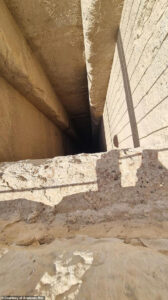
The first shaft, northeast of the Sphinx, has a square limestone mouth and plunges 130 feet—the height of a 12-story building. Its walls are precisely squared and lined with limestone and sandstone blocks, resembling the structure of some ancient machine

Egyptologist Armando Mei and his team with the Khafre Project have been studying Egypt’s Giza Plateau for years, using advanced technologies to uncover hidden structures below the surface
I came across the shafts while conducting fieldwork with the Khafre Research Project, where I serve as a researcher.
Our team, including Professor Corrado Malanga and engineer Filippo Biondi, used Synthetic Aperture Radar (SAR) satellite technology to investigate subsurface structures beneath Giza.
Guided by these spectral traces, we located the shafts, still standing, perfectly cut and utterly enigmatic.
The first shaft lies northeast of the Sphinx. Its square mouth, framed by limestone blocks, plunges 130 feet, about the height of a 12-story building.
Its walls are squared with astonishing precision, lined with limestone and sandstone blocks that resemble the walls of some ancient machine.
At a depth of 40 feet, an 80-foot-wide cavity encircles the shaft, too intentional to be natural erosion.
Satellite imaging suggested it continues even deeper beneath the rubble.
Just feet away, the second shaft mirrors the first. Located beside Khafre’s processional causeway, a covered ramp linking the Valley Temple to the area near his pyramid, it features the same smooth precision and perimeter channel.
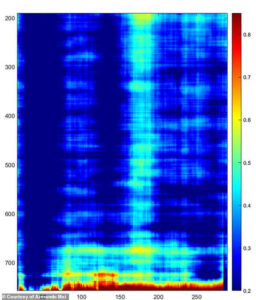
Scans of the first shaft (pictured) revealed a long passage way leading to what appeared to be other structures deep below the surface
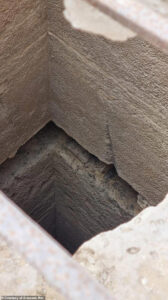
Forty feet down, an 80-foot-wide cavity encircles the first shaft, clearly too deliberate to be natural. Satellite imaging indicates it extends even deeper beneath the rubble

Just feet away, the second shaft mirrors the first. Beside Khafre’s processional causeway, a covered ramp connecting the Valley Temple to his pyramid, it shows the same smooth precision and perimeter channel.
Two shafts built to identical specifications suggest a deliberate system rather than randomness.
The third shaft, on the eastern side of Khufu’s Pyramid, is the most intriguing. Its entrance was once reinforced with retaining blocks, hinting at frequent access.
A recess cut into the west wall appears designed to lift or guide objects from below. The surrounding cavity again appears, perfectly measured.
Less than 165 feet separate the three, forming a pattern too deliberate to ignore. When mapped, their alignment mirrors the three great pyramids themselves, with a resemblance to Orion’s Belt that is uncanny.
Two smaller, rougher shafts nearby seem to be later additions. They lack the depth and polish of the originals, suggesting imitation rather than original intent.
Even so, they hint at the underground’s complexity, reminding us that Giza is far from fully explored.
The purpose of these shafts remains uncertain. Were they for ritual offerings, hydraulic systems, or vertical transport chambers?
Modern imaging, including Ground-Penetrating Radar, Electrical Resistivity Tomography and our own SAR technology, reveals further anomalies near the Sphinx, hinting at interconnected cavities beneath the plateau.

Might these shafts unlock the hidden network of chambers that Herodotus once spoke of, perhaps even linked to the Nile? The Greek historian described a vast ‘labyrinth’ in Egypt, containing some 3,000 underground chambers, including a massive subterranean pyramid
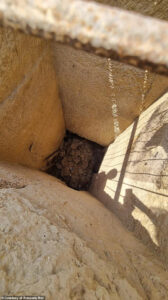
The third shaft, on the eastern side of Khufu’s Pyramid, is the most compelling. Its entrance was reinforced with retaining blocks, suggesting frequent use, while a recess in the west wall seems built to lift or guide objects from below
If confirmed, these shafts could be entry points to a vast, engineered network aligned with the pyramids themselves.
Beneath the plateau, trenches and sockets carved in the limestone, along with deep rock-cut shafts and wells, show that the builders engineered the underground with the same care as the monuments above.
This hidden dimension has fueled speculation about subterranean chambers and hydraulic systems, possibly connected to the Nile, and suggests a purpose far beyond what conventional archaeology has recognized.
The precision and alignment of these shafts, coupled with their mirrored pattern of the pyramids, hint at a cosmic and terrestrial plan interwoven above and below ground.
For decades, the true extent of Giza’s underground world has been overlooked, but these shafts may finally reveal a lost chapter of ancient engineering and ceremonial practice.
What lies at the bottom of these shafts remains a mystery. Yet every measurement, every radar image, points to a singular conclusion: the Giza Plateau still holds secrets that could reshape our understanding of ancient Egypt.
The shafts are more than anomalies; they are doorways into a subterranean world waiting to be explored.






News
𝗛𝗢𝗡. 𝗧𝗢𝗦𝗞𝗔 𝗖𝗢𝗡𝗗𝗘𝗠𝗡𝗦 𝗧𝗛𝗘 𝗞𝗜𝗟𝗟𝗜𝗡𝗚𝗦, 𝗞𝗜𝗗𝗡𝗔𝗣𝗣𝗜𝗡𝗚𝗦 𝗔𝗡𝗗 𝗥𝗔𝗣𝗘𝗦 𝗜𝗡 𝗜𝗛𝗜𝗔𝗚𝗪𝗔, 𝗢𝗕𝗜𝗕𝗜𝗘𝗭𝗘𝗡𝗔, 𝗘𝗭𝗜𝗢𝗕𝗢𝗗𝗢, 𝗘𝗠𝗘𝗔𝗕𝗜𝗔𝗠, 𝗢𝗞𝗢𝗟𝗢𝗖𝗛𝗜, 𝗨𝗠𝗨𝗚𝗨𝗠𝗔, 𝗔𝗩𝗨 𝗔𝗡𝗗 𝗢𝗧𝗛𝗘𝗥 𝗖𝗢𝗠𝗠𝗨𝗡𝗜𝗧𝗜𝗘𝗦: 𝗖𝗔𝗟𝗟𝗦 𝗙𝗢𝗥 𝗜𝗠𝗠𝗘𝗗𝗜𝗔𝗧𝗘 𝗖𝗘𝗦𝗦𝗔𝗧𝗜𝗢𝗡
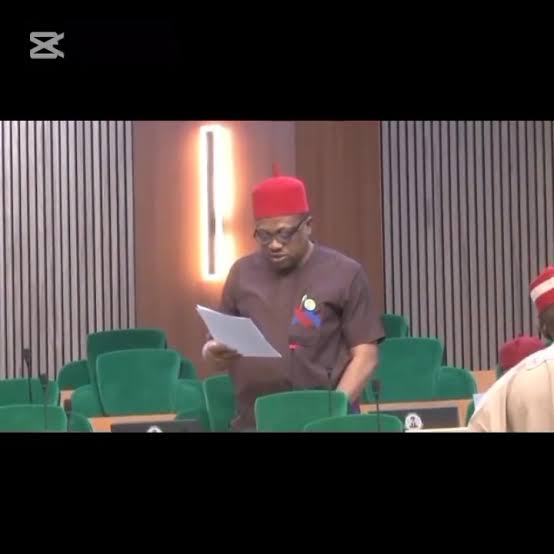
Hon. Sir Tochukwu Okere(TOSKA), Member Representing Owerri Federal Constituency, has strongly condemned the incessant gruesome killings, kidnappings, rapes and violent attacks carried out by unscrupulous and criminal elements terrorizing communities within Owerri Federal Constituency, especially in Ihiagwa, Obibiezena, Eziobodo, Emeabiam, Okolochi, Umuguma, Avu and other neighbouring communities.
The recent killings of vigilante operatives and innocent constituents at Umuguma and Ihiagwa call for urgent and deterrent response by our security agencies.
In a passionate motion raised before the Federal House of Representatives, Hon. Okere called on the Federal Government of Nigeria and relevant security agencies to immediately deploy adequate security personnel to the affected communities and take decisive actions against the worsening insecurity threatening the lives and properties of his people.
According to him, the continuous attacks on harmless villagers, farmers, women and youths can no longer be tolerated under any guise.
“I urge the Federal Government of Nigeria to urgently look into this motion and act swiftly before more innocent lives are lost. Our people deserve to live and to live in peace without fear of being kidnapped, raped or butchered in their own communities,” Hon. TOSKA stressed.
The lawmaker further emphasized that the people of Owerri Federal Constituency will not fold their arms and watch criminals continue to unleash terror across Ihiagwa, Obibiezena, Eziobodo, Emebiam, Okolochi, Umuguma, Avu and other communities while families continue to mourn their loved ones daily.
This courageous move by Hon. Sir Tochukwu Okere has continued to attract commendations from constituents who describe his intervention as timely, bold and people-oriented.
Hon. Okere is the light and the voice of Owerri Federal Constituency.
May God keep him to keep standing for us and for our interest.
News
TENSIONS RISE IN OGUTA LGA AS CHAIRMAN MOVED AHEAD WITH Town UNION ELECTIONS AGAINST STATE DIRECTIVE
By Nwauwa Ikedi Justice
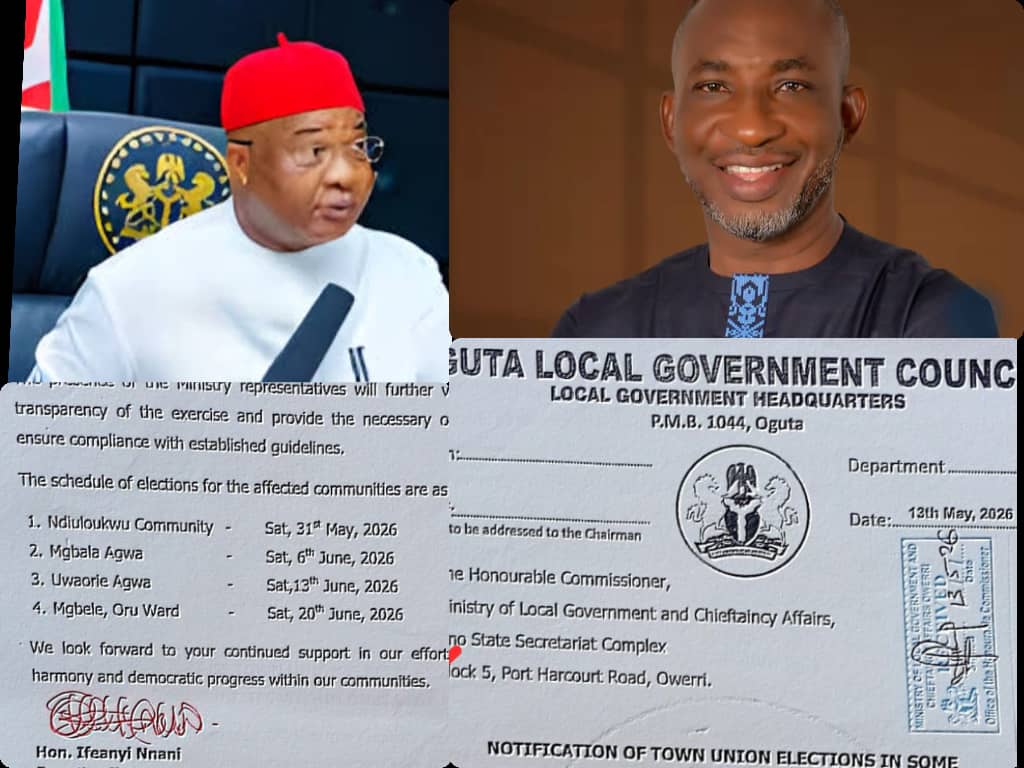
An emerging standoff between the Oguta Local Government Area executive and the Imo State Government has sparked concerns of unrest in several communities, after the council chairman proceeded with plans to conduct Town Union elections in defiance of a statewide directive from Governor Hope Uzodimma.
Last week, Hon. Ifeanyi Nnani, Executive Chairman of Oguta LGA, initiated steps to organize elections in five autonomous communities, an action seen by observers as a direct challenge to the governor’s order prohibiting local government chairmen from interfering in Town Union affairs.
The controversy stems from earlier complaints by traditional rulers across the state, who alleged that some local government chairmen had been imposing proxies as Town Union executives in their domains.
In response, Governor Uzodimma convened a statewide stakeholders’ meeting on January 17, 2026, at the Eze Imo Palace. Citing the Imo State Town Union Law No. 6 of 2003, as amended, the governor lifted the existing ban on Town Union elections and ruled that the process should be conducted in line with each community’s established customs. He also transferred supervisory responsibility from local government chairmen to the Ministry of Local Government and Chieftaincy Affairs, designating it the appropriate authority for such matters. The directive has since been credited with restoring relative peace across the state.
Despite this, sources indicate that Hon. Nnani’s administration has quietly begun conducting elections in villages within Oguta LGA without consulting the affected Town Unions or seeking clearance from the supervising ministry.
A letter dated last week and personally signed by the chairman to the Commissioner for Local Government and Chieftaincy Affairs has since come to light. Rather than seeking approval, the correspondence served as notification of the council’s intent to proceed with elections in Ndiuloukwu, Mgbala, Uworie, and Mgbele autonomous communities—a move that appears to contradict the state government’s directive.
The emergence of the letter has alarmed traditional rulers, with reports of growing unease in the affected communities. Community leaders have vowed to resist what they describe as an unlawful intrusion into their internal affairs.
Attempts to reach Hon. Nnani for comment have so far been unsuccessful, as calls to his office went unanswered.
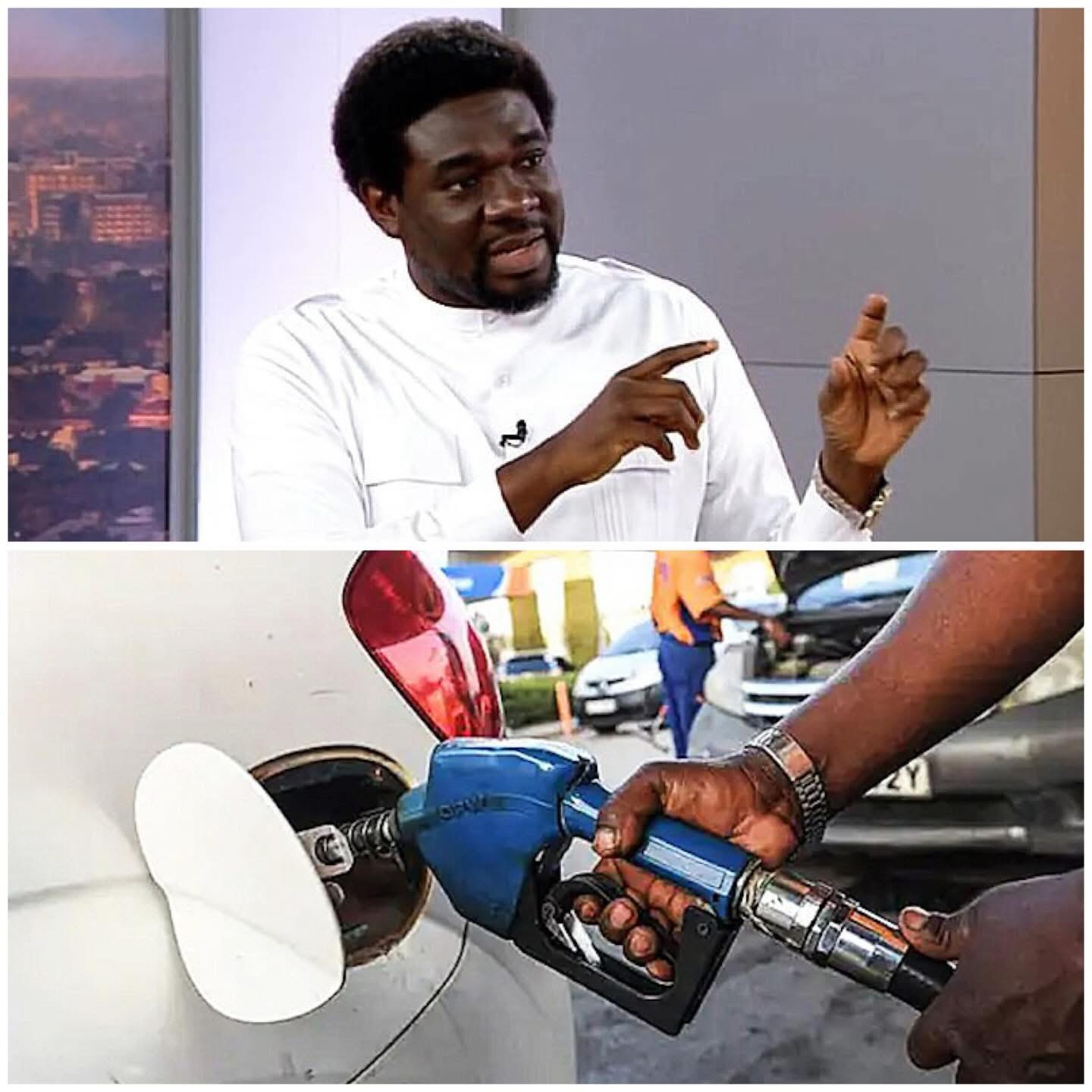
The Trade Union of Nigeria, TUC, has raised the alarm that the price of Premium Motor Spirit aka Petrol may climb to about N2,000 per litre if urgent measures are not taken to cushion the impact of rising global crude prices and the depreciating naira.
Speaking to newsmen on Thursday, April 9, the president of the TUC, Festus Osifo, called on the Federal Government to immediately deploy 60 percent of excess crude oil revenue above the 2026 budget benchmark to subsidise crude feedstock supplies to the Dangote Refinery and other modular refineries, a move it says will slash pump prices of petrol, diesel, and jet fuel within two weeks
“Today, comrades, we are seeing that the cost of petrol is edging towards N2,000 per litre depending on the part of the country that you are. Nigerian workers are already passing through excruciating pain as we speak.
The same way it is affecting transportation, it is also affecting manufacturing. The cost of diesel has also gone northward, meaning that the cost of production has increased. When production costs rise, the final price of goods on the shelves will also skyrocket.
If this continues unchecked, the inflation that we are currently celebrating as going downwards will reverse and start moving up again,” he stated.
Osifo outlined the proposal as an urgent intervention to cushion Nigerian workers from excruciating pain caused by petrol prices edging towards ₦2,000 per litre in some parts of the country

Fubara To Contest Rivers Governorship Seat Under NDC

Breaking: Tinubu Appoints 39 Year Old Professor As New Jamb Registrar

Desmond Elliot Withdraws from APC Lagos Assembly Primaries, Cites Intimidation

-
Business2 years ago
US court acquits Air Peace boss, slams Mayfield $4000 fine
-

 Trending2 years ago
NYA demands release of ‘abducted’ Imo chairman, preaches good governance
-

 Politics2 years ago
Mexico’s new president causes concern just weeks before the US elections
-

 Politics2 years ago
Putin invites 20 world leaders
-

 Politics2 years ago
Russia bans imports of agro-products from Kazakhstan after refusal to join BRICS
-
Entertainment2 years ago
Bobrisky falls ill in police custody, rushed to hospital
-
Entertainment2 years ago
Bobrisky transferred from Immigration to FCID, spends night behind bars
-
Education2 years ago
GOVERNOR FUBARA APPOINTS COUNCIL MEMBERS FOR KEN SARO-WIWA POLYTECHNIC BORI