
Politics
IMHA PLENARY : THREE BILLS INCLUDING TWO EXECUTIVE BILLS PASS SECOND READING, COMMITTED AT THE COMMITTEE STAGE FOR PASSAGE

Leveraging on the desire of the Imo State Government to ensure that the 27 Local Government Areas in the State are provided with sustainable and reliable electricity supply, also aware that the State Government is desirous of harnessing the huge gas deposit that would bring about industrial revolution, since the State has the highest gas reserve in the country, the Imo State House Of Assembly has moved to provide the legal framework for the sustenance of the two projects, with the Executive Bills passing through second reading, on Thursday 05/09/2024.
The Majority Leader, Hon Kanayo Onyemaechi and Member Representing Owerri-west State Constituency led the lead debate for the First Executive Bill titled : A Bill For A Law To Establish The LIGHT UP IMO PROJECT In Imo State And For Other Related Matters, while the Deputy Speaker, Rt Hon Amara Chyna Iwuanyanwu and Member Representing Nwangele State constituency led the lead debate for the second Executive Bill titled : A Bill For A Law To Establish The Orashi Special Energy Free Trade Zone And For Other Related Matters.
The Third Bill came under the name of the Chief Whip and Member Representing Oru-East State Constituency, Hon Chigozie Nwaneri and it sought to repeal the Imo State Oil Producing Areas Development Commission Law Number 13 Of 2010 (As Amended) And To Enact A Law To Provide For The Establishment Of A Commission For The Purpose Of Developing The Oil Producing Areas In Imo State And For Other Related Matters.
Hon Kanayo Onyemaechi, while explaining the first Bill, said that Imo State Government and the 27 Local Government Areas in the state entered into a Memorandum Of Agreement (MOA) with a private sector partner, for the purpose of providing affordable electricity across the State. According to Hon Onyemaechi, the main objective of the project is to facilitate the rehabilitation, expansion and maintenance of the State’s electricity infrastructure, ensuring stable power generation, transmission and distribution throughout the 27 local government areas of the state. He further said that it is a Bill that would be beneficial to the people of Imo State, such that factories, institutions, hospitals, cottage industries, etc, that needs to function effectively, needs electricity. Describing the Bill as people oriented Bill, Hon Onyemaechi said if passed and signed into law, will be the fulcrum of industrial revolution in the state. He thereafter called on his colleagues to support it.
The Bill was well celebrated on the floor of the House, as 13 Honourable Members spoke in its favour, as follows :
1. Rt Hon Amara Chyna Iwuanyanwu.
2. Hon Chigozie Nwaneri.
3. Hon Okey Ernest Udeze.
4. Hon Engr Innocent Ikpamezie.
5. Hon Johnson Duru.
6. Hon Gilbert Nwosu.
7. Hon Uche Francis Agabige.
8. Hon James Uba Esile.
9. Hon Princewill Amuchie.
10. Hon Uzoma Francis Osuoha.
11. Hon Ikenna Ihezuo.
12. Hon Ozioma Ebonine.
13. Hon Emeka Ozurumba.
In their submissions, the listed Honourable Members described the Bill as a people oriented Bill. According to them, it is one of the clear visions of the 3R Shared Prosperity Administration of Governor Hope Uzodimma, which is an indication that the State Government had long keyed into vision of the Federal Government, in the LIGHT UP NIGERIA PROJECT. The supporting lawmakers argued that for the project to succeed in the state, it is their responsibility as legislators to ensure the passage of the Bill. They further said that since businesses and other socio-economic activities would boom once the Bill is passed, signed into law and fully implemented, that crime rate will reduce, unemployment rate will reduce and jobs would be created, and rural-urban migration will reduce as economic activities in rural areas will blossom.
Satisfied with the contributions to the Bill, the Speaker, Rt Hon Chike Olemgbe, put the question for Honourable Members to vote if the Bill should be read a second time and Ayes had it. Thereafter, it was committed to the House Committee On Power and its Report expected to be submitted on Tuesday, 10th of September 2024, for further action.
The Deputy Speaker and Member Representing Nwangele State Constituency, Rt Hon Amara Chyna Iwuanyanwu, while adumbrating on the Second Bill, said that with the State having the highest deposit of gas reserve in Nigeria and the State Government desirous to harness the huge gas deposit to bring about industrial revolution in the State, that the visionary 3R Shared Prosperity Administration executed a Memorandum of Agreement (MOA) with a private partner, to develop the Orashi Special Energy Free Trade Zone for the Oil And Gas optimization and utilization program in the State.
According to the Prolific lawmaker, the main objective of the Free Trade Zone, which is located in Ngor-Okpala local government area of the State, is to have an industrial zone where industries will make use of gas and hydrocarbon as their source of Power, for the purpose of boosting the economy of the State, which will benefit indigenes and residents of the state. Rt Honourable Chyna Iwuanyanwu, while appealing to his Honourable colleagues to support the Bill, further said if passed, signed into law and implemented, will galvanize industrial revolution, signifying hope for our teaming youths, especially, millions of our graduates, amongst other multiple benefits. The vibrant lawmaker thereafter called on his colleagues to support it.
As a celebrated Bill, it attracted the support of lawmakers who made commendable submissions. Satisfied with the contributions to the Bill, the Speaker, Rt Hon Chike Olemgbe, put the question for Honourable Members to vote if the Bill should be read a second time and Ayes had it. The Bill was committed to the House Committee on ISOPADEC, Oil And Gas, Commerce And Industry, and its Report expected to be submitted on Tuesday, 10th of September 2024, for further action.
The third Bill, as stated earlier, which came under the name of the Chief Whip, Hon Chigozie Nwaneri, sought to repeal the Imo State Oil Producing Areas Development Commission Law Number 13 Of 2010 (As Amended) And To Enact A Law To Provide For The Establishment Of A Commission For The Purpose Of Developing The Oil Producing Areas In Imo State And Other Related Matters. It was co-sponsored by 6 lawmakers, including :
1. Rt Hon Amara Chyna Iwuanyanwu.
2. Hon Gilbert Nwosu.
3. Hon Uzoma Francis Osuoha.
4. Hon Kanayo Onyemaechi.
5. Hon Ebonine Worship Ozioma
6. Hon Emeka Ozurumba.
It has 8 Parts and 31 Sections, with the following structures :
* Preliminary.
* Establishment Of The. Commission.
* Functions Of And Powers Of The Commission.
* Establishment Of The Governing Board Of The Commission.
* Establishment Of The Management Committee Of The Commission.
* Secretariat And Other Staff.
* Funds Of The Commission.
* Legal Proceedings.
Hon Chigozie Nwaneri, while highlighting the Sections said that the Bill is self explanatory, and is an indication of the progressive roadmap of the State Government. He further explained that it is to the advantage of the Communities that produces the Mineral Resources, and the Youths of the Local Government Areas of Ohaji/Egbema, Oguta and Oru-east where these resources are found will have reason to celebrate, because solid infrastructure will be attracted, this time around.
Also, the Bill was well celebrated on the floor of the House, as the following Honourable Members spoke extensively in its favour.
1. Rt Honourable Amara Chyna Iwuanyanwu (Nwangele).
2. Hon Okey Ernest Udeze (Ideato North).
3. Hon Kanayo Onyemaechi (Owerri West).
4. Hon Uzoma Francis Osuoha (Ohaji/Egbema).
5. Hon Gilbert Chiedozie Nwosu (Oguta).
6. Hon Uche Francis Agabige (Orsu).
7. Hon Jones Uba Esile (Onuimo).
Satisfied with contributions to the Bill, the Speaker of Imo State House Of Assembly, Rt Hon Chike Olemgbe, put the question for Honourable Members to vote if the Bill should be read a second time and Ayes had it. Thereafter, he referred it to the House Committee On ISOPADEC, Oil And Gas, and its Report expected to be submitted on Tuesday, 10th of September 2024, for further action.
Citizen Ikenna Samuelson Iwuoha
05/09/2024.



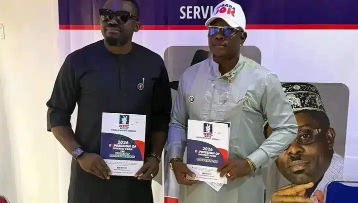
A Rivers State politician, Blessing Fubara, has declared his intention to contest the 2027 governorship election in Rivers State under the platform of the Nigeria Democratic Congress.
The politician has already obtained both the nomination and expression of interest forms needed to participate in the governorship race ahead of the 2027 election.
Blessing Fubara shares the same surname and local government area with the current Rivers State Governor, Siminalayi Fubara.
Both men are from Opobo/Nkoro Local Government Area. However, there has been no confirmation that they are family members.
The Chairman of the NDC in Rivers State, Success Jack, confirmed that Blessing Fubara is among those seeking the party’s governorship ticket.
He also stated that he could not confirm whether the governorship aspirant is related to Governor Siminalayi Fubara.
According to him, the party is preparing seriously for the 2027 general elections and hopes to win not only the governorship seat but other elective positions in Rivers State.
The development comes weeks after Blessing Fubara left the All Progressives Congress and joined the NDC.
Following his defection in Abuja, he was received by former Bayelsa State Governor, Seriake Dickson, alongside other leaders and members of the party.
After joining the NDC, Blessing Fubara said his decision was taken for the interest of Rivers people.
He also stated that the future of the state must be protected ahead of the next general election, expressing confidence that the state would experience positive changes after the 2027 polls.
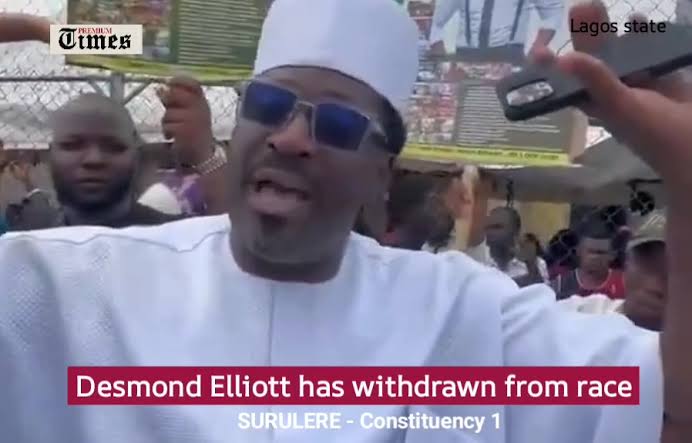
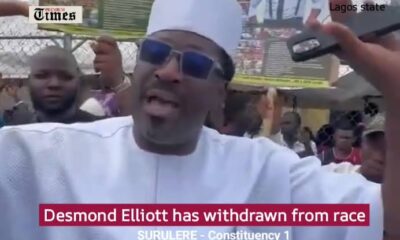
Surulere I lawmaker Desmond Elliot has withdrawn from the All Progressives Congress Lagos House of Assembly primaries, citing intimidation across multiple zones.
In a viral video posted online, the lawmaker said he was stepping out of the race despite seeking re-election under the APC. He alleged that his supporters faced intimidation during the process in several parts of the constituency.
Elliot’s decision came as the primaries held across Lagos on Tuesday. Chief of Staff to the President Femi Gbajabiamila, who represents Surulere Federal Constituency, praised the conduct of the exercise in Surulere, describing it as peaceful.
The withdrawal narrows the contest for the APC ticket in Surulere I ahead of the 2027 general election. Party officials in Lagos have not yet responded to Elliot’s claims, and the APC state chapter has not announced whether the primary in the constituency will proceed with other aspirants.
Elliot has represented Surulere I in the Lagos State House of Assembly since 2015.
https://www.instagram.com/reel/DYkCaAiMxxt/?igsh=ZWw5czl6MHJhNnRy
Politics
Political Shockwave in Rivers as Fubara Pulls Out of APC Governorship Race, Backs Party’s Candidate
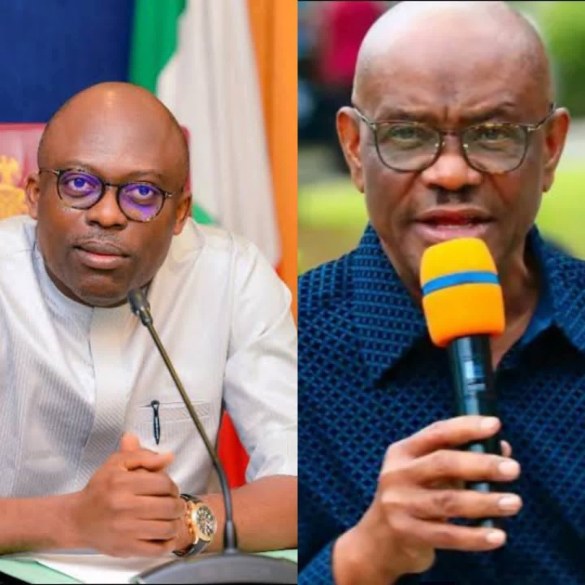
Rivers State Governor, Siminalayi Fubara, has officially withdrawn from the All Progressives Congress (APC) governorship primaries scheduled to take place on Thursday, a development that has stirred fresh political conversations across the state.
The governor announced his decision in a personally signed statement titled “My Decision to Withdraw from the Rivers State Gubernatorial Primaries,” which was released on Wednesday night.
In the statement, Fubara explained that his withdrawal followed wide consultations with political associates, stakeholders, and supporters. He stated that the decision was taken in the overall interest of peace, unity, and stability within the APC and Rivers State at large.
According to the governor, politics should not be allowed to divide the people or create unnecessary tension within the party. He stressed that preserving unity among party members and maintaining stability in the state remain more important than personal political ambition.
Fubara further pledged his total loyalty and support to whoever eventually emerges as the APC governorship candidate, assuring party faithful that he remains committed to the success and progress of the party ahead of the next general elections.
The Rivers governor also appreciated his supporters across the state for standing by him throughout the political process. He thanked party leaders, youth groups, women supporters, and political associates who had continued to show him solidarity and encouragement.
He urged his supporters not to see his withdrawal as the end of his political journey, but rather as a decision made in the collective interest of the party and the state. He also appealed to them to remain peaceful, united, and committed to the ideals of the APC.
Political observers have described the development as one of the biggest political surprises in Rivers State in recent times, especially considering the growing speculations and intense political alignments ahead of the governorship primaries.
Analysts believe the governor’s withdrawal may reshape the political calculations within the APC and influence the direction of the party’s governorship race moving forward.
The announcement has continued to generate mixed reactions from political stakeholders and residents across Rivers State. While some supporters described the move as strategic and mature, others expressed surprise over the governor’s sudden exit from the contest.
Several party faithful, however, commended Fubara for placing party unity and stability above personal ambition, noting that his decision may help reduce internal tensions and strengthen the APC ahead of the elections.
The development has also intensified attention on the remaining aspirants contesting for the APC governorship ticket, as consultations and political meetings continue ahead of the primary election.
Many observers believe the governor’s endorsement of the eventual APC candidate could play a major role in shaping the outcome of the party’s governorship battle and future political structure in the state.
As political activities continue to gather momentum in Rivers State, all eyes are now on the APC primaries and the next phase of political developments expected to unfold in the coming days.

“It Was Sweet Blue Candy” – Hon Doguwa debunked rumour he’s a drvg add!ct

ALAOJI PLANT RETURNS TO NATIONAL GRID

Fubara To Contest Rivers Governorship Seat Under NDC

-
Business2 years ago
US court acquits Air Peace boss, slams Mayfield $4000 fine
-

 Trending2 years ago
NYA demands release of ‘abducted’ Imo chairman, preaches good governance
-

 Politics2 years ago
Mexico’s new president causes concern just weeks before the US elections
-

 Politics2 years ago
Putin invites 20 world leaders
-

 Politics2 years ago
Russia bans imports of agro-products from Kazakhstan after refusal to join BRICS
-
Entertainment2 years ago
Bobrisky falls ill in police custody, rushed to hospital
-
Entertainment2 years ago
Bobrisky transferred from Immigration to FCID, spends night behind bars
-
Education2 years ago
GOVERNOR FUBARA APPOINTS COUNCIL MEMBERS FOR KEN SARO-WIWA POLYTECHNIC BORI