
Politics
Net closing in on South Korea’s president as MPs get death threats over impeachment vote

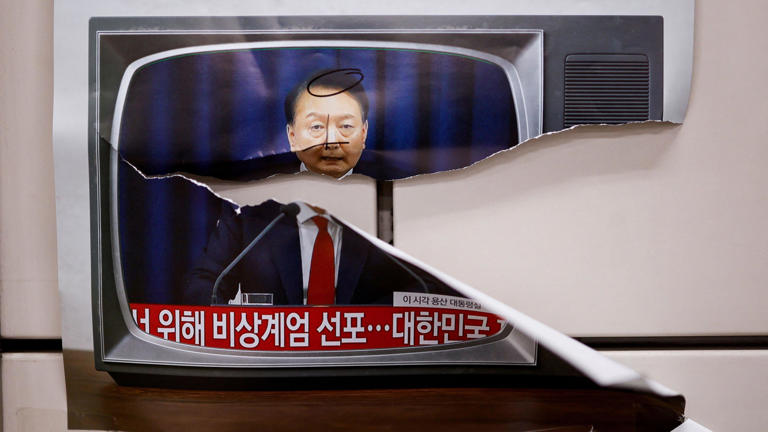
The news is moving so quickly in South Korea, the papers can no longer keep up. President Yoon Suk Yeol’s shock attempt to impose martial law last Tuesday night was so short-lived it failed to make the front page. By the time he despatched the troops, the press had already gone to print. By the following day’s editions, the failed power-grab had already been defeated.
Within the week, the president has morphed from being contrite and apologetic, hoping to avoid impeachment, to brazenly defiant, vowing to fight on as the net closed in on him.
Banned from leaving the country while he is investigated for treason – a crime punishable by death – he is facing a second impeachment vote this weekend, as support from his party trickles away. Meanwhile, the roars of anger from the thousands of people on the street every night are getting louder.
For a short while this week it looked as if he had struck a deal with his party to stand down early, in return for them not booting him out of office in last Saturday’s vote. But as the week sped by, there was no sign of the president nor the details of such plan, and it gradually became obvious Yoon had zero intention of resigning.
On Thursday, he emerged obstinate. “I will fight until the end,” he declared, as he defended his decision to seize control of the country.
His speech was rambling and filled with unsubstantiated conspiracy theories, including a vague suggestion that North Korea could have rigged the previous elections, in which he had failed to win control of parliament. The parliament was a “monster”, he said; the opposition party “dangerous”, and he, by declaring martial law, was trying to protect the people and save democracy.
Yoon spent much of this week in hiding, while police attempted to raid his offices to gather evidence. To try and temper public anger, his party announced that he would not be allowed to make decisions going forward – even though legal experts agreed there was nothing in the constitution that allowed for this.
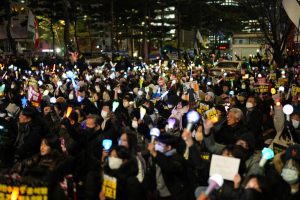
Protesters are angry with Yoon – and the MPs who are shielding him
© BBC
This has left everyone with the same, pressing question – who IS running the country? – especially as senior commanders of Yoon’s army have said they would defy his orders if he tried to impose martial law again.
There is now an unnerving power vacuum in a country that lives with the continuous threat of being attacked by North Korea. “There is no legal basis for this arrangement. We are in a dangerous and chaotic situation,” said Lim Ji-bong, a law professor at Sogang University.
It was evident to all those on the outside that this destabilising and bizarre situation could not be allowed to continue much longer. But it took the president’s party, the People Power Party (PPP), some time to realise Yoon’s impeachment was unavoidable.
Initially his party members protected him, eager to save their own political skins, and consumed by their hatred of South Korea’s opposition leader, Lee Jae-myung, who they fear will become president if Yoon is removed. But on Thursday, after stalling for days, the PPP leader, Han Dong-hoon, came out to urge all MPs to impeach him. “The president must be suspended from office immediately,” he said.
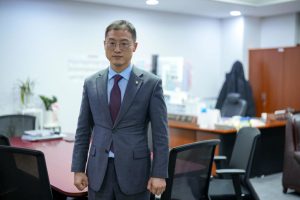
MP Kim Sang-wook plans to vote against the president
© BBC
For the impeachment to pass, two-thirds of parliament must vote in favour, meaning eight ruling party MPs must join the opposition. A handful have so far declared their intention to do so. One of the first to change his mind was Kim Sang-wook. “The president is no longer qualified to lead the country, he is totally unfit,” he told the BBC from his office at the National Assembly.
But Kim said not all MPs would follow his lead; there is a core that will stay loyal to Yoon. In his very conservative constituency, Lee said he had received death threats for switching sides. “My party and supporters have called me a traitor,” he said, labelling South Korean politics as “intensely tribal”.
The vast majority of anger, however, has been directed at the MPs who have shielded Yoon up to this point.
At a protest on Wednesday night the chants had changed from merely “impeach Yoon” to “impeach Yoon, dissolve the party”.
“I hate them both so much right now, but I think I hate the MPs even more than the president,” said a 31-year-old graduate student Chang Yo-hoon, who had joined tens of thousands of others, in freezing temperatures, to voice his disillusionment.
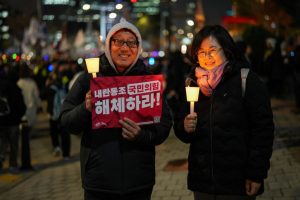
Chang Yo-hoon (left) was among those attending the street protests
© BBC
All week, lawmakers have been bombarded with thousands of abusive messages and phone calls from the public, in what one member described to me as “phone terrorism”, while some have been sent funeral flowers.
Even if enough MPs vote to impeach Yoon this weekend, his party, now divided and widely detested, faces political oblivion. “We don’t even know who we are or what we stand for anymore,” one exasperated party official told me.
The defecting lawmaker Kim Sang-wook thinks it will take time to regain voters’ trust. “We will not disappear, but we need to rebuild ourselves from scratch,” he said. “There is a saying that South Korea’s economy and culture are first class, but its politics are third class. Now is the chance to reflect on that.”
Yoon has dealt a severe blow to South Korea’s reputation as a well-established, albeit young, democracy. There was pride when MPs swiftly overturned the president’s martial law decision, that the country’s democratic institutions were functioning after all. But the fragility of the system was exposed again, as the party manoeuvred to keep him in office, with the opposition branding this a “second coup”.
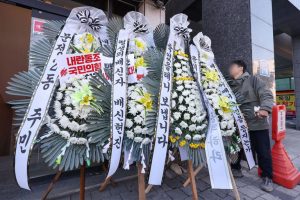
Traditional floral banners for a funeral have been sent to MPs as they consider how to vote
© News1
But Professor Yun Jeong-in, a research professor at Korea University’s Legal Research Institute, insisted the country was dealing with “an aberration, not a systemic failure of democracy”, pointing to the mass protests every night. “People are not panicking; they are fighting back. They see democracy as something that is rightfully theirs,” she said.
Damage has also been done to South Korea’s international relationships, and ironically to much of what Yoon wanted to achieve. He had a vison that South Korea would become a “global pivotal state”, playing a bigger role on the world stage. He even hoped to earn Seoul an invitation to join the elite group of G7 countries.
A Western diplomat told me they were hoping for a “swift resolution” to the crisis. “We need South Korea to be a stable partner. Impeachment would be a step in the right direction.”
If Yoon is suspended from office on Saturday, he will not leave without a fight. A prosecutor by trade, who knows the law inside out, he has decided he would rather be impeached, and challenge the decision when it goes to court, than go quietly. And the shockwaves he has set off are going to ripple through the country for years, perhaps decades, to follow.
Additional reporting by Jake Kwon and Hosu Lee.


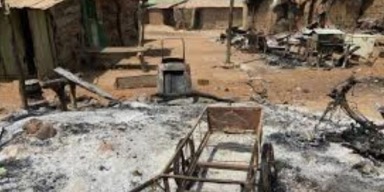
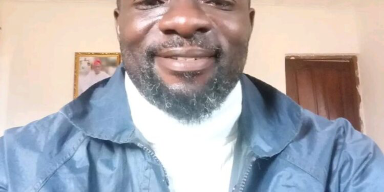

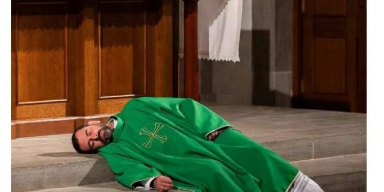



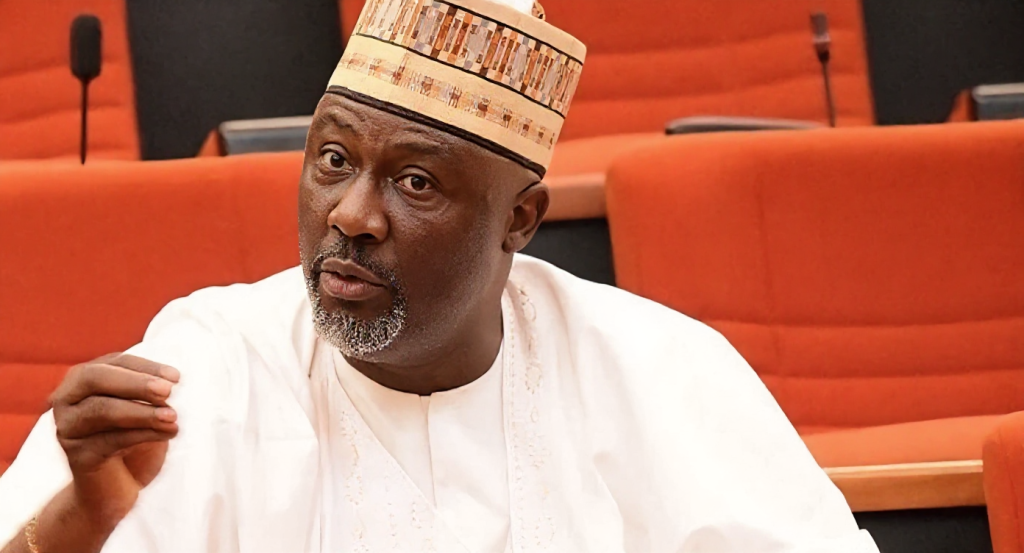
Former lawmaker, Dino Melaye Esq, has raised concerns over the Senate’s reported rejection of the electronic transmission of election results.
The move, according to Melaye, is a clear endorsement of election rigging and an indication of a sinister plan to rig the 2027 elections.
In a statement on Friday, the former lawmaker criticized the Senate’s decision, stating that it undermines the credibility of the electoral process.
The African Democratic Congress, ADC chieftain, also stated that the move opens the door for electoral manipulation and fraud.
He further warned that the rejection of electronic transmission of results is a step backwards for democracy in Nigeria.
Melaye called on lawmakers and citizens to stand up against “this blatant attempt to undermine the will of the people and ensure that future elections are free, fair, and transparent”.
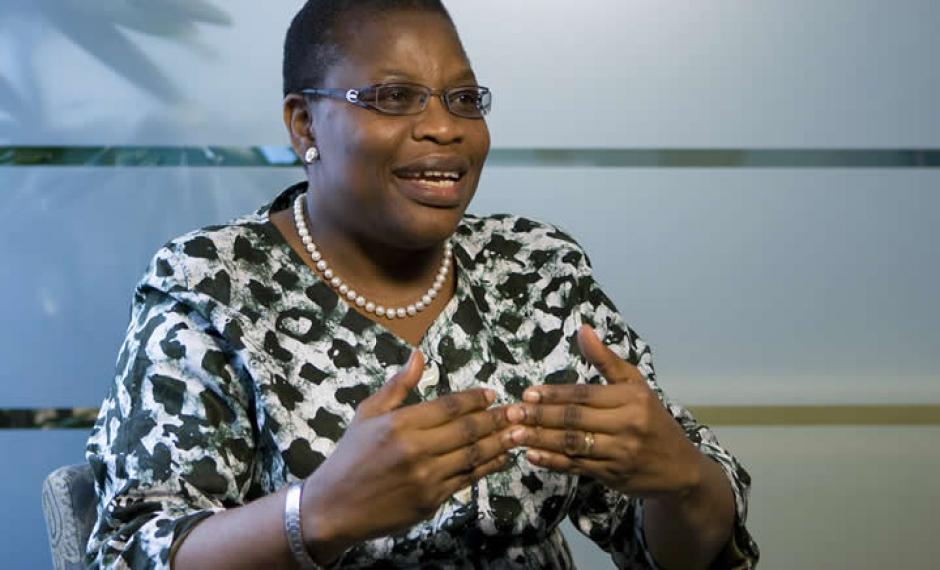
Former Minister of Education, Oby Ezekwesili, has said Nigerians have every reason to be mad at the Senate over the ongoing debate on e-transmission of election results.
Ezekwesili made this known on Friday when she featured in an interview on Arise Television’s ‘Morning Show’ monitored by DAILY POST.
DAILY POST reports that the Senate on Wednesday turned down a proposed change to Clause 60, Subsection 3, of the Electoral Amendment Bill that aimed to compel the electronic transmission of election results.
Reacting to the matter, Ezekwesili said, “The fundamental issue with the review of the Electoral Act is that the Senate retained the INEC 2022 Act, Section 60 Sub 5.
“This section became infamous for the loophole it provided INEC, causing Nigerians to lose trust. Since the law established that it wasn’t mandatory for INEC to transmit electoral results in real-time, there wasn’t much anyone could say.
“Citizens embraced the opportunity to reform the INEC Act, aiming to address ambiguity and discretionary opportunities for INEC. Yet, the Senate handled it with a “let sleeping dogs lie” approach. The citizens have every reason to be as outraged as they currently are.”
Politics
Electoral act: Senate’s action confirms Nigeria ‘fantastically corrupt’, ‘disgraced’ – Peter Obi
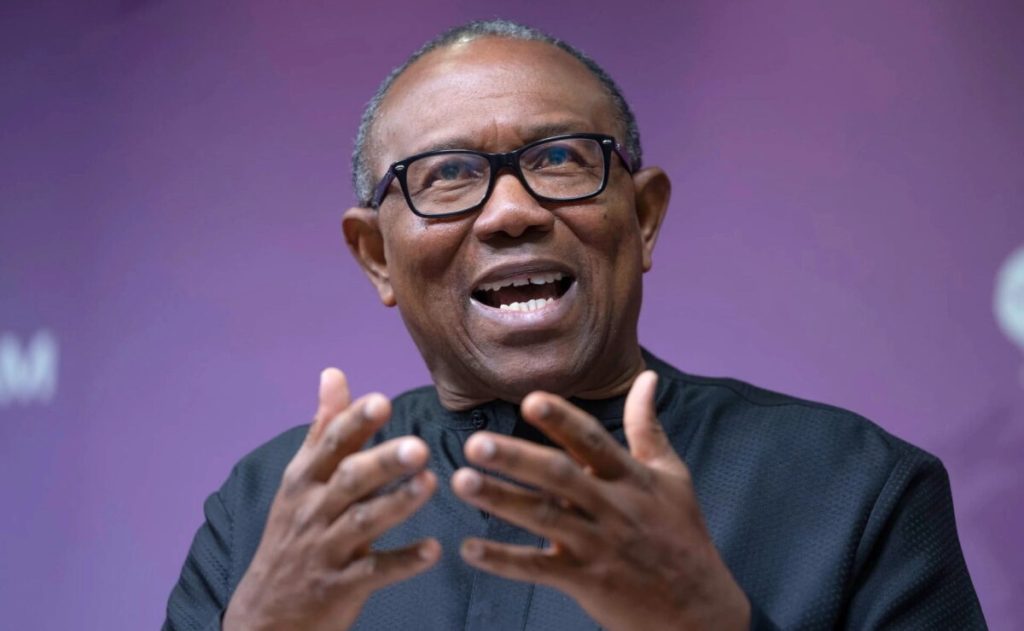
Former Labour Party presidential candidate, Peter Obi, has condemned the Senate’s refusal to make electronic transmission of election results mandatory, saying the move further exposes Nigeria as a fantastically corrupt and disgraced country.
Obi expressed his views in a statement shared on X on Friday, where he accused lawmakers of deliberately weakening Nigeria’s democratic process ahead of the 2027 general elections.
He explained that his reaction came after a brief pause to mourn victims of a deadly tragedy in Kwara State, where over 150 people reportedly lost their lives.
“Let us first pray for the souls of the innocent Nigerians lost in Kwara. That painful incident is why I delayed responding to the shameful development surrounding our electoral system,” he wrote.
Describing the Senate’s decision as intentional and dangerous, Obi said rejecting mandatory electronic transmission was not a simple oversight but a calculated attempt to block transparency.
“The Senate’s open rejection of electronic transmission of results is an unforgivable act of electoral manipulation ahead of 2027,” he said.
According to him, the action strikes at the heart of democracy and raises serious questions about the true purpose of governance in Nigeria.
“This failure to pass a clear safeguard is a direct attack on our democracy. By refusing these transparency measures, the foundation of credible elections is being destroyed. One must ask whether government exists to ensure justice and order or to deliberately create chaos for the benefit of a few.”
The former Anambra State governor linked the post-election controversies of the 2023 general elections to the failure to fully deploy electronic transmission of results, insisting that Nigerians were misled with claims of technical failures.
“
The confusion, disputes and manipulation that followed the 2023 elections were largely due to the refusal to fully implement electronic transmission,” he said.
He added that the so-called system glitch never truly existed.
Obi compared Nigeria’s electoral process with those of other African countries that have embraced technology to improve credibility, lamenting that Nigeria continues to fall behind.
“Many African nations now use electronic transmission to strengthen their democracy. Yet Nigeria, which calls itself the giant of Africa, is moving backwards and dragging the continent along.”
He criticised Nigeria’s leadership class, saying the country’s problems persist not because of a lack of ideas but because of deliberate resistance to meaningful reform.
“We keep organising conferences and writing policy papers about Nigeria’s challenges. But the truth is that the leaders and elite are the real problem. Our refusal to change is pushing the nation backwards into a primitive system of governance.”
Warning of the dangers ahead, Obi said rejecting electronic transmission creates room for confusion and disorder that only serves the interests of a small group.
He also recalled past remarks by foreign leaders who described Nigeria as corrupt, arguing that actions like this continue to justify those statements.
“When a former UK Prime Minister described Nigeria as ‘fantastically corrupt,’ we were offended. When former US President Donald Trump called us a ‘disgraced nation,’ we were angry. But our continued resistance to transparency keeps proving them right.”
Obi warned that Nigerians should not accept a repeat of the electoral irregularities witnessed in 2023.
“Let there be no mistake. The criminality seen in 2023 must not be tolerated in 2027.”
He urged citizens to be ready to defend democracy through lawful and decisive means, while also calling on the international community to closely monitor developments in Nigeria’s electoral process.
“The international community must pay attention to the groundwork being laid for future electoral manipulation, which threatens our democracy and development,” Obi stated.
He concluded by expressing hope that change is still possible if Nigerians take collective responsibility.
“A new Nigeria is possible but only if we all rise and fight for it.”

Police bust syndicate behind nude photo blackmail in Lagos

Man in shock after lady he lodged with in a hotel in Abuja flees with his car and other valuables

US Reacts As De@th Toll In Kwara Terror Attacks Hits 200

-
Business1 year ago
US court acquits Air Peace boss, slams Mayfield $4000 fine
-

 Trending1 year ago
NYA demands release of ‘abducted’ Imo chairman, preaches good governance
-

 Politics1 year ago
Mexico’s new president causes concern just weeks before the US elections
-

 Politics1 year ago
Putin invites 20 world leaders
-

 Politics1 year ago
Russia bans imports of agro-products from Kazakhstan after refusal to join BRICS
-
Entertainment1 year ago
Bobrisky falls ill in police custody, rushed to hospital
-
Entertainment1 year ago
Bobrisky transferred from Immigration to FCID, spends night behind bars
-
Education1 year ago
GOVERNOR FUBARA APPOINTS COUNCIL MEMBERS FOR KEN SARO-WIWA POLYTECHNIC BORI