
News
Okonjo-Iweala, Mo Abudu make Forbes’ world’s most powerful women 2025


Two Nigerian women, Ngozi Okonjo-Iweala and Mo Abudu, have been listed among Forbes’ 100 World’s Most Powerful Women for 2025.
The list, published on the magazine’s website on Wednesday, recognises women who hold significant influence in business, politics, culture, and global leadership.
It also highlights the growing impact of both Nigerian women in global trade and media.
They appear alongside world figures such as European Commission President Ursula von der Leyen (No. 1), European Central Bank President Christine Lagarde (No. 2), Japan’s first female prime minister, Sanae Takaichi (No. 3), Mexico’s President Claudia Sheinbaum (No. 5), and Namibia’s Prime Minister Netumbo Nandi-Ndaitwah (No. 79).
Okonjo-Iweala, ranked 92nd, is the current Director-General of the World Trade Organisation.
She is the first woman and first African to hold the position, which she assumed in March 2021.
Forbes described her as “an economist and international development professional” with “more than 30 years of experience working in Asia, Africa, Europe, Latin America and North America.”
She previously served two terms as Nigeria’s Finance Minister from 2003 to 2006 and 2011 to 2015 and briefly acted as Foreign Minister in 2006.
She also chaired the Board of Gavi, the Vaccine Alliance, which has “immunised more than 760 million children globally.”
Okonjo-Iweala holds a bachelor’s degree from Harvard University and a doctorate from the Massachusetts Institute of Technology.
The 71-year-old mother of four is recognized for her belief in the power of trade to lift developing countries out of poverty and promote sustainable development.
Mo Abudu, ranked 98th, is a media entrepreneur, philanthropist, and founder of EbonyLife Media.
She launched EbonyLife TV in 2006; the network now airs in more than 49 countries, including the UK and the Caribbean.
According to Forbes, she helped EbonyLife secure major partnership deals with Sony Pictures Television, AMC Networks, and Netflix, the first African media company to sign a multi-title film and TV agreement with the streaming giant.
In November 2025, the company launched a new digital platform, EbonyLife ON Plus, available on Google Play and the Apple App Store.
Born in London, Abudu spent part of her childhood in Nigeria with her grandmother before returning to the UK.
She is described by Forbes as “one of the most influential women in global media.”
This year’s list also reflects women’s rising influence in technology and artificial intelligence, including Lisa Su, CEO of AMD (No. 10); Ruth Porat, President and Chief Investment Officer at Alphabet (No. 12); Colette Kress of Nvidia (No. 37); Susan Li of Meta (No. 41); and Amy Hood of Microsoft (No. 16).
Other notable figures include Daniela Amodei (No. 73), co-founder and president of Anthropic, who became a self-made billionaire after the company’s valuation reached $183 billion, and Sarah Friar (No. 50), CFO of OpenAI.
In entertainment, newcomer Kim Kardashian (No. 71) made the list after raising $225 million for Skims at a $5 billion valuation and launching NikeSKIMS with Nike.
Forbes also recognised the women of Netflix’s KPop Demon Hunters (No. 100), who command a global fan base that transcends age, gender, and geography.





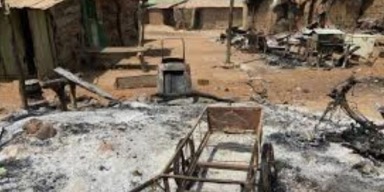
The United States Mission in Nigeria has condemned the k!lling of more than 200 civilians in recent attacks on communities in Kwara State.
Recall that terrorists launched de@dly attacks on Woro and Nuku communities in Kaiama Local Government Area of the state on Tuesday night, k!lling unsuspecting citizens.
It was gathered that the gunmen invaded the villages, opened fire on residents and burned homes.
According to reports, the de@th toll from the unfortunate incident hit 200 on Thursday night.
Reacting, the US Mission Nigeria condemned the k!lling via a post on its official X handle.
The post reads, “The United States condemns the horrific attack in Kwara state in Nigeria, which claimed the lives of more than 160 people, with the de@th toll still unconfirmed and many still unaccounted for.
“We express our deepest condolences to the families of those affected by this senseless violence.
“We welcome President Tinubu’s order to deploy security forces to protect villages in the area and his directive to federal and state officials to provide aid to the community and bring the perpetrators of this atrocity to justice.”
News
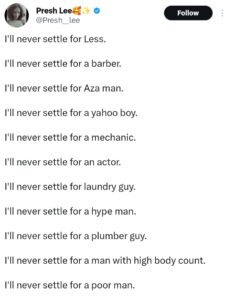
“I’ll never settle for a barber, yahoo boy or a poor man” — nail tech’s list of men she says she can’t marry sparks reactions online

A Nigerian nail technician has set social media talking after openly listing the kind of men she says she can never settle for.
In a now-viral post, she stated clearly that she refuses to “settle for less” and went on to mention professions and traits she considers a no-go area.
According to her, she can never settle for a barber, an aza man, a yahoo boy, a mechanic, an actor, a laundry man, a hype man, or a plumber. She also added that she wouldn’t marry a man with a high body count or a poor man.
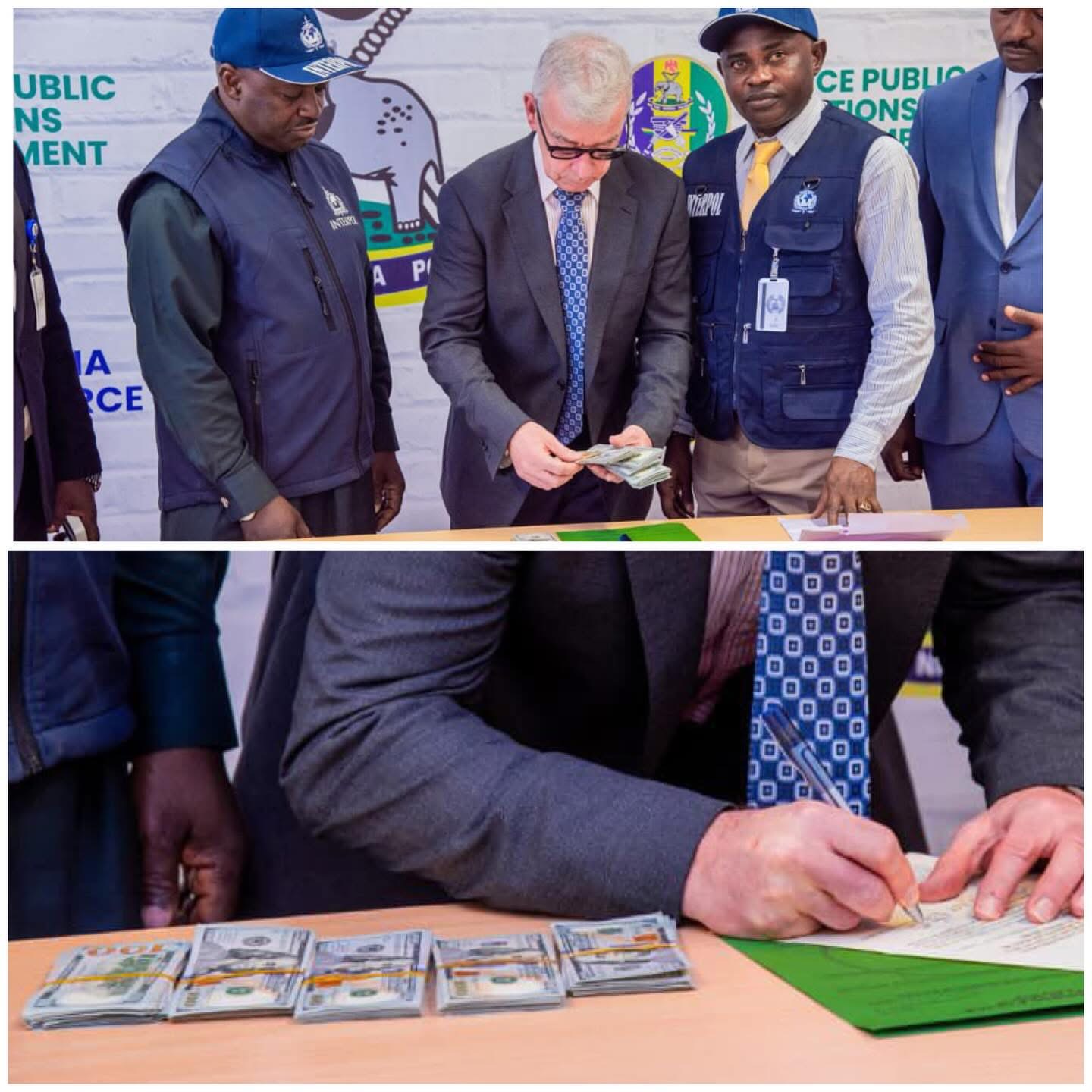
The Nigeria Police Force INTERPOL National Central Bureau (NCB), Abuja has successfully repatriated the sum of Twenty-Three Thousand United States Dollars ($23,000) recovered from an international romance scammer to the victim in The Cayman Islands.
A statement from CSP Benjamin Hundeyin, spokesperson of the force, says the repatriation followed a request received from the Royal Cayman Islands Police Service seeking assistance of the INTERPOL NCB Abuja to investigate a Nigerian national, Achufusi Obioma Ikenna, who defrauded a resident of the Cayman Islands through an online romance scam.
‘’Acting on the request, INTERPOL NCB Abuja conducted discreet, intelligence-led investigations which led to the arrest of the suspect and the recovery of the sum of $23,000.
Following the completion of all necessary documentation and in collaboration with international partners, the recovered funds were formally handed over to the Royal Cayman Islands Police Service, through the British High Commission in Abuja, represented by Mr. Shaun McLeary, for secure delivery to the victim.’’
Hundeyin added that the suspect will be arraigned at the conclusion of investigation.

US Reacts As De@th Toll In Kwara Terror Attacks Hits 200

I’m Sick And Homeless – Nigerian Actor, Okemesi Cries Out For Help (Video)

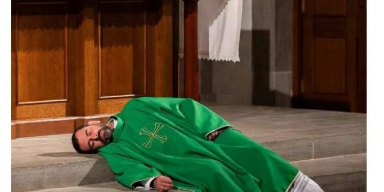
Catholic Priest Collapses And D!es In Front Of Congregation While Walking To Tabernacle To Return Holy Communion

-
Business1 year ago
US court acquits Air Peace boss, slams Mayfield $4000 fine
-

 Trending1 year ago
NYA demands release of ‘abducted’ Imo chairman, preaches good governance
-

 Politics1 year ago
Mexico’s new president causes concern just weeks before the US elections
-

 Politics1 year ago
Putin invites 20 world leaders
-

 Politics1 year ago
Russia bans imports of agro-products from Kazakhstan after refusal to join BRICS
-
Entertainment1 year ago
Bobrisky falls ill in police custody, rushed to hospital
-
Entertainment1 year ago
Bobrisky transferred from Immigration to FCID, spends night behind bars
-
Education1 year ago
GOVERNOR FUBARA APPOINTS COUNCIL MEMBERS FOR KEN SARO-WIWA POLYTECHNIC BORI