
Politics
#OpEd: Democracy In Africa And The Dangers Of A Judicial Selectorate, By Chidi Anselm Odinkalu

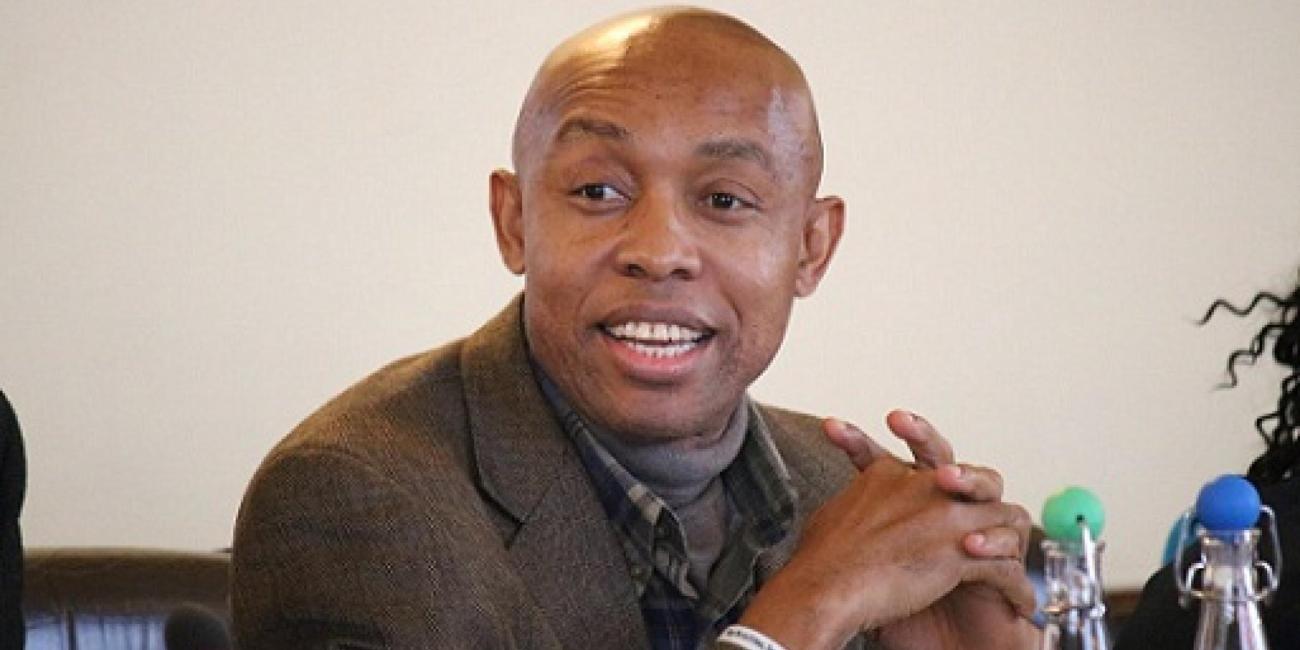
The more election disputes end up in court, the more it becomes evident to politicians that it is easier to make deals with the judges.
In March 2006, Uganda’s Supreme Court convened to begin adjudication of the disputes over the presidential election that occurred the previous month in the country. Voting took place on 23 February. Two days later, on 25 February, the Electoral Commission announced the results giving the incumbent, Yoweri Kaguta Museveni, 59.28% of the valid votes cast. In second place, with an award of 37.36% of the votes, the Commission announced Kiiza Besigye, a medical doctor whose military career began as part of the bush war that brought Museveni to power 20 years earlier in 1986.
In his petition against the announced result, Col. Besigye argued that the Electoral Commission did not validly declare the results in accordance with the Constitution, and the Presidential Elections Act; and that the election was conducted in contravention of the provisions of both. His evidence was compelling.
Yet, the impression that the petition process was a ritual performance with a predetermined outcome pervaded the process. Leading the legal team for the Electoral Commission of Uganda who were defendants in the petition was Lucian Tibaruha, Solicitor-General of Uganda. In reality, he also led the lawyers for the president, also a defendant alongside the Electoral Commission. Handling election petitions for a party political candidate was not supposed to be part of Lucian’s job,but there he was.
Presiding was Bejamin Josses Odoki, Chief Justice of Uganda since 2001 and the author of the 1995 Constitution that incrementally made Museveni a life president. Idi Amin, Uganda’s infamous military dictator, elevated Odoki to the bench as a 35 year old in 1978. Amin’s nemesis, Museveni, elevated him to the Supreme Court eight years later and made him Chief Justice in 2001.
Announcing its reasoned judgment in January 2007, the court found that there had been non-compliance with the Constitution of Uganda and the applicable laws in the form of “disenfranchisement of voters by deleting their names from the voters register or denying them the right to vote” as well as “in the counting and tallying of results.”
The Court equally found as a fact that the “principle of free and fair elections was compromised by bribery and intimidation or violence in some areas of the country” and also that “the principles of equal suffrage, transparency of the vote, and secrecy of the ballot were undermined by multiple voting, and vote stuffing in some areas.”
Despite these findings, Chief Justice Odoki and his court ruled by a majority of four votes to three of Justices of the Supreme Court of Uganda to uphold the election and grant President Museveni another five years in power. Two years after this decision, in 2009, when the Chief Justice’s son, Phillip Odoki, wedded, Museveni’s son, General Muhoozi Kainerugabawas the best man
In 2010, it emerged that Chief Justice Odoki never harboured any doubts about the outcome. Questioned about the role of judges in deciding elections in Africa, Odoki, “smiled when commenting that to nullify a presidential election would be suicidal.” He lived to see his peers in Kenya and Malawi do just that in 2017 and 2020 respectively. It proved not to be suicidal.
According to former law teacher, Olu Adediran, the role of judges in these kinds of cases is in reality “a compromise between law and political expediency.” Jude Murison is more direct in calling it “judicial politics.” Judges are not instruments of change or revolution and when they are called upon to adjudicate between sides in a political dispute, they are more often than not likely to treat that not as an opportunity to change political paymasters except when the bell has already tolled undisputedly for an incumbent.
Politicians are supposed to sell themselves to the people through their programmes and through campaigns in a contest of both ideas and vision. In return, the people through their votes offer endorsement to the politicians and programmes whom they believe best advance their interests. An electoral commission is a referee supposedly engaged and maintained at the public expense to administer this contest.
This is where things begin to break down. Although engaged in the name of the people, every electoral commission is appointed by people in power who never wish to relinquish it. When a dispute emerges as to the kind of job done by the electoral commission, it ends up before judges. However, the same people who appoint the electoral commission also usually appoint the most senior judges into office. In the maelstrom of party political competition, guardrails break down as politicians struggle to casualise the popular electorate in order to prosper a judicial selectorate.
The more election disputes end up in court, the more it becomes evident to politicians that it is easier to make deals with the judges. The people are and can be unpredictable, unlike most judges. Increasingly, therefore, politicians seek to judicialize the site of decision-making on elections, relocating that from the polling booth to the courtroom.
If a politician can get their spouse appointed to become a judge, they can even make the site of decision-making in elections more intimate, relocating it from the courtroom to the bedroom.
Instead of the usual soapbox, increasingly elections in many countries can be decided by good old pillow-talk. Former federal legislator, Adamu Bulkachuwa, whose wife, Zainab, headed Nigeria’s Court of Appeal for six years until 2020, published the manual on this model of electoral ascendancy in his parliamentary valedictory remarks as a senator in June 2023.
This is why the judicialization of politics in Africa increasingly represents a huge risk to the popular will as the basis of government. First, it vitiates the right to democratic participation and suppresses the popular will as the foundation for democratic legitimacy. Second, it enables the courts to deprive the people of their democratic rights, accomplishing that under the alluring pretence of rule of law. Third, it provides perverse incentives for politicians to capture the courts, making the judiciary in many African countries a battleground for the pre-determination of election outcomes. Fourth, it has the capacity to alter the character of the judiciary from an independent institution to a plaything of political insiders.
This trend in consigning elections to the care of a judicial selectorate around Africa now endangers judges and their independence. In Malawi, in 2020, the president attempted to remove the Chief Justice in order to secure a Supreme Court panel more solicitous of his interests in the lead-up to a presidential re-run, following a rigged electoral contest that had been struck down by the courts.
The following year in September 2021, the ruling party in Zimbabwe pressured the Constitutional Court to overrule an earlier decision of the High Court that blocked an extension of the tenure of the Chief Justice after he had reached the official retirement age. This allowed the Chief Justice to still serve, but on a contract that made him more subject to presidential whim. Ahead of contentious national elections two years later, the same president decided to advance $400,000 to all serving judges in Zimbabwe in “housing loan” with no repayment obligations.One of the beneficiaries was the chair of the Zimbabwe Electoral Commission (ZEC), herself a serving judge.Unsurprisingly, she announced her benefactor, the incumbent president, as winner in the ensuing election.
Even worse, this trend now also endangers entire countries, if not indeed regions. This was evident in April 2020, when Mali’s Constitutional Court overturned the results of 31 parliamentary seats won by the opposition. Its decision to hand these seats over to the ruling party sparked an uprising that led first to the dissolution of the Constitutional Court, and later the overthrow of the government in a military coup.
Mali’s twin crises of governmental legitimacy and state fragmentation is a tragic reminder of the dangers of judicial overreach in election adjudication. But the crisis in Mali has also become a regional crisis for West Africa. To adapt an expression familiar to new-age Pentecostals in West Africa: what judges cannot do does not exist.
A lawyer and a teacher, Odinkalu can be reached at chidi.odinkalu@tufts.edu



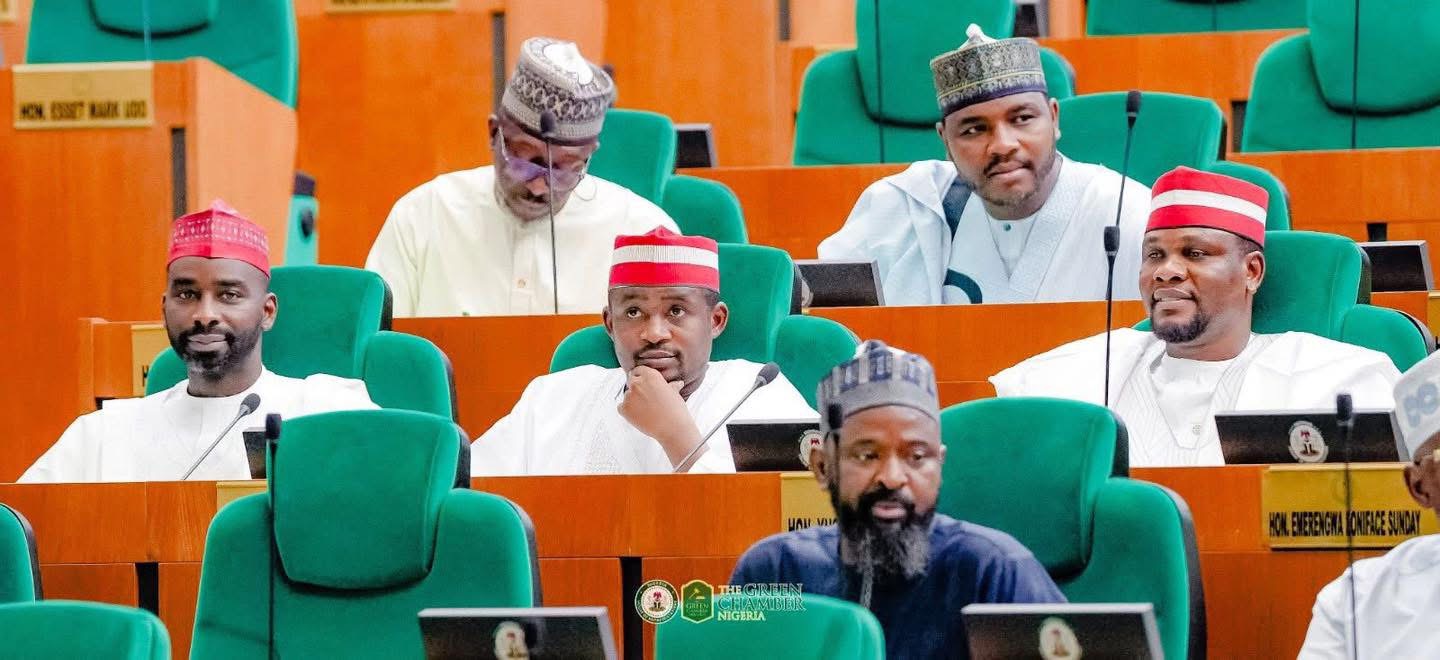
No fewer than 50 members of the 10th House of Representatives are unlikely to be part of the 11th Assembly after losing out in the All Progressive Congress (APC) primaries held on Saturday.
This marks one of the largest turnovers of sitting federal lawmakers since 2015 and signals intensifying internal competition within the ruling party eight months to the 2027 general elections.
While House Speaker Tajudeen Abbas (Kano) and Deputy Speaker Benjamin Kalu (Abia) successfully defended their tickets, several ranking and long-serving lawmakers were defeated, exposing strong anti-incumbent sentiment and the decisive role of state governors in candidate selection.
Major casualties
One of the biggest upsets was the defeat of House Majority Leader Julius Ihonvbere in Edo State’s Owan Federal Constituency. He polled 1,005 votes out of 7,587 cast, finishing third behind Andrew Ijegbia, who scored 3,695 votes. Abdul Oroh placed second with 1,740 votes.
In Delta State, veteran lawmaker Nicholas Mutu, who has represented Bomadi/Patani Federal Constituency since 1999, lost his re-election bid. Ngozi Okolie also lost the Aniocha/Oshimili ticket to former House Minority Leader Ndudi Elumelu.
Cross River State recorded one of the highest casualty rates, with five of eight incumbents failing to secure re-nomination.
They include three-term member Mike Etaba (Obubra/Etung), Godwin Offiono (Ogoja/Yala), Emil Inyang (Akamkpa/Biase), and Bassey Akiba (Odukpani/Calabar Municipality).
Only Peter Akpanke, Joseph Bassey, and Victor Abang won return tickets.
In Plateau State, conflicting results in Pankshin/Kanke/Kanam Federal Constituency triggered early confusion. One returning officer declared challenger John Tongshinen winner with 29,968 votes against incumbent Yusuf Gagdi’s 5,849.
The APC Plateau State primaries committee, chaired by Stella Okotete, later dismissed that declaration as unauthorised and affirmed Mr Gagdi as the authentic winner with 29,207 votes.
At a press briefing, Mrs Okotete stated that Nandom Kura was the recognised returning officer. “The returning officer approved by my committee that has gone to do fake declaration is null and void,” she said.
Other significant losses occurred in Ogun State (at least five incumbents, including Deputy Chief Whip Ibrahim Isiaka and Tunji Akinosi) and Ekiti State (three sitting members).
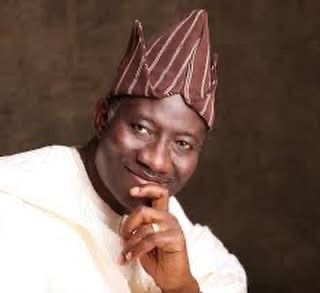
The Peoples Democratic Party (PDP), led by Tanimu Turaki, SAN, has scheduled to screen former president Goodluck Jonathan tomorrow, Tuesday, aMay 19, as the lone presidential candidate of party.
According to a statement from the PDP faction backed by the Oyo State Governor, Seyi Makinde, Former Vice-President Namadi Sambo, former governor of Plateau State, Jona Jang and a former Minister of Foreign Affairs, Tom Ikimi have been listed among a committee of 14 members to screen Jonathan described as a lone candidate by the party.
Other members of the committee were Chief Olabode George, Babangida Aliyu, Maryam ciroma, Zainab Maina, Josephine Anenin, Dr. Abdul Bulama, Dr. Esther Uduehi, Edo State PDP chairman, Tony Aziegbemi, Dr. Sunday Solarium and Chief Anicho Okoro, who would serve as administrative secretary of the committee.
Last week, the national Publicity Secretary of the faction, Ini Ememobong, disclosed that former president Jonathan has successfully registered as a member of the party in the fresh digital registration exercise directed by INEC.
The PDP faction also announced that it was set to screen 748 house of representatives aspirants, 198 senatorial aspirants, and 112 governorship aspirants.
The screening committee would screen 2122 states houses of assembly aspirants. The exercise will commence tomorrow, Tuesday in different states.
According to the statement, the screening exercise would take place nationwide on Tuesday, May 19, 2026, at 10:00 a.m.
The statement said the Interim National Working Committee (iNWC) has also released the names of members to serve on the Screening Committees and Screening Appeal Panels.
It added that the publication of the screening details “is in accordance with the party’s guidelines and timetable for the conduct of the 2027 general elections.”
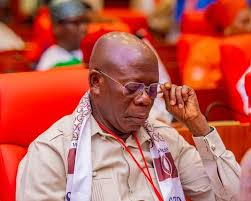
A former governor and incumbent Senator, Adams Oshiomhole, along with his counterpart Senator Joe Ikpea, sailed through the All Progressives Congress senatorial primary in Edo unopposed, and securing their tickets without a single vote cast against them.
Also Omoregie Ogbeide-Ihama emerged the winner in the APC primary for the Edo South senatorial district.
Ogbeide-Ihama won in the seven local government areas of Edo South in the results announced by the Chairman of APC National Assembly Primary Election, Muhammed Ajana at the Urokpota Hall, Benin.
He polled 27,154 votes while his opponents, Senator Neda Imasuen, got 13,580, and Pastor Osagie Ize-Iyamu got 6785.
The elections were hitch-free in Edo North and Edo Central, where there was no contest against the incumbents, Senators Oshiomhole of Edo North and Ikpea of Edo Central, respectively.
Ajana at the Urokpota Hall said the collation arose from votes cast in the seven local government areas made up of 77 wards where elections were conducted by members of the committee.
He said, “There are seven local governments that make up the Edo South Senatorial District. We have heard from the Returning officers from the seven local government areas. From the collation, the cumulative result we have for Edo South Senatorial District is this; Ogbeide-Ihama with 27,154 votes, Imasuen with 13,580 votes and Ize-Iyamu with 6, 785.
“This is the total reflection of what has transpired from the ward level to the local government and the Edo South senatorial district collation centre. With this we await further directives from the National Secretariat, we have done our best by collating the results which is our mandate, to collate the results and send them to the National Secretariat.”
However, it was gathered that Ize-Iyamu emerged as the APC candidate for Edo South Senatorial race. He claimed to have clinched the party’s ticket after defeating Ogbeide-Ihama and Imasuen.
It was claimed that the Chief Returning Officer, Abubakar Muhammad Kabiru, officially declared Ize-Iyamu the winner after securing the highest number of votes cast.
On his part, the senator representing the district condemned the exercise describing it as a sham allegedly designed to favour a preferred aspirant.
Imasuen spoke while reacting to events at his polling unit in Umagbae North Ward 5, Urhokuosa where he said he was denied the opportunity to vote following what he described as a chaotic and manipulated process.
The lawmaker accused leaders of the party of openly adopting a preferred candidate ahead of the exercise and intimidating members into supporting that aspirant.
He said, “There is nothing satisfactory about this sham of election they did today and it is very unfortunate because as a loyal party member, I expected something better than this.”
He said the warning signs emerged days before the primary when some ward chairmen allegedly informed him that they had been directed not to receive him during consultations.
Imasuen claimed that some ward leaders openly told him the party had already adopted a preferred aspirant, identified as Hon. Omoregie Ogbeide-Ihama, making further consultations unnecessary.

𝗛𝗢𝗡. 𝗧𝗢𝗦𝗞𝗔 𝗖𝗢𝗡𝗗𝗘𝗠𝗡𝗦 𝗧𝗛𝗘 𝗞𝗜𝗟𝗟𝗜𝗡𝗚𝗦, 𝗞𝗜𝗗𝗡𝗔𝗣𝗣𝗜𝗡𝗚𝗦 𝗔𝗡𝗗 𝗥𝗔𝗣𝗘𝗦 𝗜𝗡 𝗜𝗛𝗜𝗔𝗚𝗪𝗔, 𝗢𝗕𝗜𝗕𝗜𝗘𝗭𝗘𝗡𝗔, 𝗘𝗭𝗜𝗢𝗕𝗢𝗗𝗢, 𝗘𝗠𝗘𝗔𝗕𝗜𝗔𝗠, 𝗢𝗞𝗢𝗟𝗢𝗖𝗛𝗜, 𝗨𝗠𝗨𝗚𝗨𝗠𝗔, 𝗔𝗩𝗨 𝗔𝗡𝗗 𝗢𝗧𝗛𝗘𝗥 𝗖𝗢𝗠𝗠𝗨𝗡𝗜𝗧𝗜𝗘𝗦: 𝗖𝗔𝗟𝗟𝗦 𝗙𝗢𝗥 𝗜𝗠𝗠𝗘𝗗𝗜𝗔𝗧𝗘 𝗖𝗘𝗦𝗦𝗔𝗧𝗜𝗢𝗡

TENSIONS RISE IN OGUTA LGA AS CHAIRMAN MOVED AHEAD WITH Town UNION ELECTIONS AGAINST STATE DIRECTIVE

2027: More Than 50 Lawmakers Lose APC Reps Tickets in Major Primary Election

-
Business2 years ago
US court acquits Air Peace boss, slams Mayfield $4000 fine
-

 Trending2 years ago
NYA demands release of ‘abducted’ Imo chairman, preaches good governance
-

 Politics2 years ago
Mexico’s new president causes concern just weeks before the US elections
-

 Politics2 years ago
Putin invites 20 world leaders
-

 Politics2 years ago
Russia bans imports of agro-products from Kazakhstan after refusal to join BRICS
-
Entertainment2 years ago
Bobrisky falls ill in police custody, rushed to hospital
-
Entertainment2 years ago
Bobrisky transferred from Immigration to FCID, spends night behind bars
-
Education2 years ago
GOVERNOR FUBARA APPOINTS COUNCIL MEMBERS FOR KEN SARO-WIWA POLYTECHNIC BORI