
News
Overcrowded, overlooked: Inside Ogun Correctional Centre crisis

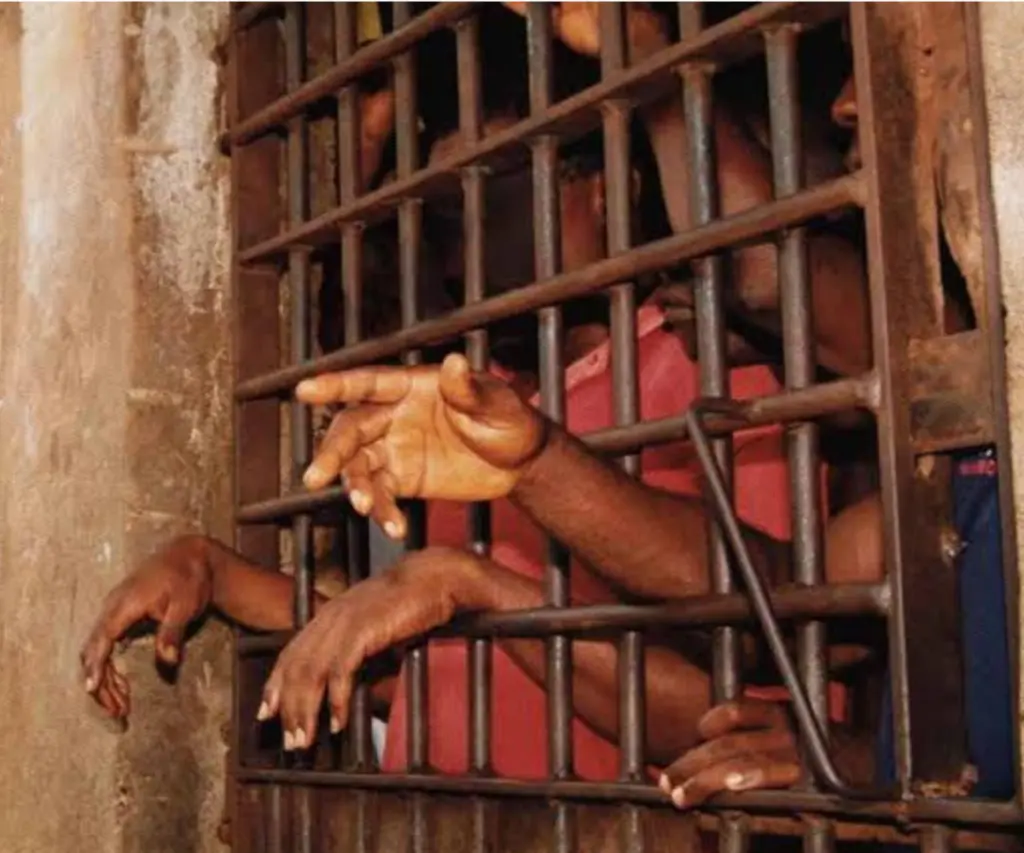
“We slept in hundreds, like packed sardines in a room that was supposed to accommodate twenty people. We battled skin rashes to head lice, bedbugs and then to mental disorder,” 50-year-old Idris (not real name) narrated his hellish experience behind bars at Ibara Correctional Center in Abeokuta, Ogun State.
His journey began on a sunny afternoon when he sighted his old-time friend around the Peoples Democratic Party, PDP, secretariat, opposite NNPC mega station in Abeokuta.
Filled with euphoria, he hurriedly parked his car and crossed over to greet him. Unknown to Idris, a cult fracas had ensued the previous day and this led to confrontation and shooting at the scene.
“They started shooting, I was shot, and I shot at many people also, but I was overpowered since there were many and the person I went to greet had fled the scene. I had a cut on my neck which landed me at the Federal Medical Center, Idi-Aba where I spent almost a month, from there I was taken to Ibara police station, then to Eleweran and after spending months I taken to court and charged for attempted murder and unlawful possession of firearms and ammunition,” he told Ekwutosblog.
Life in ‘Hell’ called prison
Idris, who was an awaiting trial inmate spent almost two years before the Islamic Humanitarian Service (IHS) came to his rescue. He described the Ibara correctional center as ‘nothing but hell’ as his cell room filled with other inmates was beside the kitchen.
“It was like a dream. I asked myself, am I going to sleep here today? Will I still be going out? But I had to spend some years and months. The Ibara prison is nothing to write home about but hell. My cell room was beside the kitchen; we would be feeling heat day and night. It’s highly overcrowded, do you know how we sleep? If you open a sardine that was packed, that’s how we slept in prison, mental disorderliness, from skin rashes to head lice and then to bedbugs,” he sighed, shaking his head slowly.
“What they even served is nothing to write home about. A food that cannot feed a boy of 10 or 8 years, but they would serve it three times daily. Rice is for Wednesdays and Saturdays, while garri and beans are on other days. If you eat the soup too much it gives you a disability, we usually call it ‘Sapa ti mu mi lepon’ (meaning hunger has affected my scrotum).
Overcrowded And Overlooked
The Nigerian Correctional Service (NCoS) formerly known as Nigerian Prisons Service (NPS) was officially changed on August 15, 2019, when President Muhammadu Buhari signed the Nigerian Correctional Service Act 2019 into law. The change was intended to reflect a paradigm shift from mere punishment to treatment and rehabilitation, with the aim of moving from a punitive and custodial-focused approach to one that prioritizes reformation, rehabilitation, and social reintegration of offenders.
Sadly, these facilities have become dumping grounds leading to overcrowding and thus denying inmates of adequate space, sanitation, and healthcare.
According to 2025 statistics from the Correctional Services, facilities across the country hold a total number of 81,287 inmates, with 27,701 convicted and a total of 53,178 awaiting trial. The inmates include 79,193 male and 2,006 female, with 51,679 male and 1,499 female awaiting trial.
In Ogun State, Ibara correctional centre, Abeokuta, built with the capacity of 700, presently holds double of its intended capacity- 1,468 inmates, while the Oba correctional center built at a capacity of 850 holds 999 inmates.
Idris lamented the poor and limited access to medical care at the correctional centre. Some inmates died of ulcers, while others ran mad when they had measles, he said.
He revealed that they are only given paracetamol and in cases where it is severe, the family of the inmate would have to cover the hospital bills.
“When I was there people died of ulcer. I was also a victim of ulcer, but I was saved. I don’t know if they were hoarding the drugs, but they don’t have enough. They can only give you paracetamol and analgesic tablets. I remembered back then, two people ran mad when they had measles. I don’t know where they are now.
He blamed the congestion of correctional facilities, delay in the legal system, among others, saying it also gives them trauma.
‘Correctional Centers Breed Criminals’
Findings showed that a number of facilities no longer serve its full purpose as some, on coming out, become worse and commit more grievous offenses. In recent times, most perpetrators arrested by security agencies are found to be ex-convicts who had served their term or were given state pardon.
Idris opined that correction facilities unlike in the past now serve as den for criminals, arguing that most inmates become professionals after blending with hardened criminals.
He said, “There are cases that aren’t supposed to be in prisons, they should be committed to community works and services. Some are there because of N1,000, others N5,000, and they keep them there, some come with stealing, and it will be graduated to robbery.
“Do you know some are in prison for armed robbery and are still robbing outside?” He asked.
He added: “They are still having their own share of the robbery taking place outside the prison. Some are there with lesser crimes and are adopted and taken care of by those with capital offenses, such a person would be a loyalist to the person taking care of him.”
Please Look Into Our Situation – Inmate Tells Government
An inmate from the Ibara Correctional Centre, Ayomide Olagoke urged the state government to look into the congestion of their facilities, saying that inmates are suffering and dying every day.
Olagoke, a master’s degree holder in Banking and Finance, spoke to Ekwutosblog during his convocation ceremony from West African College For Christian Missions, where he bagged bachelor’s in theology.
Speaking during the ceremony held at the facility, he insisted that they’ve left behind their old ways and are now changed people, begging the government to intensify its effort in granting pardon and amnesty.
His words: “We implore the government to look into our situation; we are now a change agent the world is waiting to see. And as a matter of fact, every man deserves a second chance, the center is congested and as a result, people are suffering and dying every day. You can imagine husbands and wives in custody awaiting trial for seven, eight, nine years and the question is what will become of the children they’ve left behind?
“The people on death row and life imprisonment, they are just too numerous. We plead to the state government to intensify efforts in granting pardon and amnesty to this category of people,” he begged.
Inmates Are Kept In Deplorable Conditions – Ogun CJ
The Chief Judge of Ogun State, Justice Mosunmola Dipeolu, recently lamented that aside from the centers being highly congested, the inmates are kept in a deplorable condition.
Dipeolu disclosed this in the Sagamu correctional center, noting that inmates cannot lie down, rather they sit or stand, adding that this was detrimental to their health.
She made this known in an interview with newsmen after carrying out jail delivery exercises to decongest the facilities in the state, attributing the congestion to some inmates who have been in custody since 2013 and are still awaiting trial.
She said, “Obviously the center is highly congested, like we observed at Sagamu, the condition under which they are kept is very deplorable.
“There’s no cell where the inmates can lie down, it’s either they stand, or they sit, and this is not good for their health.
“Some of them were recommended for release on grounds of health and from our record, most of these cases are before the high court. We have had cases of inmates in custody since 2013, so the longest awaiting trial inmates here have been here in the last 12 years and are still awaiting trial,” the chief judge lamented.
The Ogun State Controller of Corrections, Abioye Adesina, told DAILY POST that despite several decongestions carried out in the state, the correctional facilities remained overcrowded.
He maintained that the state’s correctional facilities face lots of challenges, including logistics, urging Governor Dapo Abiodun to help them with more vehicles.
Adesina said, “Definitely, there is a reduction now, even though it is not as much as what we wanted, but they are reduced now. There is no correctional center that does not have the issue of logistics, we only manage what we have, but we are still appealing to the State Government to help us with more vehicles or repair the ones on ground so that operations can continue.”
Decongestion Measures Only Exist On Paper – Lawyer
Ogaga Ediru, a legal practitioner and law lecturer at Philomath University, Abuja, expressed concern that decongestion measures in correctional facilities only exist on paper.
He explained that Section 12(4),(7) of the Nigerian Correctional Service Act 2019, states that when a custodial centre exceeds its capacity, the State Controller must notify the relevant authorities within one week and upon receiving the notification, the relevant authorities have three months to take necessary steps to address the overcrowding.
He regretted that in practice, these provisions are often not adhered to.
Ediru, who is also a Health Law Scholar, and Researcher argued that overcrowding can also affect the rendering of healthcare services to inmates, leading to poor hygiene, sanitation, quantity and quality of food, as well as fostering the outbreak and spread of infectious diseases.
He said, “Unfortunately, these measures only exist on paper. Empirical data still show that Correctional Centers are still overcrowded till date and as a result, the living conditions and welfare of inmates have deteriorated drastically.
“Section 23 of the Nigerian Correctional Service Act 2019 mandates the Nigerian Correctional Service to put in place healthcare services for the promotion and protection of the physical and mental health, prevention and treatment of diseases of prisoners in custody.
“Although the duties of the Correctional Service are not expressly linked to overcrowding under the Act, it is only logical to conclude that overcrowding in these centers can adversely affect the rendering of these healthcare services.
‘Blame Slow Pace Of Getting Justice’
The lawyer, however, pointed accusing fingers at the country’s ‘sluggish’ trial system, noting that many inmates are awaiting trial for relatively minor offences and for longer periods of time than the law allows.
Ediru, maintaining that prison decongestion requires a multi-dimensional approach that includes legal, administrative, social policy, and judicial reforms, called on government at all levels to increase the number of judges and magistrates, particularly in the criminal divisions, improve the police forensic and investigative capabilities, and put an end to the practice of detaining suspects without charge.
“The Federal and state governments should appoint more judges and magistrates to reduce the workload on judges and reduce delay trials.
“Criminal justice reform should be made a national agenda, championed by the presidency and governors, thereby increasing budgetary allocation to the justice sector.
“There is also a need to amend outdated laws like the Criminal Code and Penal Code to reflect modern realities and non-custodial measures,” he concluded.
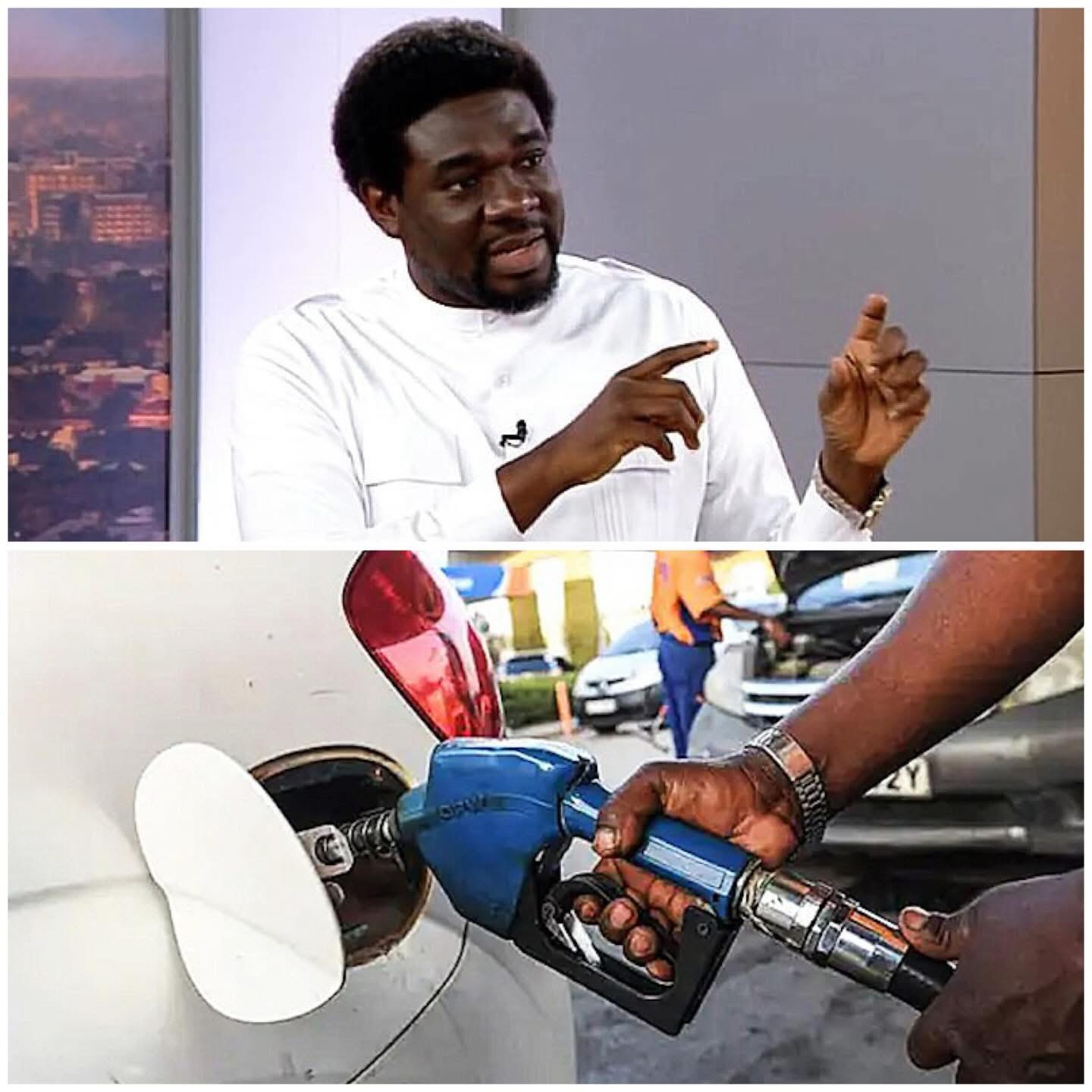
The Trade Union of Nigeria, TUC, has raised the alarm that the price of Premium Motor Spirit aka Petrol may climb to about N2,000 per litre if urgent measures are not taken to cushion the impact of rising global crude prices and the depreciating naira.
Speaking to newsmen on Thursday, April 9, the president of the TUC, Festus Osifo, called on the Federal Government to immediately deploy 60 percent of excess crude oil revenue above the 2026 budget benchmark to subsidise crude feedstock supplies to the Dangote Refinery and other modular refineries, a move it says will slash pump prices of petrol, diesel, and jet fuel within two weeks
“Today, comrades, we are seeing that the cost of petrol is edging towards N2,000 per litre depending on the part of the country that you are. Nigerian workers are already passing through excruciating pain as we speak.
The same way it is affecting transportation, it is also affecting manufacturing. The cost of diesel has also gone northward, meaning that the cost of production has increased. When production costs rise, the final price of goods on the shelves will also skyrocket.
If this continues unchecked, the inflation that we are currently celebrating as going downwards will reverse and start moving up again,” he stated.
Osifo outlined the proposal as an urgent intervention to cushion Nigerian workers from excruciating pain caused by petrol prices edging towards ₦2,000 per litre in some parts of the country
News
Cameroon’s President, Paul Biya Set To Get A Vice President For The First Time In His 43-Year Rule
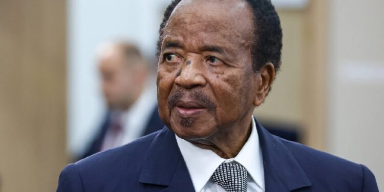
Cameroon’s president, Paul Biya, is set to get a vice president for the first time in his four-decade rule, following controversial constitutional changes backed by the parliament.
In a joint session of the ruling party-dominated National Assembly and Senate, lawmakers voted 200 to 18 in favour, with four abstentions, to pass the bill.
The bill stipulates that the vice president will automatically assume the presidency if President Paul Biya dies, resigns, or becomes incapacitated.
Biya, 93, has led the Central African country since 1982 and is the world’s oldest serving head of state. Public discussion about his health is banned.
According to the legislation, a copy of which was seen by Reuters, the vice president will be appointed and dismissed by the president, serving for the remainder of the president’s seven-year term.
However, the interim leader would be prohibited from initiating constitutional changes or running in a subsequent election.
Prior to the amendment, the constitution designated the leader of the Senate to briefly take over in case the sitting president d!es or is incapacitated. An election would then be held.
The Social Democratic Front (SDF) party, which has six representatives in parliament, boycotted the vote. It had pushed for a revision in favour of the vice-president being jointly elected with the president, rather than appointed.
The party also sought a constitutional provision that reflects the linguistic split between English and French-speaking regions. The SDF wanted the nation’s top two posts to be shared between Cameroon’s two communities, which was the position before 1972.
“This constitutional reform could have been a moment of political courage, but it is nothing less than a missed historic opportunity,” SDF chairman Joshua Osih said.
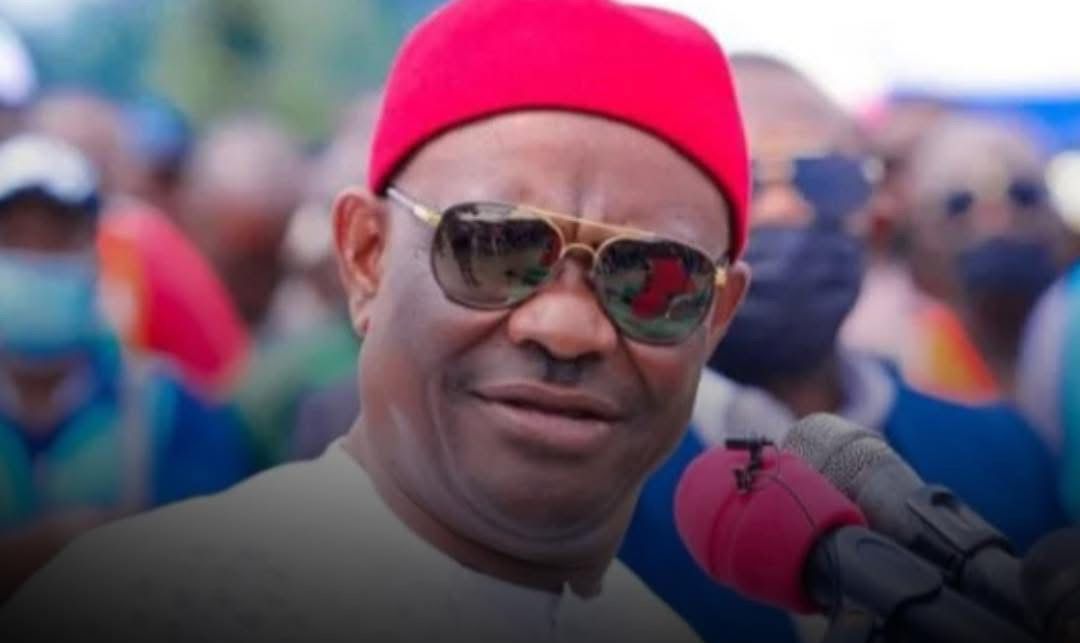
Minister of the Federal Capital Territory, Nyesom Wike, has highlighted the ongoing challenges of tax collection, pointing out the disparity between citizens’ expectations and the reality of government revenue.
Speaking with TVC NEWS live, he stressed that while Nigerians expect quality infrastructure and services, there is widespread reluctance to contribute through taxes.
On the difficulty of generating revenue, Wike said: “To collect tax, you know it’s not an easy thing. I don’t know how many of you here like to pay tax. Nigerians want everything for free. They want road, they want light. It is not easy.”
He further stated; “When I came to Abuja we were about 8, 9 billion. The money we get from the federal government is 1% of the allocation of federal government. So if federal government gets 1 trillion for example, they’ll give us one percent which is ten billion naira and that cannot carry the society. Our salary in a month is not less than 12–13 billion, so we must augment. How do we augment?”
Addressing public criticism, he added: “There’s no ab¥se that any politician has received than me. I think after the president, I’m the highest ab¥sed. There’s nothing we do that we won’t get ab¥sed. Well, what is important to me is that I want to be concentrated to do the job.”
On oversight and accountability, Wike explained how closely he monitors the finances: “The money we have gotten from tax challenge me, minister FCT, what are you doing? I’ll show you as I sit here.”

David Mark Holds Secret Meeting With PRP Leaders as ADC Crisis Deepens

Chaos As Military Officers Exchange Blows During Tinubu’s Visit To Bayelsa (Videos)

HRH Ekwueme of Ochia Kingdom Iynched & kiIIed in Imo.

-
Business1 year ago
US court acquits Air Peace boss, slams Mayfield $4000 fine
-

 Trending1 year ago
NYA demands release of ‘abducted’ Imo chairman, preaches good governance
-

 Politics1 year ago
Mexico’s new president causes concern just weeks before the US elections
-

 Politics1 year ago
Putin invites 20 world leaders
-

 Politics1 year ago
Russia bans imports of agro-products from Kazakhstan after refusal to join BRICS
-
Entertainment1 year ago
Bobrisky falls ill in police custody, rushed to hospital
-
Entertainment1 year ago
Bobrisky transferred from Immigration to FCID, spends night behind bars
-
Education2 years ago
GOVERNOR FUBARA APPOINTS COUNCIL MEMBERS FOR KEN SARO-WIWA POLYTECHNIC BORI