
Business
President Tinubu Applauds NGX N100 trillion milestone, charges Nigerians To Invest More Locally

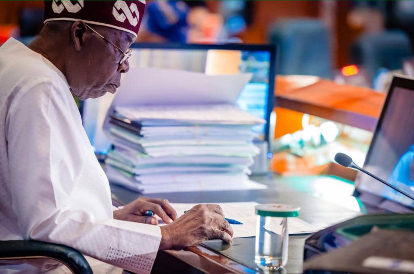
President Bola Tinubu has praised corporate Nigeria, citizens, and other stakeholders in the Nigerian capital market for surpassing the N100 trillion milestone on the Nigerian Exchange (NGX).
President Tinubu described this record achievement as an inspiration for the investing public operating in the money and capital markets.
He urged Nigerians to deepen their investments in the local economy, assuring that 2026 will yield even greater returns as his administration’s economic reforms continue to deliver stronger outcomes.
“With the Nigerian Exchange (NGX) crossing the historic N100 trillion market capitalisation mark, the country is witnessing the birth of a new economic reality and rejuvenation.
“In 2025, while many of the world’s markets struggled with stagnation or tepid recovery, the NGX All-Share Index was on the ascent. It closed 2025 with a 51.19% return, higher than the 37.65% recorded in 2024. This performance ranks among the highest in the world. Year-to-date returns have significantly outpaced the S&P 500, the FTSE 100, and even many of our emerging-market peers in the BRICS+ group.
“Nigeria is no longer a frontier market to be ignored—it is now a compelling destination where value is being discovered. As the stock market reflects the entire economy, its stellar performance is a significant indicator of the country’s economic health and the confidence investors have in our economy
“On the NGX, we have witnessed remarkable performances from listed companies across all sectors. From blue-chip industrial giants that have localised their supply chains, to a banking sector that has demonstrated resilience and technological innovation, Nigerian companies are proving that the country can deliver strong returns on investment.
“And we are just getting started. The pipeline for new and upcoming listings looks robust. More indigenous energy firms, tech unicorns, telecoms, and infrastructure-heavy entities are seeking to access the public market to fund their expansion. As these firms are listed, they will boost market capitalisation and deepen democratic ownership of the Nigerian economy.
“We are not celebrating the superlative stock market performance in isolation. We are also celebrating the microeconomic effects of our reforms. After the initial headwinds that followed our reforms, we are finally seeing a bend in the inflation curve. Crucial monetary tightening and the removal of distortionary ‘Ways and Means’ financing have restored stability to the Naira. Furthermore, investments in the agriculture sector have contributed to a consistent decline in inflation over the past eight months. From a 24-month high of 34.8% in December 2024, inflation decelerated to 14.45% as of November 2025, with projections indicating it will reach 12% in 2026. Indeed, inflation is likely to fall below 10 per cent before the end of this year, leading to improved living standards and accelerated GDP growth. The year 2026 promises to be an epochal year for delivering prosperity to all Nigerians.
“Also noteworthy is the status of our nation’s current account, a valid measure of our overall economic health. In 2024, Nigeria posted a surplus of $16 billion. According to the Central Bank of Nigeria (CBN), our current account balance is projected to rise to $18.81 billion in 2026, up from $16.94 billion in 2025.
“Under our administration, Nigeria is exporting more and importing less of what we can produce locally. Non-oil exports surged by 48% by the third quarter of 2025, totalling N9.2 trillion. Exports to Africa alone rose by 97% to N4.9 trillion. Manufacturing exports increased by 67% year-on-year in the second quarter of 2025, suggesting a strong close to the year.
“Nigeria’s foreign reserves have crossed the $45 billion mark, giving the Central Bank the firepower to maintain stability. The Naira has stabilised, moving away from the volatility that once fuelled speculation. The Central Bank of Nigeria, in its latest outlook, projects foreign reserves will cross the $50 billion threshold in the first quarter of 2026.
“We are also seeing an expansion of the rail networks, the completion of major arterial roads and the revitalisation of our ports. With the transformative Lagos-Calabar and Sokoto-Badagry superhighways, the nation’s infrastructure is growing.
“Our medicare facilities are improving, and medical tourism costs are declining. Our students benefit from the Nigeria Education Loan Fund (NELFUND), and universities are receiving increased research grants.
“Nation-building is a process, not a destination. Hard work, sacrifices, and the focus of its citizens build a nation. The N100 trillion market capitalisation is a signal to the world that the Nigerian economy is robust and productive.
“As your leader, I pledge to continue working unrelentingly to build an egalitarian, transparent, and high-growth economy that will be further catalysed by the historic tax and fiscal reforms that came into full implementation from January 1,” President Tinubu said.
Bayo Onanuga
Special Adviser to the President
(Information and Strategy)
January 8, 2026





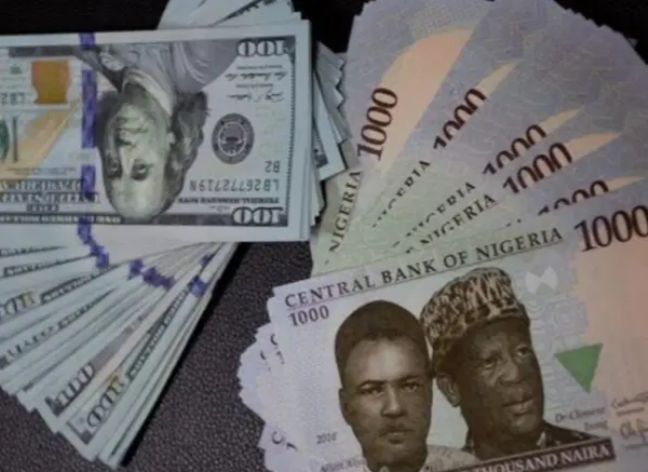
The Nigerian Naira maintained a steady performance against the US Dollar during early trading on Wednesday, February 25, 2026. Data from the Nigerian Foreign Exchange Market (NFEM) and informal sources indicate that the currency is benefiting from a period of lower volatility, supported by consistent policy measures from the Central Bank of Nigeria (CBN).
Official Market Performance (NFEM)
In the official window, the Naira was quoted at an opening rate of 1,351.13 per dollar. As the morning progressed, the rate experienced minor fluctuations, at one point touching 1,352.02 before retracing to 1,350.88 by 7:30 AM WAT. This reflects a stable trend compared to the closing rates observed at the start of the week.
The recent stability in the NFEM is largely attributed to the central bank’s ongoing strategy of maintaining a transparent price discovery mechanism. Authorized dealers report a healthy level of liquidity, which has prevented the sharp, unpredictable swings that characterized the market in previous years. The simple average or mean rate for the week continues to hover around the 1,348 mark, indicating a very narrow trading corridor.
Parallel Market Trends
The parallel market continues to shadow the official rate closely, with the US dollar being exchanged at rates ranging between 1,355 and 1,365 per dollar. The historically low spread between the official and “black market” rates—currently less than 1.5%—is a testament to the success of the current harmonization policies.
Traders in major financial hubs like Lagos and Kano note that while there is steady demand for small-scale retail transactions, the absence of massive speculative hoarding has kept the informal rate from breaking away from the official benchmark.
Key Economic Drivers
Several factors are influencing the Dollar-to-Naira pair this Wednesday:
Interest Rate Environment: The Monetary Policy Rate (MPR) currently stands at 26.50%, a high-yield environment that continues to attract foreign portfolio investment and encourages domestic savings in the local currency.
Inflationary Outlook: With January 2026 inflation recorded at 15.10%, the market is pricing in a “real rate” that is increasingly attractive to investors, providing a fundamental floor for the Naira.
Foreign Reserves: Robust external reserves, currently estimated at over 47 billion dollars, have given the CBN sufficient capacity to intervene and smooth out any temporary liquidity mismatches.
As the trading week continues, market analysts expect the Naira to remain within the 1,345 to 1,355 range in the official window, barring any unexpected shifts in global oil prices or major changes in the US Federal Reserve’s interest rate path.
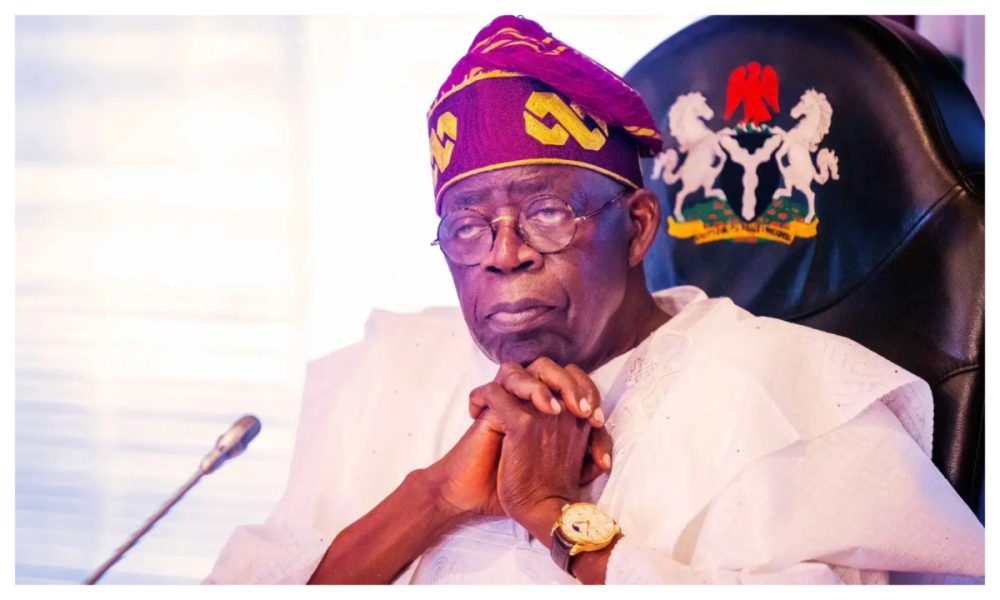
The Petroleum and Natural Gas Senior Staff Association of Nigeria, PENGASSAN, has given President Bola Tinubu conditions over the recent Executive Order, EO9, for remittance of oil and gas revenue to the Federation Account.
Speaking during an interview on Arise Television on Friday, the president of PENGASSAN, Festus Osifo, asked Tinubu to take back the Executive Order, set up a team, look at the PIA and identify where there are pros and cons.
Ekwutosblog reports that Tinubu signed an Executive Order, EO, to safeguard and enhance oil and gas revenues for the Federation.
The Executive Order also aims at curbing wasteful spending, eliminate duplicative structures in the critical sector of the national economy, and redirect resources for the benefit of the Nigerian people.
Meanwhile, PENGASSAN had called for continued stakeholder engagement following the Executive Order restructuring oil and gas revenue remittances.
Speaking during the interview, Osifo said, “You can review the law of the land. There’s no law that is perfect.
“We have heard in the last one year that the president was about to send an Executive Bill to the National Assembly to amend the PIA.
“That should be the direction. You don’t put the car before the horse. What the president should do is that take back the Executive Order, set up a team, look at the PIA, where there are pros and cons.
“And since you could amend the PIA, you take to the National Assembly and all the stakeholders will come there and make their inputs. That is how laws are refined. That is exactly what we want the president to do.
“The 2% that will be deducted from the NNPC by the President’s Executive Order is what the NNPC uses to say salaries.
“We all know that when revenue dries up in an organization, the first casualty is the workforce. The workers in NNPC today are an endangered species.”
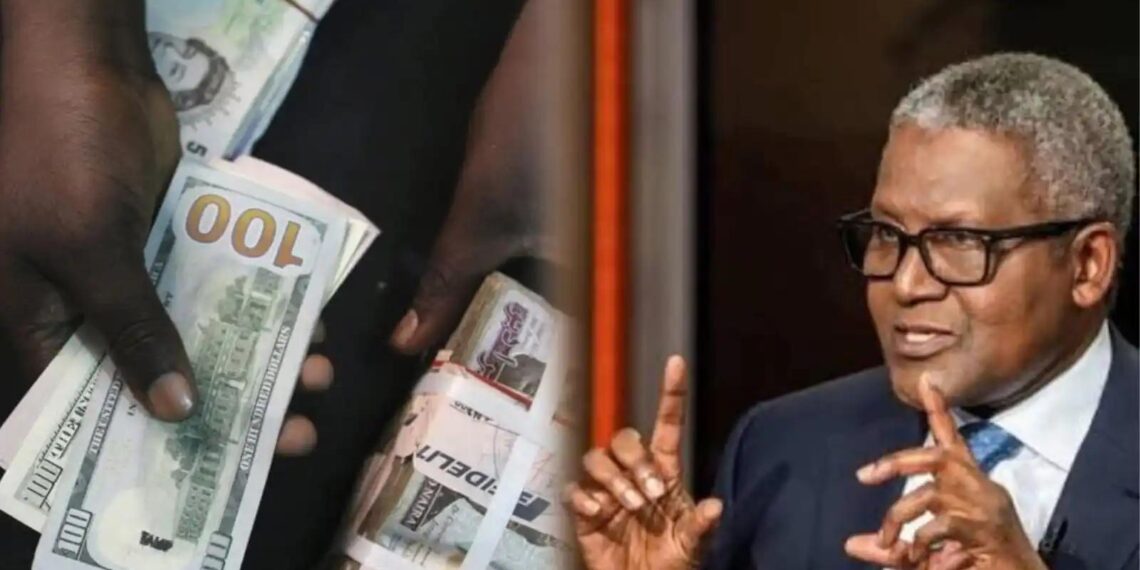
The Chairman of the Dangote Group, Aliko Dangote, has predicted that the naira will strengthen significantly this year, projecting that the currency could trade at ₦1,000 to $1.
Dangote made the remarks while speaking at the launch of the Nigeria Industrial Policy in Abuja, an event attended by Vice President Kashim Shettima and other top government officials.
Although the naira currently exchanges at around ₦1,300 to the dollar, Dangote expressed optimism that recent government reforms would yield positive results for the economy and manufacturers.
“I mean, today, if you look at it, Your Excellency, I believe with the policies that you have implemented in government, people now have started seeing the result, and manufacturers are very, very happy,” he said.
“Today, the dollar is N1,340. Mr. Vice-President, I can assure you that, with what I know, by blocking all this importation, the currency this year will be as low as N1,100 if we are lucky. The only thing is for, maybe, the government to stop the naira from getting stronger so that they will keep collecting more naira.
“But it’s a catch-22 situation where, now, if the naira gets stronger, it means that everything will go down. Everything will go down because we are an import-based country, which we shouldn’t be. What we should be doing is manufacturing all the things that we need.”
Dangote stressed the need to protect local investors through incentives and improved infrastructure, particularly reliable power supply, which he described as a major challenge for businesses.
He said that while the industrial policy framework is sound, it must be supported with strong protection measures for industrialists to achieve industrialization, job creation and economic growth.
Last week, Chairman of First HoldCo, Femi Otedola, also projected that the naira would appreciate to ₦1,000/$1 before year-end, attributing the expected gains to increased local refinery capacity.
Speaking at the same event, Vice President Shettima highlighted the crucial role of the private sector in driving the Nigeria Industrial Policy, noting that Dangote Cement alone paid ₦900 billion in taxes in 2025. The policy is expected to boost value addition, strengthen industrial linkages and enhance export competitiveness.
Other dignitaries at the event included the Secretary to the Government of the Federation, George Akume, representatives of the Manufacturers Association of Nigeria, the United Nations, and industry leaders.

Middle East war: No distress calls yet from Nigerians in Iran- FG

X user sparks debate on whether you should inform your brother’s wife before visiting his home

Hon Success Opara: Focusing on Business, Advocating for Good Governance, quits partisan politics for now.

-
Business1 year ago
US court acquits Air Peace boss, slams Mayfield $4000 fine
-

 Trending1 year ago
NYA demands release of ‘abducted’ Imo chairman, preaches good governance
-

 Politics1 year ago
Mexico’s new president causes concern just weeks before the US elections
-

 Politics1 year ago
Putin invites 20 world leaders
-

 Politics1 year ago
Russia bans imports of agro-products from Kazakhstan after refusal to join BRICS
-
Entertainment1 year ago
Bobrisky falls ill in police custody, rushed to hospital
-
Entertainment1 year ago
Bobrisky transferred from Immigration to FCID, spends night behind bars
-
Education2 years ago
GOVERNOR FUBARA APPOINTS COUNCIL MEMBERS FOR KEN SARO-WIWA POLYTECHNIC BORI