
Politics
REGIONALISM AND PARLIAMENTARY SYSTEM OF GOVERNMENT ARE NOT SOLUTIONS TO NIGERIA’S PROBLEM – EMIR OF KANO SANUSI

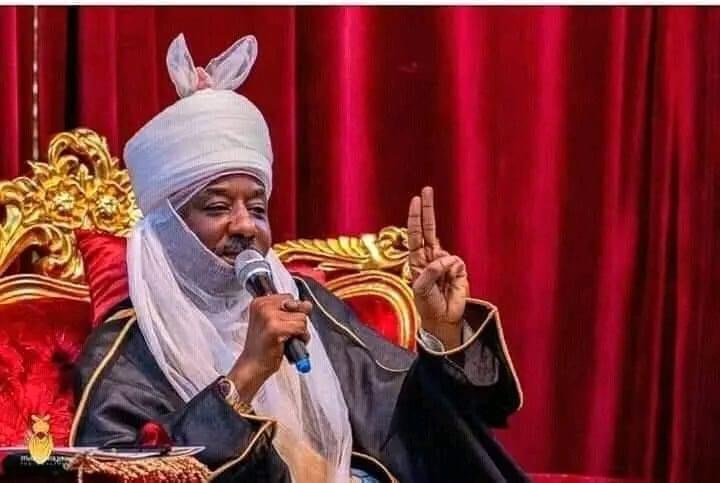
Emir of Kano, Muhammadu Sanusi II has said that regionalism and parliamentary system of government are not solutions to Nigeria’s problem.
Sanusi who said this in an interview with Vanguard, questioned the necessity of a bicameral legislature and the rationale behind appointing ministers from every state, even when not required. He noted that it contributes to bureaucratic inefficiencies and does not necessarily serve the best interests of the nation.
He also criticized the federal government’s interference in state matters, particularly regarding traditional and chieftaincy affairs. Emir Sanusi also stressed the importance of upholding constitutional principles and maintaining a clear separation of powers to ensure accountable governance.
The monarch who noted that regionalism will exacerbate the issues in the country rather than resolve existing tensions, also called for a more cohesive national identity and governance structure that promotes unity and accountability.
He said;
“I think there are several things we can do to address those structures because at the end of the day if you allow the state governors to run, the thing with devolution is we have 36 states, if only half of the governors are good, at least half of Nigeria has a good government. There is too much power at the centre, too much of the resources. The centre does not do primary education or primary healthcare, and that is where the vast majority of Nigerians are. Shouldn’t those resources come to the state? Instead of everybody going to Abuja, what is happening in Abuja? There are several issues that we need to look at. And also simple constitutionalism and federalism, just even the respect of separation of separation of power. If you take the example of what is happening in Kano today, chieftaincy matter is 100 per cent a state matter.
“We had a parliamentary system in the First Republic. What happened? At the end of the day, it is the humans that operate the system. People talk about regions. Initially, the regions we had in this country were North, East, and West, and then it became NorthEast and MidWest. Where did the creation called six geo-political zones come from historically? We can keep dividing and subdividing this country and thinking of ourselves, but are we really honest? Are these regions?
“If you go to the Niger Delta, since when did the Itsekiri stop fighting wars against the Ijaw? Since when did we become homogeneous?
“It was the Sokoto Jihad that brought us together. From the Sokoto caliphate, we became Northerners, from Northerners, we became Nigerians. When I was in King’s College, I grew up under Yakubu Gowon in a country where Nigerians were thinking like Nigerians. What happened? Political leadership is the one that exploits regional and ethnic identities as part of the struggle for political office.
“When they get there, they all sit together. If you look at the president’s cabinet, what do you have? You have everybody from every state. You have Christians, you have Muslims, you have Northerners and Southerners. Why are they not fighting one another in there? The elites are irresponsible.
“Don’t think that pandering to these elites by saying the solution is going to a regional system of government. How do we go regional? In Yorubaland, there are Ijebu, Ekiti, Ijesha, Owo, and Egba since when did they become one? Right there between Ife and Modakeke, they were killing each other. It is not about that. It is not a solution. How many parts are you going to slice this country to get a homogenous country? How? With all the intermarriages and education, I am not sure that is a solution, and I think people have this dream that can only be sold by blocking out history.
“We had a regional system in the First Republic. How did it end? We had a parliamentary system in the First Republic. How did it end? I am not talking about the coup; I am talking about the crisis that led to the coup. Before Nzeogu, forget Ironsi. How was the system before they came? Is there any documentary evidence that that system was fundamentally better than what we have?
“We can’t shift responsibilities away from human beings, the people who are responsible for operating the system. If you go to the Senate and the House of Representatives, and you are there for 16 years and you have never passed a bill, you don’t even know that your job is to be a lawmaker.”




Politics
ADC Owerri Municipal Gets New Chairman: Hon. Success Opara Emerges Amidst State Leadership Tussle
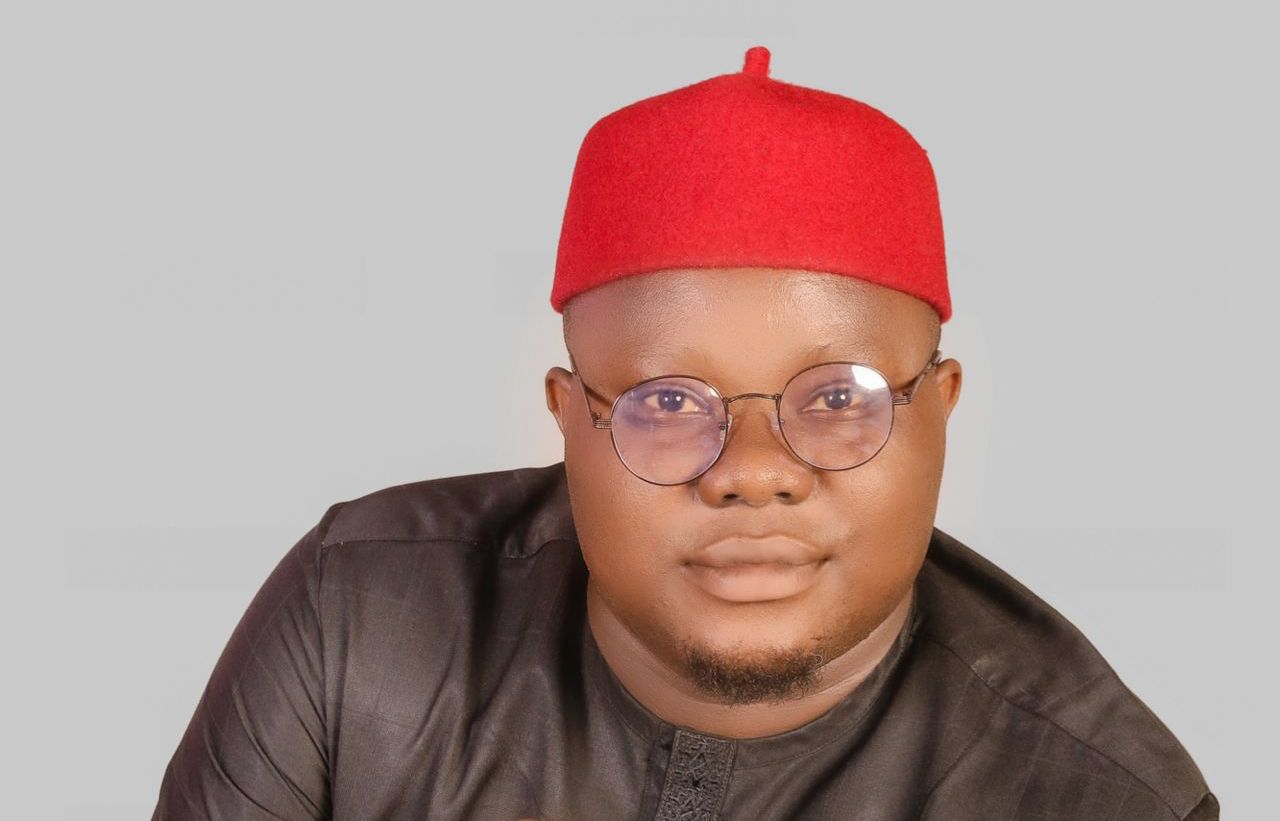
The African Democratic Congress (ADC) in Owerri Municipal, Imo State, has concluded its Local Government Area Congress, with Hon. Success Opara emerging as the new Chairman. The congress, conducted in all wards across Owerri Municipal, saw party faithfuls voting for Opara, who is expected to lead the party to victory in future elections.
However, there’s an ongoing leadership tussle within the Imo State ADC, with Chief Emmanuel Amushie claiming to be the authentic state chairman, recognized by the Independent National Electoral Commission (INEC). On the other hand, Prof. James Okoroma has also been declared the authentic state chairman by the national leadership of the ADC.
On the other hand Independent National Electoral Commission (INEC) has removed the faction led by Prof. James Okoroma as the recognized leadership of the African Democratic Congress (ADC) in Imo State, as of April 9, 2026. INEC recognizes only the Amuchie-led Executive as the lawful and legitimate leadership of the ADC in Imo State.
The removal follows a Court of Appeal ruling directing parties to maintain the status quo pending the determination of a substantive suit before the Federal High Court. INEC has also suspended recognition of all leadership factions of the ADC until the court reaches a final decision.
Politics
‘If Wike Fails To Apologize To Okinbaloye, We Will Boycott All Press Briefings’ – Broadcasters Warn
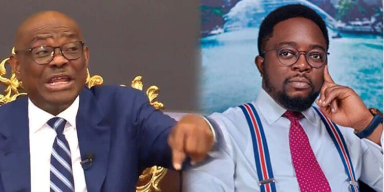
The Independent Broadcast Association of Nigeria (IBAN) has asked the Minister of the Federal Capital Territory, Nyesom Wike, to retract a controversial remark he made about a journalist with Channels Television, Seun Okinbaloye.
IBAN, the umbrella body for independent broadcast stations in Nigeria, also warned that it may boycott all media engagements organized by the minister if he fails to issue a public apology.
In a statement signed by Ahmed Ramalan, IBAN Chairman, and Fidelis Duker, Acting General Secretary, the association expressed concern about the implications of the comment aired during a live television interview.
The controversy stemmed from a remark made by Wike during a routine media chat on Friday, when he reacted to Okinbaloye’s commentary on the trajectory of Nigeria’s democracy while watching the program Politics Today.
“If there was any way to break the screen, I would have shot him,” Wike had said.
The minister later clarified to journalists present that the statement was not a literal threat.
On Saturday, Lere Olayinka, Senior Special Assistant on Public Communications to the minister, described the comment as “hyperbolic”, arguing that it had been taken out of context by critics.
However, IBAN maintained that the remark was inappropriate for a public official, even if it was not intended as a literal threat.
The association said statements suggesting violence could easily be interpreted as intimidation of journalists.
IBAN warned that comments implying violence could contribute to a hostile environment for media practitioners.
The group noted that Nigeria currently ranks 122 out of 180 countries on the global press freedom index, adding that journalists already face numerous challenges.
According to the association, these include surveillance, attacks, and arbitrary arrests.
The association called on the minister to withdraw the remark and apologise publicly to the journalist and the wider media community.
IBAN also urged Wike to reaffirm his commitment to press freedom in accordance with Sections 22 and 39 of the 1999 Constitution.
“Should the minister fail to meet these requests within a reasonable period, IBAN will have no choice but to advise all independent broadcast stations to suspend coverage of all press briefings, media chats, and official news conferences hosted by the FCT minister,” the statement read.
Despite its warning, the association said it remains open to constructive engagement with public officials.
“We hope the minister will take the necessary corrective action so that normal coverage can continue without interruption,” IBAN added.
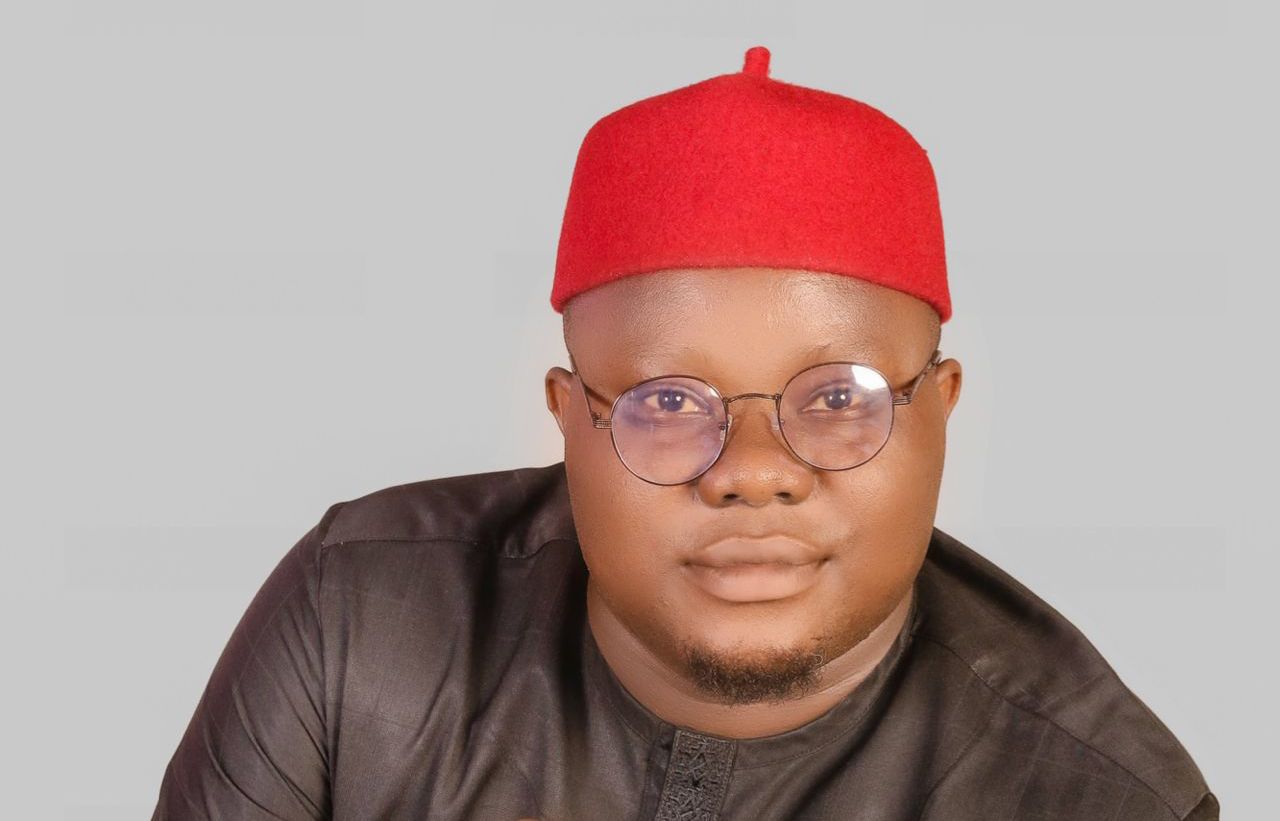
In a heartfelt message, Hon Success Opara has extended warm Easter greetings to Nigerians, celebrating the resurrection of Jesus Christ. Speaking at St. Peter Anglican Church Ikengbu, Opara emphasized the significance of Easter, saying, “He is risen! May the miracle of Easter bring you renewed hope, faith, and joy. Rejoice in the promise of new life and the joy that conquered everything.”
The lawmaker prayed for Nigerians to experience the transformative power of the resurrection, urging them to find solace in the promise of eternal life. “As we commemorate this sacred occasion, let us reflect on the values of love, compassion, and forgiveness that Jesus Christ embodied,” he said.
Hon Opara’s message was filled with Easter cheer, as he wished Nigerians a joyous celebration with family and loved ones. “May the spirit of Easter fill your heart with peace, hope, and renewed faith. Happy Easter!”
The Easter celebration at St. Peter Anglican Church Ikengbu was marked with prayers, hymns, and reflections on the significance of Christ’s resurrection.

ADC Owerri Municipal Gets New Chairman: Hon. Success Opara Emerges Amidst State Leadership Tussle

Abuja hotel collapse: Wike orders arrest of owner, to convert land to public use

How Yakubu Gowon found himself in the Army

-
Business1 year ago
US court acquits Air Peace boss, slams Mayfield $4000 fine
-

 Trending1 year ago
NYA demands release of ‘abducted’ Imo chairman, preaches good governance
-

 Politics1 year ago
Mexico’s new president causes concern just weeks before the US elections
-

 Politics1 year ago
Putin invites 20 world leaders
-

 Politics1 year ago
Russia bans imports of agro-products from Kazakhstan after refusal to join BRICS
-
Entertainment1 year ago
Bobrisky falls ill in police custody, rushed to hospital
-
Entertainment1 year ago
Bobrisky transferred from Immigration to FCID, spends night behind bars
-
Education2 years ago
GOVERNOR FUBARA APPOINTS COUNCIL MEMBERS FOR KEN SARO-WIWA POLYTECHNIC BORI