
Columns
Rotimi Akeredolu and Betty Anyanwu: Wedding Day, 1981

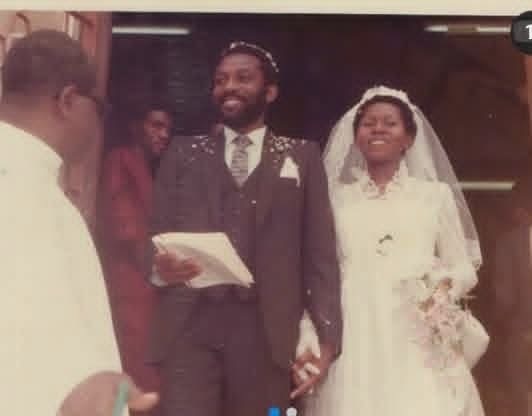
A rare glimpse into the early life of Rotimi Akeredolu and Betty Anyanwu, capturing the beginning of a lifelong partnership that would span over four decades.
A Milestone Union
The photograph captures the wedding of Rotimi Akeredolu and Betty Anyanwu in 1981—a day that marked the beginning of a partnership lasting more than four decades. The couple’s love and shared commitment were later celebrated with their 40th wedding anniversary in April 2021, a testament to their enduring bond.
Rotimi Akeredolu: Lawyer, Politician, and Governor
Rotimi Akeredolu was a prominent Nigerian lawyer and politician, widely respected for his legal acumen and leadership. He served as the Governor of Ondo State from 2017 until his passing on December 27, 2023, while still in office.
Legal Career: Akeredolu had a distinguished career in law, earning recognition as a Senior Advocate of Nigeria (SAN).
Political Leadership: As governor, he focused on state development, infrastructure, and governance reforms.
Legacy: His tenure is remembered for efforts to improve the welfare of Ondo State citizens and strengthen democratic institutions.
Partnership with Betty Anyanwu
Betty Anyanwu, his wife, stood by him through both personal and professional milestones. Their marriage provided the emotional and moral support that underpinned Akeredolu’s work in law and politics. Together, they navigated the challenges of public life, balancing family, governance, and service to the community.
Their wedding day photo, shared on social media on July 2, 2024, offers a rare glimpse into the couple’s early life together and the foundation of a lifelong partnership.
Legacy of Love and Service
The union of Rotimi Akeredolu and Betty Anyanwu symbolizes more than a personal relationship; it represents shared resilience, commitment, and mutual support. Their marriage endured through decades of public service, political challenges, and personal milestones, leaving an indelible mark on Ondo State and Nigeria at large.
Sources
Social media post, July 2, 2024
Nigerian Government Records and Media Archives
Photo: Wedding of Rotimi Akeredolu and Betty Anyanwu, 1f981







Columns
General Muhammadu Buhari and Oba Mustapha Olawore Olanipekun: A Meeting of State and Tradition
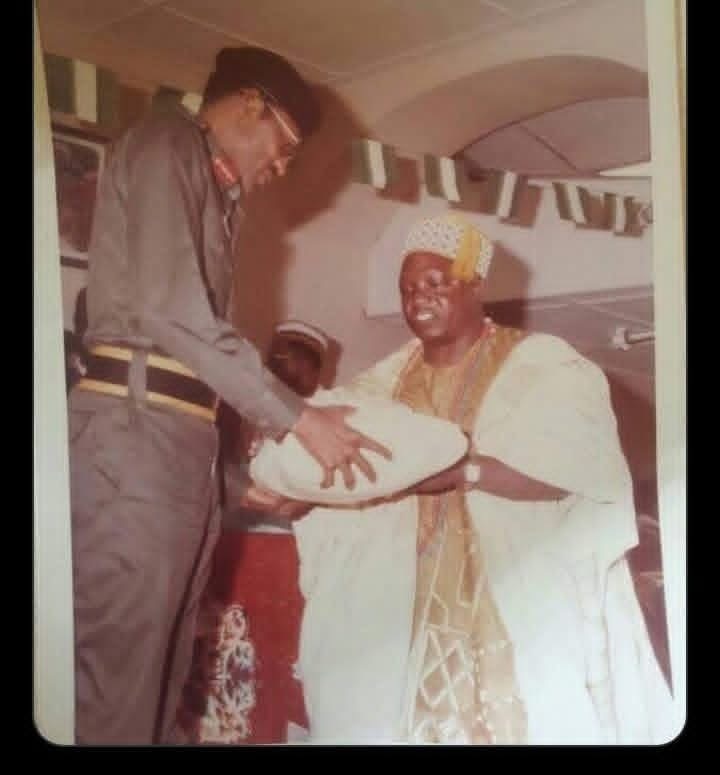
A historic moment reflecting the relationship between Nigeria’s national leadership and traditional authority.
A Photograph of Political and Traditional Authority
A notable photograph captures Muhammadu Buhari, Nigeria’s former military Head of State and later President, during a formal visit to Offa, where he is seen alongside Mustapha Olawore Olanipekun, the late Olofa of Offa.
The image reflects a long-standing practice in Nigeria in which national political leaders pay courtesy visits to traditional rulers. Such encounters serve both ceremonial and practical purposes, reinforcing the relationship between the modern political system and indigenous institutions of authority.
In many communities, traditional rulers remain influential figures whose roles extend beyond cultural leadership to include mediation, community development advocacy, and preservation of local heritage.
Muhammadu Buhari: Soldier, Head of State, and President
Muhammadu Buhari was born on 17 December 1942 in Daura. He built a long career in the Nigerian military and rose through the ranks during a period when the armed forces played a central role in governance.
Following the 1983 Nigerian military coup, Buhari became Nigeria’s Head of State, ruling from 1983 to 1985.
Decades later, he returned to national leadership through democratic elections. In 2015, he was elected President of Nigeria and served two terms, remaining in office until 2023.
Throughout his political career, Buhari became widely known for:
His military discipline and leadership style
A strong emphasis on anti-corruption policies
National security initiatives
Long involvement in Nigeria’s political landscape
Oba Mustapha Olawore Olanipekun: The Ariwajoye II of Offa
The monarch seen with Buhari in the photograph is Oba Mustapha Olawore Olanipekun, who ruled as Olofa of Offa under the regnal title Ariwajoye II.
He ascended the throne in 1969, with formal government recognition following in 1970, and remained on the throne until 2010. His reign lasted more than four decades, making him one of the longest-serving traditional rulers in the region.
During his reign, the town of Offa witnessed several improvements and development initiatives, including:
Reconstruction and expansion of the Olofa’s palace
Civic and community development projects
Strengthening the traditional institution in Offa
Oba Olanipekun became known locally as a respected monarch whose leadership contributed to the continuity and prestige of the Olofa stool.
Offa and the Olofa Stool
Offa is an important historical town in Kwara State Nigeria, with deep cultural roots within Yoruba civilisation.
The Olofa of Offa is the traditional ruler and custodian of the town’s cultural heritage. The position carries both symbolic and administrative responsibilities, including:
Preserving traditional customs and festivals
Representing the community in relations with government authorities
Supporting social and developmental initiatives within the town
Under Oba Olanipekun’s leadership, the institution maintained strong connections with both state and national leaders.
The Cultural Meaning of Such Visits
In Nigeria, visits by national leaders to traditional rulers hold significant symbolic meaning.
They demonstrate:
Recognition of traditional authority within the modern political system
Respect for community leadership structures
Cooperation between government institutions and local communities
Such visits often involve discussions on:
Local development needs
Community security issues
Cultural events and national unity
These interactions illustrate Nigeria’s dual system of authority, where modern democratic governance coexists with longstanding traditional institutions.
Legacy of the Meeting
Photographs like this capture more than a ceremonial moment. They represent the enduring relationship between state leadership and indigenous governance structures in Nigeria.
For Muhammadu Buhari, meetings with traditional rulers formed part of his broader engagement with communities across the country.
For Oba Mustapha Olawore Olanipekun, hosting national leaders reflected his stature as a respected monarch whose influence extended beyond Offa.
Together, the image stands as a reminder of how traditional authority and modern governance continue to intersect in Nigeria’s political and cultural life.
Sources
Historical records on Muhammadu Buhari
Community histories of Offa
Documentation of the reign of Mustapha Olawore Olanipekun
Nigerian studies on the role of traditional institutions in governance.
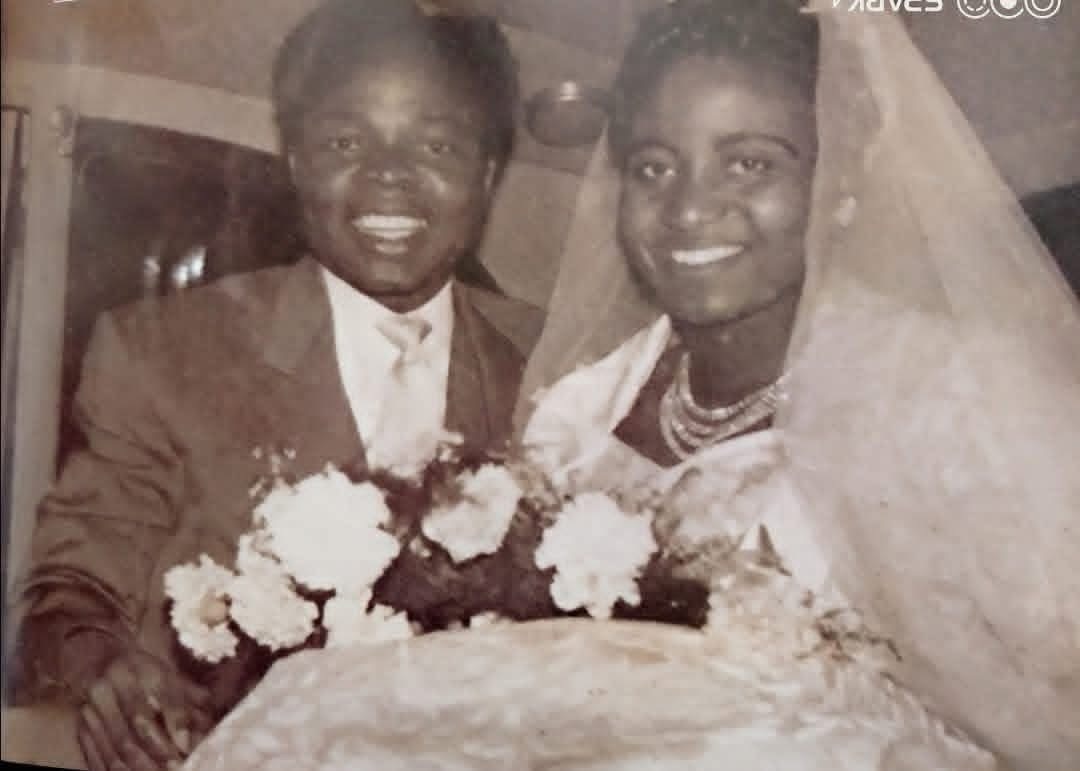
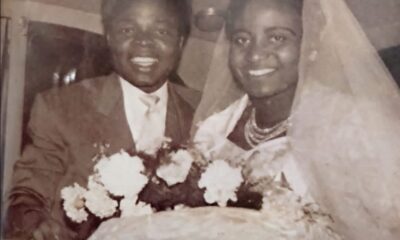
Celebrating the union of Justice Moronkeji Omotayo Onalaja and Margaret Folasade Onalaja, a partnership that preceded Nigeria’s independence and endured through decades of national transformation.
A Historic Union
On October 17, 1959, Moronkeji Omotayo Onalaja, then a young legal practitioner, married Margaret Folasade Onalaja. This photograph captures that seminal moment—a personal milestone set against the backdrop of a nation on the cusp of independence.
Their wedding reflects not only a union of two individuals but also the beginning of a lifelong partnership that would provide the personal foundation for Justice Onalaja’s future contributions to Nigeria’s judiciary.
Justice Onalaja’s Distinguished Legal Career
Moronkeji Omotayo Onalaja (1933–2017) went on to have a remarkable legal career, culminating in his appointment as a Justice of the Court of Appeal (JCA). Known for:
Integrity: Upholding ethical standards and fairness in judicial proceedings.
Judicial Excellence: Producing well-reasoned, impactful judgments across a wide range of cases.
Commitment to Justice: Ensuring that the rule of law guided his decisions.
In recognition of his contributions, he was awarded the Officer of the Order of the Federal Republic (OFR), one of Nigeria’s highest honors for public service. His work helped strengthen the judiciary during formative years in Nigeria’s post-independence era.
Partnership with Margaret Folasade Onalaja
Margaret Folasade Onalaja (1938–2002), his wife, was a steadfast companion throughout his career. Their marriage spanned decades, witnessing the challenges and triumphs of both personal life and national development. Together, they navigated Nigeria’s political and social changes, balancing family life with professional duties.
Their wedding photograph, taken in 1959, remains a symbol of enduring partnership, highlighting the personal dimension that supported Justice Onalaja’s public achievements.
Legacy
The legacy of Justice Moronkeji Omotayo Onalaja is not limited to the courtroom. It extends to the values exemplified in his marriage—loyalty, integrity, and dedication—that complemented his professional ethos.
This portrait is a quiet yet powerful reminder that behind every public figure lies a personal story, and in the case of Justice Onalaja, a life built on both commitment to the law and partnership with his wife.
Sources
Tribute to Hon. Justice M. O. Onalaja
Nigerian Legal Archives
Photo: Justice Moronkeji Omotayo Onalaja and Margaret Folasade Onalaja, 1959
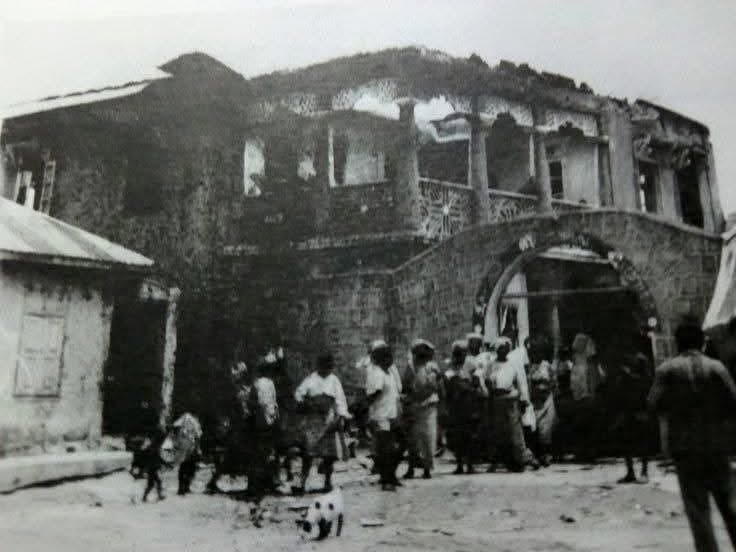
On July 1, 1969, the town of Ogbomoso witnessed one of the most dramatic and tragic episodes of the Agbekoya Revolt. During the unrest, Oba Olajide Adeoye, the traditional ruler of Ogbomoso, was killed when protesters attacked his palace.
Background: The Agbekoya Revolt
The Agbekoya uprising was a large-scale protest by farmers across the former Western State (today mostly Oyo State and surrounding areas). The name Agbekoya roughly translates from Yoruba as “farmers who reject suffering.”
The revolt began in 1968 and was fueled by several grievances:
Sharp increases in personal income taxes imposed on rural farmers
The introduction of utility levies despite limited infrastructure in rural areas
Poor road networks and lack of electricity or public services
Harsh tax enforcement methods used by local officials
These measures were implemented during Nigeria’s military rule under Yakubu Gowon, when the country was also facing economic pressures during the Nigerian Civil War.
Attack on the Palace
In Ogbomoso, tensions escalated dramatically when angry farmers stormed the palace of the Soun of Ogbomoso, Oba Olajide Adeoye. Protesters accused local authorities and traditional institutions of cooperating with the tax policies that burdened rural communities.
During the attack:
The palace was set on fire.
Oba Olajide Adeoye reportedly attempted to escape.
He was attacked by rioters and killed during the chaos.
The killing shocked the region and underscored the intensity of the revolt.
Government Response
The Nigerian authorities responded quickly to restore order:
Security forces were deployed to affected communities.
More than 500 suspects were arrested, including some women, in connection with the uprising and violence.
Eventually, negotiations between the government and farmers helped calm the situation. The authorities also reduced tax rates and modified enforcement practices, addressing some of the grievances that had triggered the revolt.
Historical Significance
The Agbekoya Revolt remains one of the most significant rural uprisings in Nigerian history. It demonstrated the political power of organized farmers and forced the government to reconsider rural taxation policies.
The tragic death of Oba Olajide Adeoye during the unrest is remembered as one of the most dramatic moments of the revolt and highlights the complex relationship between traditional leadership, government policy, and popular protest in Nigeria’s post-independence era.
Sources
The Agbekoya Uprising 1968–1969 by Toyin Falola
A History of Nigeria by Toyin Falola and Matthew M. Heaton
Nigerian historical archives on the Agbekoya Revolt and rural protests in Western Nigeria.

Police arrest five suspected armed robbers in Ibadan, recover exhibits

General Muhammadu Buhari and Oba Mustapha Olawore Olanipekun: A Meeting of State and Tradition

Justice Moronkeji Omotayo Onalaja and Wife: A Wedding Portrait, 1959

-
Business1 year ago
US court acquits Air Peace boss, slams Mayfield $4000 fine
-

 Trending1 year ago
NYA demands release of ‘abducted’ Imo chairman, preaches good governance
-

 Politics1 year ago
Mexico’s new president causes concern just weeks before the US elections
-

 Politics1 year ago
Putin invites 20 world leaders
-

 Politics1 year ago
Russia bans imports of agro-products from Kazakhstan after refusal to join BRICS
-
Entertainment1 year ago
Bobrisky falls ill in police custody, rushed to hospital
-
Entertainment1 year ago
Bobrisky transferred from Immigration to FCID, spends night behind bars
-
Education2 years ago
GOVERNOR FUBARA APPOINTS COUNCIL MEMBERS FOR KEN SARO-WIWA POLYTECHNIC BORI