
News
Strengthening Collaboration In Advanced Aerospace Technologies For Enhanced National and Regional Security Keynote Address By Governor Hope Uzodimma, CON, At The Fourth Africa Air Forces Forum In Lagos, Nigeria.

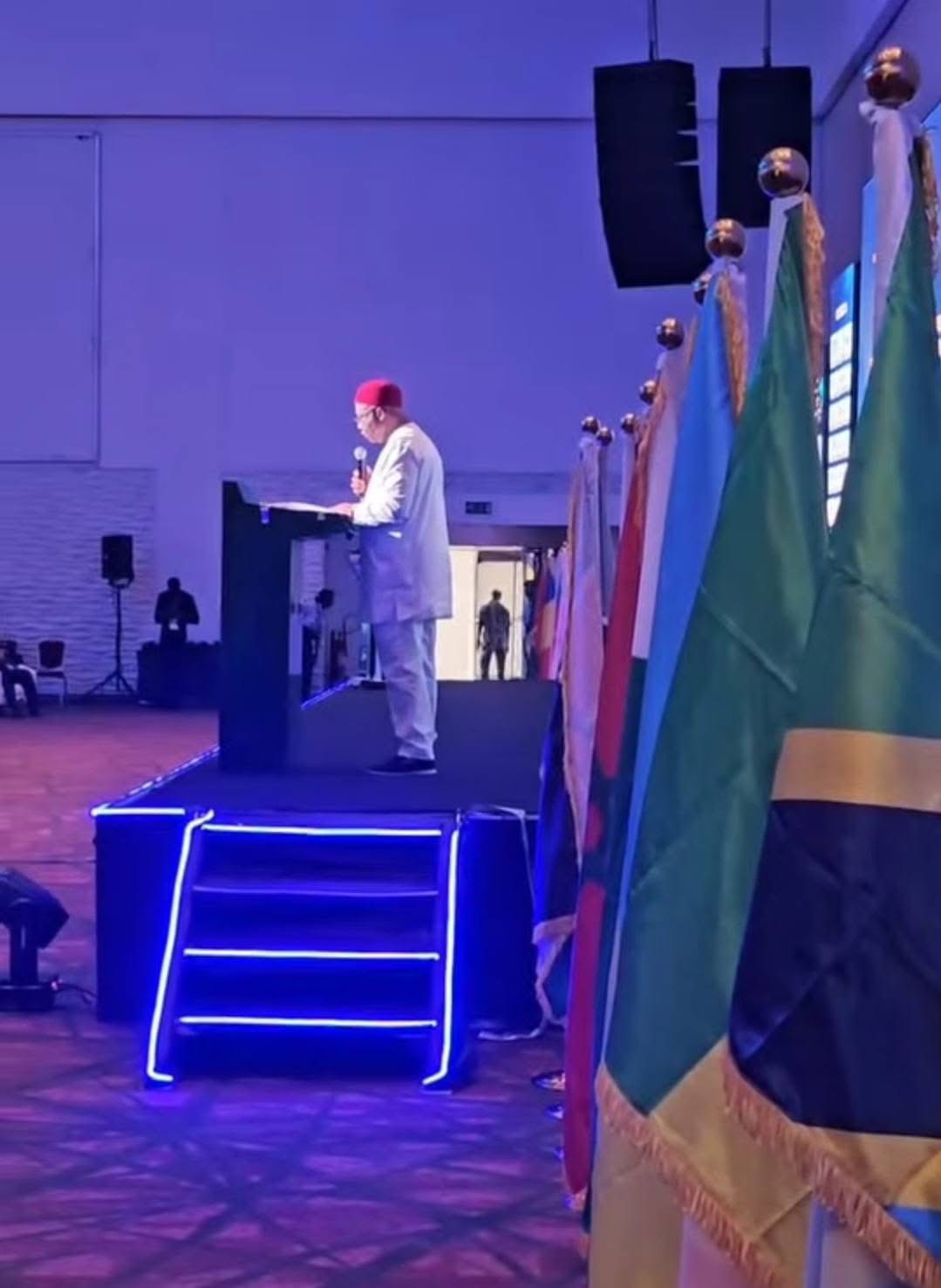
Strengthening Collaboration In Advanced Aerospace Technologies For Enhanced National and Regional Security
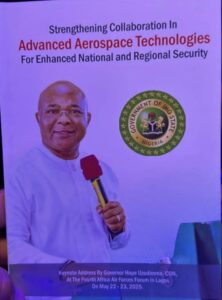
Keynote Address By Governor Hope Uzodimma, CON,
At The Fourth Africa Air Forces Forum In Lagos, Nigeria.
On May 22-23, 2025.
PROTOCOLS
I am deeply honoured to be invited to deliver this keynote address at this high-profile gathering of professionals and aerospace technology experts. This forum is both timely and auspicious.
Let me begin by warmly welcoming all participants,
especially those who have travelled from across Africa and around the world to be part of this historic event. I also bring you the warm greetings of the people of Imo State, who, like many Africans, place great hope in the shared security vision that this forum embodies.
I sincerely commend the foresight and leadership of
Nigeria’s Chief of the Air Staff, Air Marshal Hasan Bala
Abubakar DFS, and his African counterparts for putting this forum together. Your collective resolve inspires confidence in our defence capability as a region.
Airspace defines sovereignty. In today’s world, it also
shapes a nation’s survival. Across Africa, we are being
increasingly confronted by a complex web of transboundary threats, from terrorism and banditry to cyber incursions and resource-based conflicts. Borders or timelines do not confine these challenges. And as the threats evolve, so must our responses, not only in tactical precision but also in collaborative foresight.
We are reminded that airpower remains one of the most versatile tools of modern defence, offering speed, reach, deterrence, and intelligence superiority. However, although some African nations have built impressive capabilities, for example, Egypt has over 1,000 military aircraft, Algeria has 600-plus, and Nigeria maintains 163 aircraft, these numbers alone are insufficient. We need not only more aircraft but smarter integration of our air assets into a collective security architecture.
The Multinational Joint Task Force, which was created in response to the threat of Boko Haram, offers a case in point. Through such joint operations, we have achieved real gains in our efforts to secure our countries. We have neutralised terrorist strongholds, restored communities, and enabled safe resettlement. However, gaps remain in intelligence coordination, operational interoperability, and shared logistics. These must be addressed not in theory but through mechanisms we build together.
That task begins with a hard truth: Africa remains largely dependent on external suppliers for critical aerospace and defence needs. This reliance leaves us vulnerable to both market volatility and strategic manipulation. Yet across the continent, signs of transformation are emerging.
Nigeria’s Defence Industries Corporation is producing
small arms and experimenting with advanced platforms. Private firms like Proforce are manufacturing world-class Mine Resistant Ambush Protected vehicles, already deployed in Chad, Niger, and Rwanda. South Africa has doubled its defence exports since 2020, supplying Africa remains largely dependent on external suppliers for critical aerospace
and defence needs. This reliance leaves us vulnerable to both market volatility and strategic manipulation.
advanced systems and electronic warfare equipment.
Morocco has become a trusted aerospace manufacturing hub, producing for Airbus and other global Original Equipment Manufacturers (OEMs). Egypt and Algeria maintain mature domestic defence industries, while Ethiopia and Zambia have made strides in self-sufficiency and technology integration.
Most notably, at least 35 indigenous drone models are in development or active service across Africa. Nigeria leads in this domain, with 28 drone systems operational or undergoing tests. This is a powerful signal that we are not passive consumers of security technology; we are increasingly becoming architects of our solutions.
But intention must now meet execution. We must
translate our shared aspirations into binding frameworks: mutual defence agreements, co-development pacts, pooled logistics platforms, shared research infrastructure, and joint training protocols. These are not luxuries. In the face
of 21st-century threats, they are necessary instruments of survival.
Increased defence spending ($25 billion in Algeria, $13.4billion in Morocco, $3.1 billion in Nigeria) shows that we are willing to invest. However, we must align these investments with coherent goals. For instance, technology transfer, indigenous innovation, and workforce development. South Africa and Morocco have shown how aerospace progress fuels economic growth and job creation. We must take a cue from these countries.
The leadership of the Nigerian Air Force has adopted a self- reliant approach, reactivating long-abandoned aircraft, deploying locally developed Unmanned Aerial Vehicles (UAVs) like the Tsaigumi, and incorporating academic research into mission planning and systems design. This shift is redefining the scope of African-led innovation in defence.
Distinguished participants, this forum must now bear a new doctrine: an African aerospace doctrine. One rooted in local capacity, governed by shared standards, and fuelled by political commitment. Our continent has the institutions. The African Union and regional economic
“We must translate our shared aspirations
into binding frameworks: mutual defence
agreements, co-development pacts, pooled
logistics platforms, shared research
infrastructure, and joint training
protocols. These are not luxuries. In the
face of 21st-century threats, they are
necessary instruments of survival.”
communities already provide frameworks for collective action. What is left is the courage to act, the will to fund, and the discipline to implement.
The era when air superiority was seen as a privilege is gone. Now, it is a requirement for sovereignty and peace. As we reflect, I urge this distinguished body to move from principles to policies. African skies must not remain exposed and unprotected, and African solutions can no longer wait.
Thank you, and may your deliberations advance the cause of peace, prosperity, and security across our beloved continent.
Sen. Hope Uzodimma, CON
Governor, Imo State of Nigeria.





News
𝗛𝗢𝗡. 𝗧𝗢𝗦𝗞𝗔 𝗖𝗢𝗡𝗗𝗘𝗠𝗡𝗦 𝗧𝗛𝗘 𝗞𝗜𝗟𝗟𝗜𝗡𝗚𝗦, 𝗞𝗜𝗗𝗡𝗔𝗣𝗣𝗜𝗡𝗚𝗦 𝗔𝗡𝗗 𝗥𝗔𝗣𝗘𝗦 𝗜𝗡 𝗜𝗛𝗜𝗔𝗚𝗪𝗔, 𝗢𝗕𝗜𝗕𝗜𝗘𝗭𝗘𝗡𝗔, 𝗘𝗭𝗜𝗢𝗕𝗢𝗗𝗢, 𝗘𝗠𝗘𝗔𝗕𝗜𝗔𝗠, 𝗢𝗞𝗢𝗟𝗢𝗖𝗛𝗜, 𝗨𝗠𝗨𝗚𝗨𝗠𝗔, 𝗔𝗩𝗨 𝗔𝗡𝗗 𝗢𝗧𝗛𝗘𝗥 𝗖𝗢𝗠𝗠𝗨𝗡𝗜𝗧𝗜𝗘𝗦: 𝗖𝗔𝗟𝗟𝗦 𝗙𝗢𝗥 𝗜𝗠𝗠𝗘𝗗𝗜𝗔𝗧𝗘 𝗖𝗘𝗦𝗦𝗔𝗧𝗜𝗢𝗡
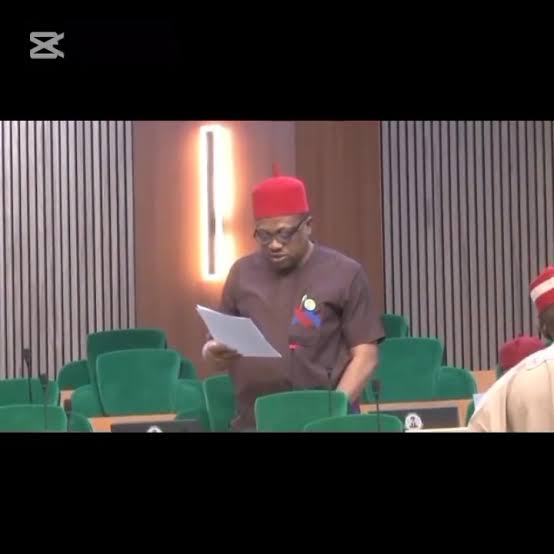
Hon. Sir Tochukwu Okere(TOSKA), Member Representing Owerri Federal Constituency, has strongly condemned the incessant gruesome killings, kidnappings, rapes and violent attacks carried out by unscrupulous and criminal elements terrorizing communities within Owerri Federal Constituency, especially in Ihiagwa, Obibiezena, Eziobodo, Emeabiam, Okolochi, Umuguma, Avu and other neighbouring communities.
The recent killings of vigilante operatives and innocent constituents at Umuguma and Ihiagwa call for urgent and deterrent response by our security agencies.
In a passionate motion raised before the Federal House of Representatives, Hon. Okere called on the Federal Government of Nigeria and relevant security agencies to immediately deploy adequate security personnel to the affected communities and take decisive actions against the worsening insecurity threatening the lives and properties of his people.
According to him, the continuous attacks on harmless villagers, farmers, women and youths can no longer be tolerated under any guise.
“I urge the Federal Government of Nigeria to urgently look into this motion and act swiftly before more innocent lives are lost. Our people deserve to live and to live in peace without fear of being kidnapped, raped or butchered in their own communities,” Hon. TOSKA stressed.
The lawmaker further emphasized that the people of Owerri Federal Constituency will not fold their arms and watch criminals continue to unleash terror across Ihiagwa, Obibiezena, Eziobodo, Emebiam, Okolochi, Umuguma, Avu and other communities while families continue to mourn their loved ones daily.
This courageous move by Hon. Sir Tochukwu Okere has continued to attract commendations from constituents who describe his intervention as timely, bold and people-oriented.
Hon. Okere is the light and the voice of Owerri Federal Constituency.
May God keep him to keep standing for us and for our interest.
News
TENSIONS RISE IN OGUTA LGA AS CHAIRMAN MOVED AHEAD WITH Town UNION ELECTIONS AGAINST STATE DIRECTIVE
By Nwauwa Ikedi Justice
An emerging standoff between the Oguta Local Government Area executive and the Imo State Government has sparked concerns of unrest in several communities, after the council chairman proceeded with plans to conduct Town Union elections in defiance of a statewide directive from Governor Hope Uzodimma.
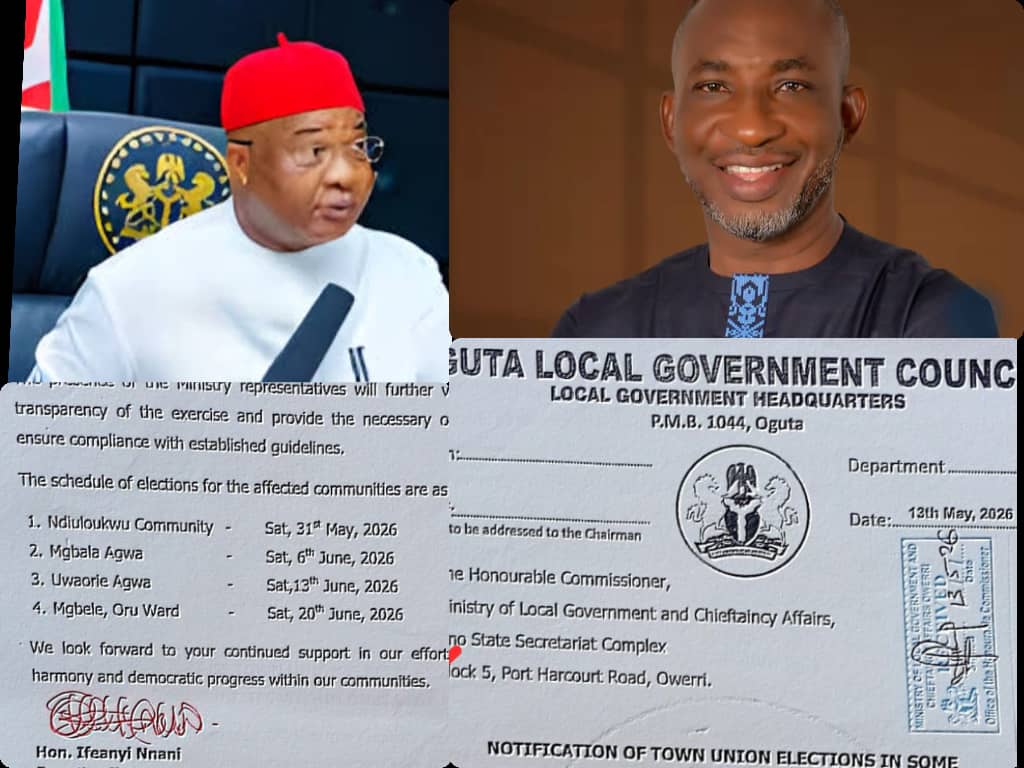
Last week, Hon. Ifeanyi Nnani, Executive Chairman of Oguta LGA, initiated steps to organize elections in five autonomous communities, an action seen by observers as a direct challenge to the governor’s order prohibiting local government chairmen from interfering in Town Union affairs.
The controversy stems from earlier complaints by traditional rulers across the state, who alleged that some local government chairmen had been imposing proxies as Town Union executives in their domains.
In response, Governor Uzodimma convened a statewide stakeholders’ meeting on January 17, 2026, at the Eze Imo Palace. Citing the Imo State Town Union Law No. 6 of 2003, as amended, the governor lifted the existing ban on Town Union elections and ruled that the process should be conducted in line with each community’s established customs. He also transferred supervisory responsibility from local government chairmen to the Ministry of Local Government and Chieftaincy Affairs, designating it the appropriate authority for such matters. The directive has since been credited with restoring relative peace across the state.
Despite this, sources indicate that Hon. Nnani’s administration has quietly begun conducting elections in villages within Oguta LGA without consulting the affected Town Unions or seeking clearance from the supervising ministry.
A letter dated last week and personally signed by the chairman to the Commissioner for Local Government and Chieftaincy Affairs has since come to light. Rather than seeking approval, the correspondence served as notification of the council’s intent to proceed with elections in Ndiuloukwu, Mgbala, Uworie, and Mgbele autonomous communities—a move that appears to contradict the state government’s directive.
The emergence of the letter has alarmed traditional rulers, with reports of growing unease in the affected communities. Community leaders have vowed to resist what they describe as an unlawful intrusion into their internal affairs.
Attempts to reach Hon. Nnani for comment have so far been unsuccessful, as calls to his office went unanswered.
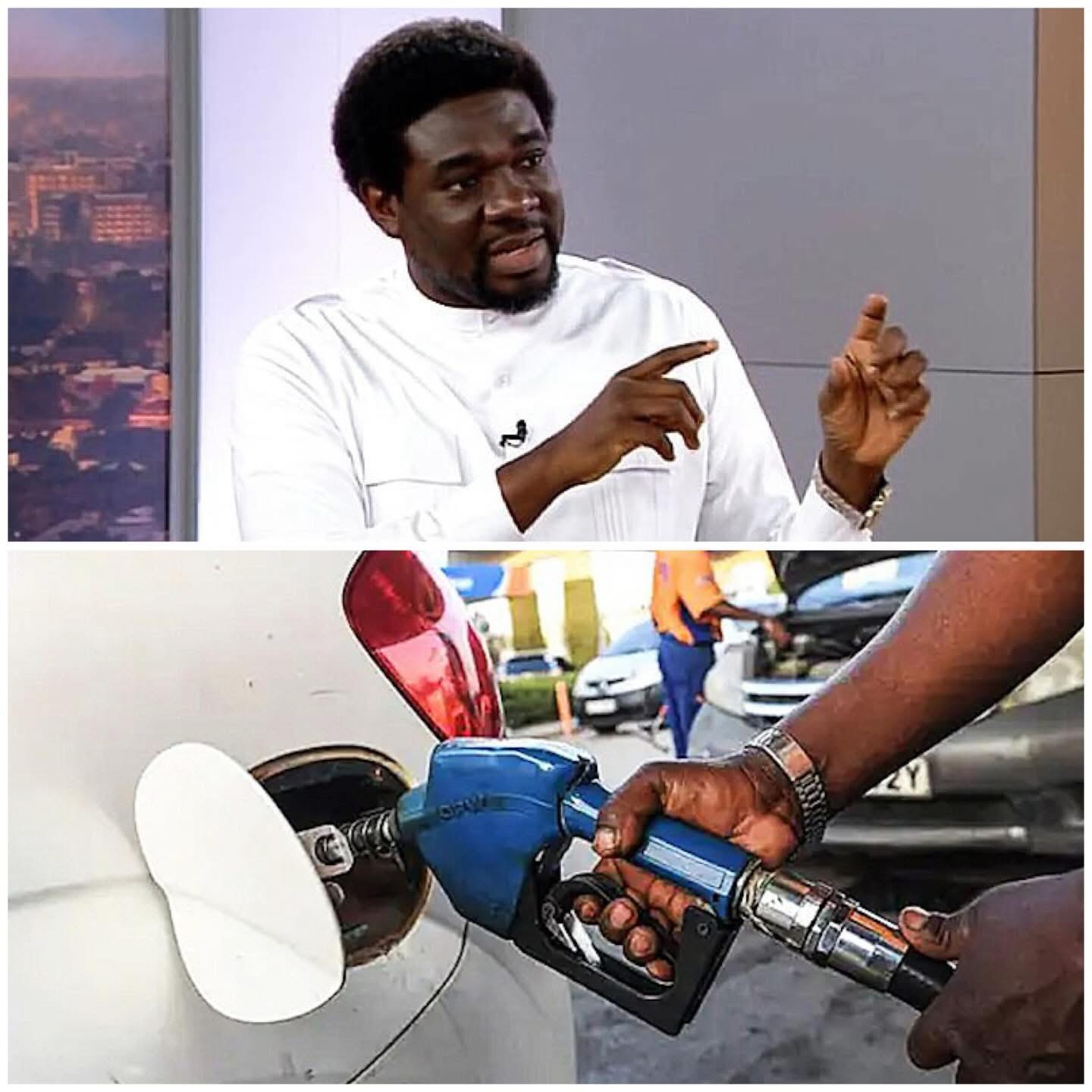
The Trade Union of Nigeria, TUC, has raised the alarm that the price of Premium Motor Spirit aka Petrol may climb to about N2,000 per litre if urgent measures are not taken to cushion the impact of rising global crude prices and the depreciating naira.
Speaking to newsmen on Thursday, April 9, the president of the TUC, Festus Osifo, called on the Federal Government to immediately deploy 60 percent of excess crude oil revenue above the 2026 budget benchmark to subsidise crude feedstock supplies to the Dangote Refinery and other modular refineries, a move it says will slash pump prices of petrol, diesel, and jet fuel within two weeks
“Today, comrades, we are seeing that the cost of petrol is edging towards N2,000 per litre depending on the part of the country that you are. Nigerian workers are already passing through excruciating pain as we speak.
The same way it is affecting transportation, it is also affecting manufacturing. The cost of diesel has also gone northward, meaning that the cost of production has increased. When production costs rise, the final price of goods on the shelves will also skyrocket.
If this continues unchecked, the inflation that we are currently celebrating as going downwards will reverse and start moving up again,” he stated.
Osifo outlined the proposal as an urgent intervention to cushion Nigerian workers from excruciating pain caused by petrol prices edging towards ₦2,000 per litre in some parts of the country

Fubara To Contest Rivers Governorship Seat Under NDC

Breaking: Tinubu Appoints 39 Year Old Professor As New Jamb Registrar

Desmond Elliot Withdraws from APC Lagos Assembly Primaries, Cites Intimidation

-
Business2 years ago
US court acquits Air Peace boss, slams Mayfield $4000 fine
-

 Trending2 years ago
NYA demands release of ‘abducted’ Imo chairman, preaches good governance
-

 Politics2 years ago
Mexico’s new president causes concern just weeks before the US elections
-

 Politics2 years ago
Putin invites 20 world leaders
-

 Politics2 years ago
Russia bans imports of agro-products from Kazakhstan after refusal to join BRICS
-
Entertainment2 years ago
Bobrisky falls ill in police custody, rushed to hospital
-
Entertainment2 years ago
Bobrisky transferred from Immigration to FCID, spends night behind bars
-
Education2 years ago
GOVERNOR FUBARA APPOINTS COUNCIL MEMBERS FOR KEN SARO-WIWA POLYTECHNIC BORI