
Politics
The APC Lacks Credibility To Discuss Debt Management In Delta State

The recent misguided propaganda by the Delta State Chapter of the All Progressives Congress (APC) to misinform the public on the debt management measures being undertaken by the administration of His Excellency, Governor Sheriff Oborevwori, was, at best, a shameless act of its characteristic duplicitousness.
In the release signed by its Publicity Secretary, Valentine Onojeguo, the APC merely tried to disinform the public by attempting to play down the significance of Governor Oborevwori’s act of responsibility in reducing the debt profile of the State to ensure greater financial stability and sounder economic health.
It is indeed strange that the APC in Delta State would pretend not to know the origin and the truth about the debt profile of the nation and the States. Let us remind them that through the mismanagement of the national economy by the APC-led Federal Government, from 2015 when it took over the reins of government with President Muhammadu Buhari, it has presided over heavy and reckless borrowing, escalating the national debt stock from about N7 trillion after the 16 years of the PDP governance, to over N90 trillion under its eight years, leading to a situation in which 97% of Nigeria’s national revenue was devoted to debt servicing and the attendant reduced revenue allocations to States and Local Governments.
While it failed woefully in managing the crude oil production capacity of the nation which it brought from over two million barrels per day to a low of about one million BPD, a huge chunk of the revenue receipts from even the low output had been devoted to their corruptive importation of petroleum products and payment of fuel subsidy, by which little or nothing was being returned to the federation account.
The situation was further worsened by its poor fiscal and monetary policies which steadily and increasingly devalued the Naira and posed inflationary difficulties across all sectors and segments of the nation.
The former Minister of Finance under Buhari, Zainab Ahmed, openly admitted in 2021 that, revenues were low and so were federal allocations to the States and Local Governments.
“The crash of the crude oil prices really hit us very hard in terms of revenue. We have very low revenues, we have very high expenditures. What we have done so far is just to provide some stability to make sure salaries are paid, pensions are received every month; that we send funds to the judiciary and the legislature; that we meet our debt service obligations. That’s what we are doing. It also means we have had to borrow more than we have planned.
“It is a very difficult time. I cannot explain to you how difficult it is, not just for the Federal Government but also for the States. We see increasing reductions in our FAAC revenues. So, FAAC reduces and whenever FAAC reduces, it is a very difficult situation.”
Those were the words of the former Minister of Finance of the APC government on the national economy.
Not only did the federal government try to sustain the economy purely on loans and more loans which were not applied to productive sectors nor effectively and equitably to infrastructural development, it also resorted to printing money which is the worst style of economic management.
During a Senate Committee hearing in March 2024, the current Minister of Finance and Coordinating Minister of the Economy, Wale Edun, gave a sordid picture of how the APC mismanaged the national economy, from 2015 to 2023.
“It came from eight years of just printing money not matched by productivity. It’s not like when you earn dollars, and you free the naira alongside it. We are going to audit even the N22.7 trillion printed aimlessly. The consequence of the eight years of printing money without productivity is high inflation confronting the country now,” he said.
Given this background of APC management of the economy from 2015 to 2023, as we have seen attested to by its Ministers of Finance, it can only be shameless pretence, though in line with its usual deceitfulness, for the APC to question why component States of the federation had to source market funds, including loans and bonds, to be able to function effectively in the service of their people.
According to the National Bureau of Statistics, Lagos, an APC State, led in the borrowing with close to N1 trillion.
“Lagos State recorded the highest domestic debt in Q2 2023 with N996.44 billion (and) recorded the highest external debt with US$ 1.26 billion, followed by Kaduna with US$569.38 million.”
Delta State, like all other States could not have been an exception in seeking ways and means to serve its people. With a total exposure of about N450 billion accumulated through the years into the first quarter of 2023, as forced mostly by consequence of APC mismanagement of the national economy, Delta State holds neither the highest domestic nor external debt, and the immediate past administration of His Excellency, Senator Dr. Ifeanyi Okowa, clearly outlined the infrastructure projects on which borrowed funds were applied, as are visible across the State.
However, in the current dispensation, even when the APC federal government and some other States have continued to borrow, Governor Sheriff Oborevwori has decided not only to hem borrowing but also to pay up and reduce inherited loans and interests in order to safeguard the State from the kind of debt service burden that has crippled the nation under the leadership of the APC.
Such commitment is not only noble, but can only be executed through a deep sense of leadership responsibility and financial prudence as Oborevwori is demonstrating.
In his 2024 budget appropriation, he was emphatic about keeping the State expenditure within revenue limits, reducing its debt profile and ensuring that the administration does not build new inflationary pressure through extra budgetary funding. In simple terms, his government is averse to borrowing, profligacy and expenditures that are not planned nor budgeted for.
It was for this reason that he cut down on various items relating to executive cost of running government while he increased the budget volume for projects and programmes directly related to providing for the people, communities and workers.
This was demonstrated in the reduction of Overhead Cost by N9.7 billion or 8.35%, from N116.2 billion in 2023 to N106.5 billion in 2024; the reduction of the vote for Grants and Contributions by N4.7 billion or 32%, from N14.7 billion in 2023 to N10 billion in 2024; the reduction of the capital vote for the Administration sector by N20.9 billion or 48%, from N43.6 billion in 2023 to N22.7 billion in 2024; and the drastic reduction of Contingency provision by N8.2 billion or 61.7%, from N13.3 billion in 2023 to just N5.1 billion in 2024.
While the budget made a provision of N50 billion for possible receipts from loans, it is on record that the administration has not borrowed a dime in its almost fifteen months, notwithstanding the financial requirements for the execution of high level infrastructure projects, workers and social welfare investments, and human capital development programmes being churned out across the State.
Rather, Oborevwori has saved over N205 billion through financial efficiency and gone on to reduce the State debt profile by N180 billion.
It is these achievements in the financial management of the State that the APC is quarreling with.
But see why we will not bother about their charade: They want the State to be run the way APC has misrun the national economy since 2015, in which through their reckless borrowings they led Nigeria into servicing its debts hanging with over 97% of its national revenue, and borrowing evermore in the attempt to sustain the economy on borrowed life wire, while actually crashing it. God forbid that to happen in Delta.
On the contrary, Oborevwori is determined to manage Delta into a debt-free State.
Thankfully, from the relative increase in oil production output, especially in Delta as occasioned by Oborevwori’s efficient management of relations with oil producing communities, there is increased allocation to the State and he is focused on managing the State economy within its means, including intensified IGR, to administer the State in such manner that debts would not be left for coming generations and administrations to inherit as the APC does and would want to see in Delta State.
Signed:
Engr. Dan Ossai, MNSE, CEng.
State Secretary,
PDP, Delta State
12th August, 2024



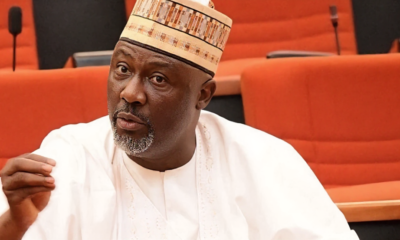



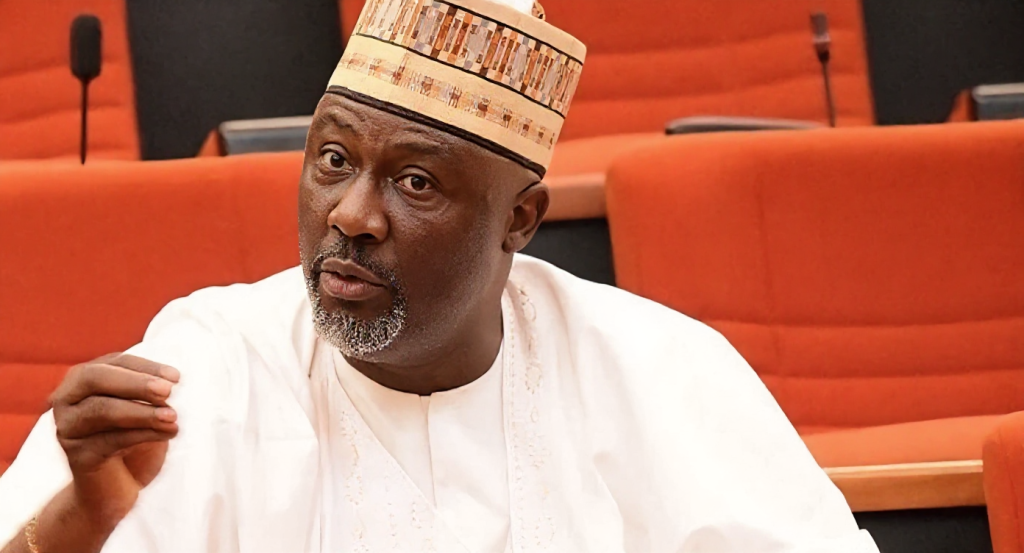
Former lawmaker, Dino Melaye Esq, has raised concerns over the Senate’s reported rejection of the electronic transmission of election results.
The move, according to Melaye, is a clear endorsement of election rigging and an indication of a sinister plan to rig the 2027 elections.
In a statement on Friday, the former lawmaker criticized the Senate’s decision, stating that it undermines the credibility of the electoral process.
The African Democratic Congress, ADC chieftain, also stated that the move opens the door for electoral manipulation and fraud.
He further warned that the rejection of electronic transmission of results is a step backwards for democracy in Nigeria.
Melaye called on lawmakers and citizens to stand up against “this blatant attempt to undermine the will of the people and ensure that future elections are free, fair, and transparent”.
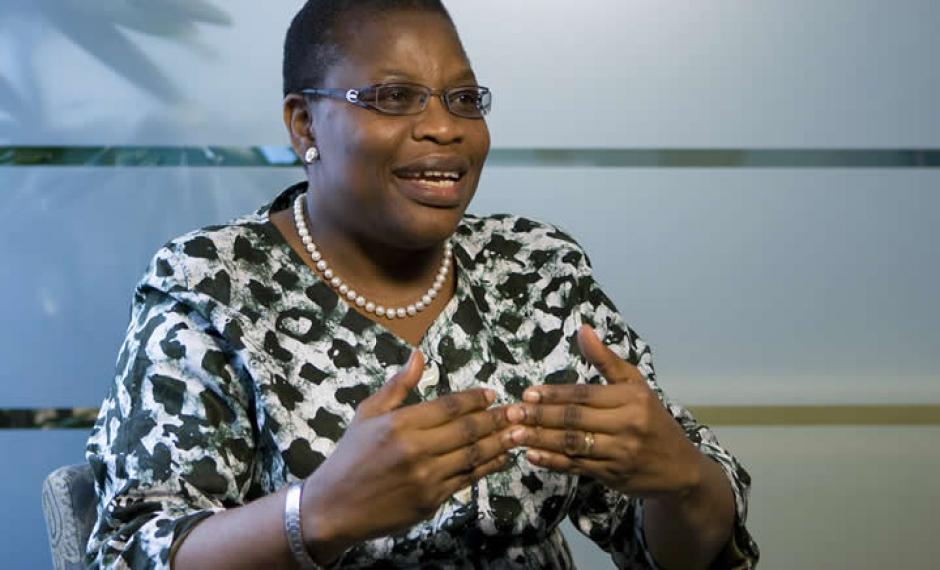
Former Minister of Education, Oby Ezekwesili, has said Nigerians have every reason to be mad at the Senate over the ongoing debate on e-transmission of election results.
Ezekwesili made this known on Friday when she featured in an interview on Arise Television’s ‘Morning Show’ monitored by DAILY POST.
DAILY POST reports that the Senate on Wednesday turned down a proposed change to Clause 60, Subsection 3, of the Electoral Amendment Bill that aimed to compel the electronic transmission of election results.
Reacting to the matter, Ezekwesili said, “The fundamental issue with the review of the Electoral Act is that the Senate retained the INEC 2022 Act, Section 60 Sub 5.
“This section became infamous for the loophole it provided INEC, causing Nigerians to lose trust. Since the law established that it wasn’t mandatory for INEC to transmit electoral results in real-time, there wasn’t much anyone could say.
“Citizens embraced the opportunity to reform the INEC Act, aiming to address ambiguity and discretionary opportunities for INEC. Yet, the Senate handled it with a “let sleeping dogs lie” approach. The citizens have every reason to be as outraged as they currently are.”
Politics
Electoral act: Senate’s action confirms Nigeria ‘fantastically corrupt’, ‘disgraced’ – Peter Obi
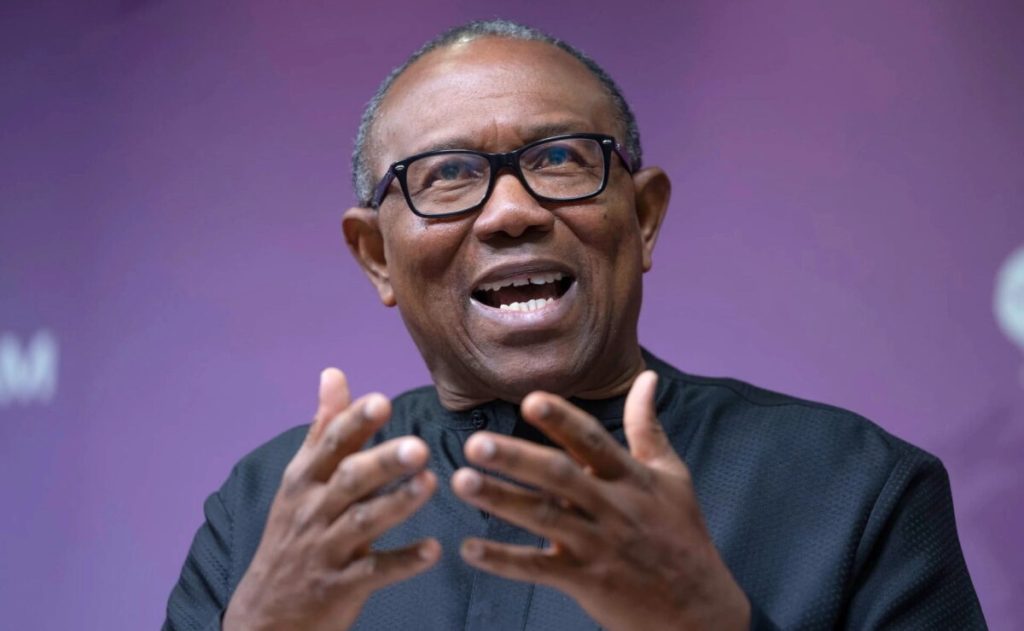
Former Labour Party presidential candidate, Peter Obi, has condemned the Senate’s refusal to make electronic transmission of election results mandatory, saying the move further exposes Nigeria as a fantastically corrupt and disgraced country.
Obi expressed his views in a statement shared on X on Friday, where he accused lawmakers of deliberately weakening Nigeria’s democratic process ahead of the 2027 general elections.
He explained that his reaction came after a brief pause to mourn victims of a deadly tragedy in Kwara State, where over 150 people reportedly lost their lives.
“Let us first pray for the souls of the innocent Nigerians lost in Kwara. That painful incident is why I delayed responding to the shameful development surrounding our electoral system,” he wrote.
Describing the Senate’s decision as intentional and dangerous, Obi said rejecting mandatory electronic transmission was not a simple oversight but a calculated attempt to block transparency.
“The Senate’s open rejection of electronic transmission of results is an unforgivable act of electoral manipulation ahead of 2027,” he said.
According to him, the action strikes at the heart of democracy and raises serious questions about the true purpose of governance in Nigeria.
“This failure to pass a clear safeguard is a direct attack on our democracy. By refusing these transparency measures, the foundation of credible elections is being destroyed. One must ask whether government exists to ensure justice and order or to deliberately create chaos for the benefit of a few.”
The former Anambra State governor linked the post-election controversies of the 2023 general elections to the failure to fully deploy electronic transmission of results, insisting that Nigerians were misled with claims of technical failures.
“
The confusion, disputes and manipulation that followed the 2023 elections were largely due to the refusal to fully implement electronic transmission,” he said.
He added that the so-called system glitch never truly existed.
Obi compared Nigeria’s electoral process with those of other African countries that have embraced technology to improve credibility, lamenting that Nigeria continues to fall behind.
“Many African nations now use electronic transmission to strengthen their democracy. Yet Nigeria, which calls itself the giant of Africa, is moving backwards and dragging the continent along.”
He criticised Nigeria’s leadership class, saying the country’s problems persist not because of a lack of ideas but because of deliberate resistance to meaningful reform.
“We keep organising conferences and writing policy papers about Nigeria’s challenges. But the truth is that the leaders and elite are the real problem. Our refusal to change is pushing the nation backwards into a primitive system of governance.”
Warning of the dangers ahead, Obi said rejecting electronic transmission creates room for confusion and disorder that only serves the interests of a small group.
He also recalled past remarks by foreign leaders who described Nigeria as corrupt, arguing that actions like this continue to justify those statements.
“When a former UK Prime Minister described Nigeria as ‘fantastically corrupt,’ we were offended. When former US President Donald Trump called us a ‘disgraced nation,’ we were angry. But our continued resistance to transparency keeps proving them right.”
Obi warned that Nigerians should not accept a repeat of the electoral irregularities witnessed in 2023.
“Let there be no mistake. The criminality seen in 2023 must not be tolerated in 2027.”
He urged citizens to be ready to defend democracy through lawful and decisive means, while also calling on the international community to closely monitor developments in Nigeria’s electoral process.
“The international community must pay attention to the groundwork being laid for future electoral manipulation, which threatens our democracy and development,” Obi stated.
He concluded by expressing hope that change is still possible if Nigerians take collective responsibility.
“A new Nigeria is possible but only if we all rise and fight for it.”

2026 World Cup: Super Eagles waiting for FIFA’s decision – Iwobi

Ijoba Lande accuses Lagos police officers of assault, theft

Sanwo-Olu attends 50th memorial ceremony for General Murtala Muhammed

-
Business1 year ago
US court acquits Air Peace boss, slams Mayfield $4000 fine
-

 Trending1 year ago
NYA demands release of ‘abducted’ Imo chairman, preaches good governance
-

 Politics1 year ago
Mexico’s new president causes concern just weeks before the US elections
-

 Politics1 year ago
Putin invites 20 world leaders
-

 Politics1 year ago
Russia bans imports of agro-products from Kazakhstan after refusal to join BRICS
-
Entertainment1 year ago
Bobrisky falls ill in police custody, rushed to hospital
-
Entertainment1 year ago
Bobrisky transferred from Immigration to FCID, spends night behind bars
-
Education1 year ago
GOVERNOR FUBARA APPOINTS COUNCIL MEMBERS FOR KEN SARO-WIWA POLYTECHNIC BORI