
Columns
The Arrest of Lt-Col. Buka Suka Dimka After the 1976 Coup Attempt

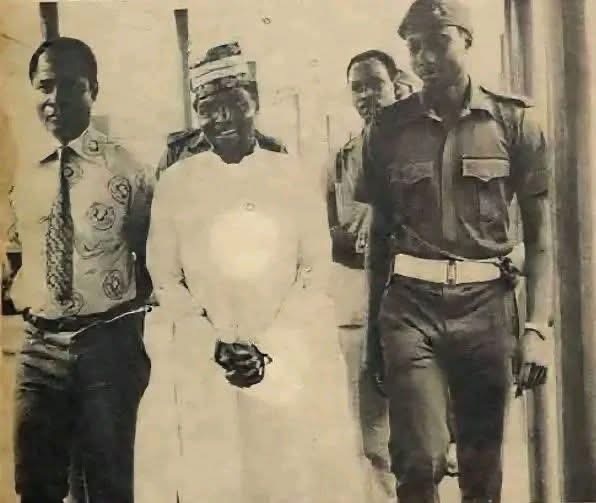
One of the most dramatic moments in Nigeria’s political history occurred in February 1976, when a failed military coup resulted in the assassination of Nigeria’s Head of State, Murtala Ramat Muhammed. The central figure behind the coup attempt was Buka Suka Dimka, a Lieutenant Colonel in the Nigerian Army whose actions triggered a nationwide crisis and one of the most intense manhunts in the country’s military history.
A well-known photograph from that period shows Dimka smiling while being handcuffed after his arrest. The image captures the moment the Nigerian authorities finally apprehended the officer whose failed uprising had shaken the nation.
The Coup That Shocked Nigeria
On 13 February 1976, a group of soldiers attempted to overthrow the Nigerian military government. At the time, Nigeria was under the leadership of General Murtala Muhammed, who had become Head of State after the overthrow of Yakubu Gowon in July 1975.
Muhammed’s administration had quickly gained public attention for its bold reforms, including anti-corruption measures and plans to return Nigeria to civilian rule. However, not all members of the military were satisfied with the pace and direction of his policies.
During the coup attempt, soldiers loyal to Dimka ambushed the Head of State’s motorcade in Lagos, which was Nigeria’s capital at the time. Muhammed was assassinated during the attack, sending shockwaves across the country.
Following the killing, Dimka and his collaborators attempted to seize control of the government.
Dimka’s Broadcast to the Nation
Shortly after the attack, Dimka made a radio broadcast explaining the reasons behind the coup attempt. In his message, he accused the government of corruption, poor leadership, and administrative weakness.
He also criticised what he described as arbitrary arrests and detentions without trial, claiming these issues justified the overthrow of the military government. However, the broadcast failed to convince the majority of the Nigerian military.
Key military units across the country remained loyal to the government, and the coup attempt began to collapse within hours.
Collapse of the Plot
Although the conspirators succeeded in assassinating the Head of State, they failed to gain control of strategic military commands and communication centres. Loyal troops quickly regained control of major installations in Lagos and other cities.
Senior military officers moved swiftly to stabilise the situation and prevent further unrest. Eventually, leadership of the country passed to Olusegun Obasanjo, who assumed power as Head of State following the death of Muhammed.
As order returned, the Nigerian authorities launched an intensive search for Dimka and other coup plotters who had gone into hiding.
The Manhunt and Arrest
After realising that the coup had failed, Dimka fled Lagos in an attempt to evade capture. Security forces across Nigeria began a large-scale manhunt to locate him.
Reports from the period indicate that he was eventually arrested in eastern Nigeria after several days on the run. Contemporary media accounts claimed he was captured while in the company of a woman described as a prostitute, though this detail mainly appeared in newspaper reports and is sometimes treated cautiously by historians.
Regardless of the circumstances, his arrest marked the end of the coup leader’s attempt to escape justice.
Trial and Execution
Following his capture, Dimka and several other suspects were tried before a military tribunal. The trial focused on the assassination of the Head of State and the attempted overthrow of the Nigerian government.
The tribunal found Dimka and many of his collaborators guilty. In total, about 38 military officers and civilians connected to the plot were sentenced to death.
The executions were carried out by firing squad in March 1976, making it one of the largest sets of executions in Nigeria’s military history.
Legacy of the 1976 Coup Attempt
The assassination of Murtala Muhammed deeply affected Nigeria. Although he ruled for only about six months, he had gained widespread popularity for his decisive leadership and reform agenda.
After the coup attempt failed, Olusegun Obasanjo continued Muhammed’s policies, including the plan to transition Nigeria back to civilian government. That process eventually led to the establishment of the Second Republic in 1979.
Today, the events of February 1976 remain one of the most significant turning points in Nigeria’s political and military history. The photograph of Dimka being handcuffed after his arrest stands as a powerful reminder of a moment when the country narrowly avoided further political instability.
Sources
Drum Magazine Archives (1976)
Nigerian military historical records on the 1976 coup attempt
Historical documentation on the assassination of Murtala Muhammed
Archival Nigerian newspaper reports on the Dimka trial and executions





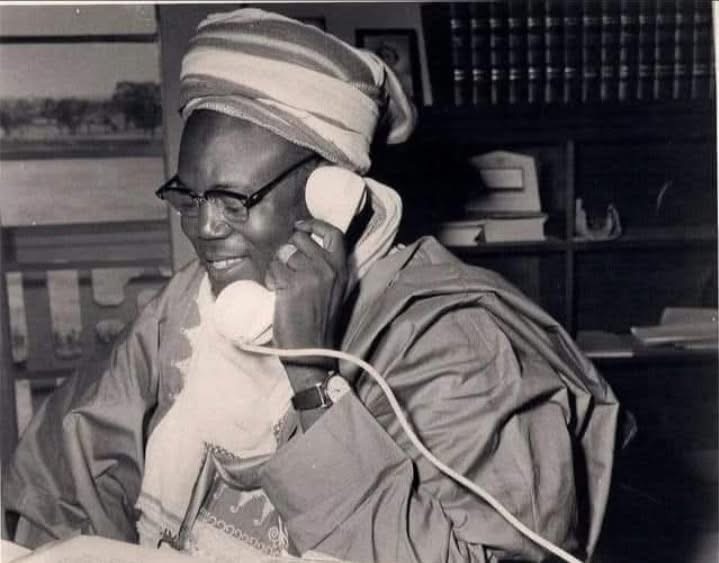
In December 1959, as Nigeria stood on the threshold of independence, the Premier of the Northern Region, Ahmadu Bello, sent a Christmas message to Christians across Northern Nigeria.
At a time when the country was still shaping its national identity, his message emphasized unity, tolerance, and mutual respect among the diverse peoples of the region.
He said:
“We are people of many different races, tribes, and religions, who are knit together by a common history, common interests, and common ideals.
Our diversity may be great, but the things that unite us are stronger than the things that divide us. On an occasion like this, I always remind people about our firmly rooted policy on religious tolerance.
We have no intention of favouring one religion at the expense of another. Subject to the overriding need to preserve law and order, it is our determination that everyone should have absolute liberty to practise his beliefs.
It is befitting on this momentous day, on behalf of my ministers and myself, to send a special word of gratitude to all Christian missions.
Let me conclude this with a personal message.
I extend my greetings to all our people who are Christians on this great feast day. Let us forget the difference in our religion and remember the common brotherhood before God, by dedicating ourselves afresh to the great tasks which lie before us.”
The message reflected the policy of religious tolerance that the Northern government under Ahmadu Bello often emphasized in the years leading to Nigeria’s independence in 1960.
It remains a notable reminder of the call for unity among Nigeria’s many religious and ethnic communities.
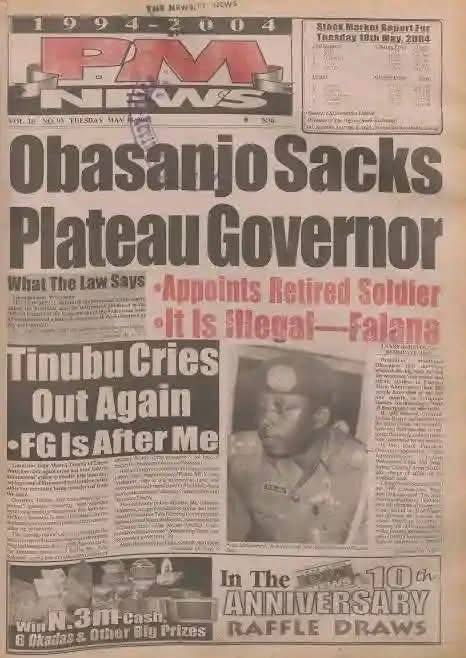
The 2004 federal intervention in Plateau State that sparked debate over constitutional powers and democracy in Nigeria.
On May 18, 2004, Nigeria witnessed one of the most controversial constitutional decisions of its Fourth Republic when President Olusegun Obasanjo declared a state of emergency in Plateau State and suspended the democratically elected governor, Joshua Dariye.
The action followed weeks of violent ethno-religious clashes in the town of Yelwa, particularly in Shendam and surrounding communities. Hundreds of people were killed in the violence between Christian and Muslim groups, drawing national and international concern.
To stabilize the situation, Obasanjo appointed retired military officer Chris Alli as the sole administrator of Plateau State, effectively placing the state under federal emergency control.
The decision triggered widespread debate about constitutional authority, federal power, and the limits of executive intervention in Nigeria’s democratic system.
Background: Rising Violence in Plateau State
Plateau State, located in Nigeria’s Middle Belt, has historically been a region of complex ethnic and religious diversity. While this diversity has contributed to the state’s rich cultural identity, it has also led to periodic tensions.
In early 2004, violent clashes erupted in the southern Plateau town of Yelwa, where longstanding disputes between Christian and Muslim communities escalated into large-scale attacks and reprisals.
Reports at the time indicated that entire communities were destroyed and hundreds of residents lost their lives. The violence spread to surrounding areas, including Shendam, creating a humanitarian crisis and raising fears that the conflict could escalate further.
Security agencies struggled to contain the violence, prompting the federal government to consider extraordinary measures.
Declaration of Emergency Rule
On May 18, 2004, President Olusegun Obasanjo addressed the nation and announced the declaration of a state of emergency in Plateau State.
Under the emergency rule:
Governor Joshua Dariye was suspended from office.
The Plateau State House of Assembly was also suspended.
Retired Major General Chris Alli was appointed sole administrator of the state.
Federal security forces were deployed to restore order.
Chris Alli, a former military commander, was tasked with restoring peace, rebuilding security institutions, and overseeing governance until the crisis subsided.
This intervention marked one of the rare occasions in Nigeria’s Fourth Republic when a democratically elected governor was removed from office through federal emergency powers.
Constitutional Debate
The decision immediately sparked legal and political controversy across the country.
Critics argued that the Nigerian Constitution allows the declaration of a state of emergency but does not explicitly permit the suspension of elected officials.
Among those who openly criticized the move was Bola Tinubu, then Governor of Lagos State. Tinubu described the action as illegal and unconstitutional, warning that it could undermine Nigeria’s democratic institutions.
Supporters of the president, however, argued that the scale of violence in Plateau State required decisive federal intervention to prevent further bloodshed.
The debate highlighted tensions between federal authority and state autonomy within Nigeria’s political system.
Administration Under Chris Alli
As sole administrator, Chris Alli assumed control of the state government and worked closely with federal authorities and security agencies.
His responsibilities included:
Restoring law and order across conflict areas.
Coordinating humanitarian relief for displaced residents.
Facilitating dialogue between warring communities.
During the emergency period, security operations were intensified to prevent further violence.
After several months, the federal government determined that the situation had stabilized enough for normal governance to resume.
Restoration of Civilian Government
In November 2004, the emergency rule in Plateau State was lifted.
Governor Joshua Dariye and the state legislature were reinstated, marking the end of the federal intervention.
However, the political controversies surrounding the decision continued to shape public discussions about constitutional interpretation and executive authority in Nigeria.
Historical Significance
The 2004 Plateau State emergency remains an important moment in Nigeria’s democratic history for several reasons:
Federal intervention in state governance: It demonstrated the extent to which the federal government could intervene during internal crises.
Constitutional interpretation: It raised unresolved questions about whether elected officials can legally be suspended during a state of emergency.
Conflict management: It highlighted the challenges of managing ethno-religious tensions in diverse regions of Nigeria.
The event also set a precedent that continues to be discussed whenever emergency powers are considered in Nigeria.
Sources
Nigerian newspaper archives, May 2004 (including reports on the Plateau State emergency rule).
Academic analyses of Nigeria’s Fourth Republic governance and constitutional law.
Historical political reporting from Nigerian media organizations covering the Plateau crisis.
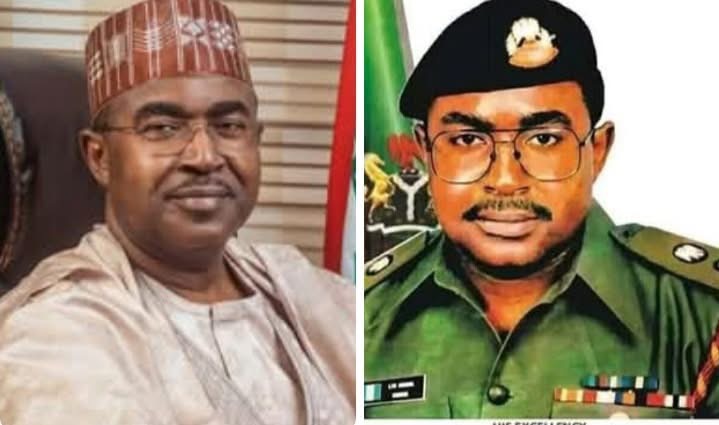
What kind of military administrator governs two very different states one in the far North-East and another at the heart of Nigeria’s commercial capital and still remains relevant decades later?
Brigadier-General Mohammed Buba Marwa (rtd.) is one of those rare figures.
Born on 9 September 1953, Marwa is a career military officer who first came into state leadership as Military Governor of Borno State (1990–1992) under General Ibrahim Babangida. In Borno, he focused on infrastructure, water resources, and security at a time when the state faced border and economic challenges.
Years later, he was appointed Military Governor of Lagos State (1996–1999) during the Abacha and Abdulsalami Abubakar era.
In Lagos, his name became strongly associated with aggressive governance massive road rehabilitation, crime-control initiatives like Operation Sweep, improved healthcare access, and strict financial discipline.
He famously ran Lagos without borrowing and handed over funds at the end of military rule.
But Marwa’s story did not end with the military.
In 2021, he returned to national prominence when he was appointed Chairman of the National Drug Law Enforcement Agency (NDLEA). Under his leadership, the agency was restructured, emboldened, and repositioned. Drug seizures increased, major trafficking networks were disrupted, and Nigeria’s drug-control efforts regained international visibility. His performance earned him a second term in office.
Mohammed Buba Marwa represents a generation of military administrators who transitioned into long-term public service.
From governing Borno and Lagos to leading Nigeria’s war against drug abuse, his career shows how power, discipline, and persistence can shape different eras of national life

Trump Says He Must Be Involved In Choosing Iran’s Next Leader After Khamenei’s Death

The Arrest of Lt-Col. Buka Suka Dimka After the 1976 Coup Attempt

Success Opara Congratulates Hon Onyekachi Ibezim on APC State Secretary Emergence

-
Business1 year ago
US court acquits Air Peace boss, slams Mayfield $4000 fine
-

 Trending1 year ago
NYA demands release of ‘abducted’ Imo chairman, preaches good governance
-

 Politics1 year ago
Mexico’s new president causes concern just weeks before the US elections
-

 Politics1 year ago
Putin invites 20 world leaders
-

 Politics1 year ago
Russia bans imports of agro-products from Kazakhstan after refusal to join BRICS
-
Entertainment1 year ago
Bobrisky falls ill in police custody, rushed to hospital
-
Entertainment1 year ago
Bobrisky transferred from Immigration to FCID, spends night behind bars
-
Education2 years ago
GOVERNOR FUBARA APPOINTS COUNCIL MEMBERS FOR KEN SARO-WIWA POLYTECHNIC BORI