
Columns
Tinubu’s Effort To Shift Blame For Bad Governance To Governors, Deceitful

The 1st to 10th August 2024 End Bad Governance Nation – wide protest put tremendous pressure on President Tinubu, and exposed the failures of his administration.
The protesters demanded that the President must tell the nation how he intended to improve the deplorable state of the economy, and the ever-growing insecurity to life and property. They insisted that the President must change his extravagant lifestyle, reduce the size of his cabinet, and cut back on the cost of government. Unable to address these concerns, the President became unduly defensive and belligerent. He began to blame others for his own failures. The state governors were his favorite scapegoats.
In order to cement his accusations against the governors, Tinubu posited that they have all the money they need to develop their states if they wanted to.
According to the President, the N2.4 trillion Federal Government allocation which he approved for state governors between January and June 2024 was the largest ever in history. In addition to this allocation which translates to N431 billion monthly per state, the President announced that he gave each state an additional N570 billion.
Unfortunately, both of the generous funds which Tinubu claimed he has made available to the governors are fallacious misrepresentations.
Consider the facts: Given Nigeria’s 35% rate of inflation and the value of the naira which has depreciated by over 300% (450 to 1 dollar in 2022, and 1,500 to 1 dollar in 2024), the N2.4 trillion allocated to states from January to June 2024 is in reality less valuable than the N1.788 trillion six months Federal Government allocation to states by President Buhari in 2022.
In order for governors as alleged by Tinubu to be able to achieve similar developmental goals they achieved with N1.788 trillion (for six months, and N298 billion per month) in 2022, they would require N8.4 trillion, (six months), not N2.4 trillion. And for their monthly allocation they would require N1.508 trillion monthly, not N431 billion. Clearly the governors have less revenue to work with today, not more as alleged by Tinubu.
Disingenuous as the N2.4 trillion allocation issue is, the President’s other claim of providing an additional N570 billion to each state is even more egregious. Simply put, on the matter of the N570 billion additional funds, the president lied to the nation. As Oyo State Governor Seyi Makinde and other governors have explained and as the World Health Organization (WHO) records show, the said N570 billion was a World Bank Intervention Fund for COVID Recovery. The States have already spent their own money for the purpose of fighting the impact of the COVID pandemic on behalf of the World Health Organization (WHO), and were merely refunded through their Federal Government. This was how WHO refunded states all over the world.
President Tinubu mustaccept the responsibility for the myriads of problems which his policies and actions have brought upon Nigeria instead of blaming state governors. After all he has said that the buck stops with him as President.
It was his ill-conceived decision to remove fuel subsidies which has virtually brought the economy to its knees. His devaluation of the naira has led to an astronomical increase in the cost of living. Food and every day household items are becoming increasingly unaffordable. His draconian tax policies are creating a crisis of unemployment as companies are going bankrupt and others are relocating out of Nigeria. The instability of the economy is keeping foreign investors away from our shores.
True, about 60% of Nigerian governors are performing very poorly. Unfortunately for the country, these wasteful, greedy and unethical governors’ model themselves after the President; the nation’s leader. But even these unreliable governors cannot be held responsible for the state of the economy and the state of the country’s security as both critical areas of government are controlled from the center.
It is the Federal Government which coordinates the country’s economy by receiving revenue from states and redistributing it to them through the Federal Government’s distribution formula. It is not the Governors who control the Federation Account.
And it is the Federal Government which is responsible for the nation’s security through its control of the Army, the Navy, the Air Force as well as the police, not state Governors. Whether he likes it or not, President Tinubu has to be held responsible for Nigeria’s worsening economy and disastrous security situation.
And it is the Federal Government which is responsible for the nation’s security through its control of the Army, the Navy, the Air Force as well as the police, not state Governors. Whether he likes it or not, President Tinubu has to be held responsible for Nigeria’s worsening economy and disastrous security situation.
Also, President Tinubu cannot blame Governors for the aspect of bad governance which is reflected in his obnoxious lifestyle. He has only himself to blame if Nigerians condemn him for prioritizing his 150-billion-naira jet, his N1 billion cardilac, his N5 billion yacht, the N21 billion vote for refurbishing his Vice President’s lodge and several billion Naira approved for the First Lady’s travels over Education, Health, Transportation and agriculture.
Dr. Adetokunbo Pearse, PhD. Public Affairs Analyst and Convener Reset Lagos PDP and member PDP National Presidential Campaign Council (2023).



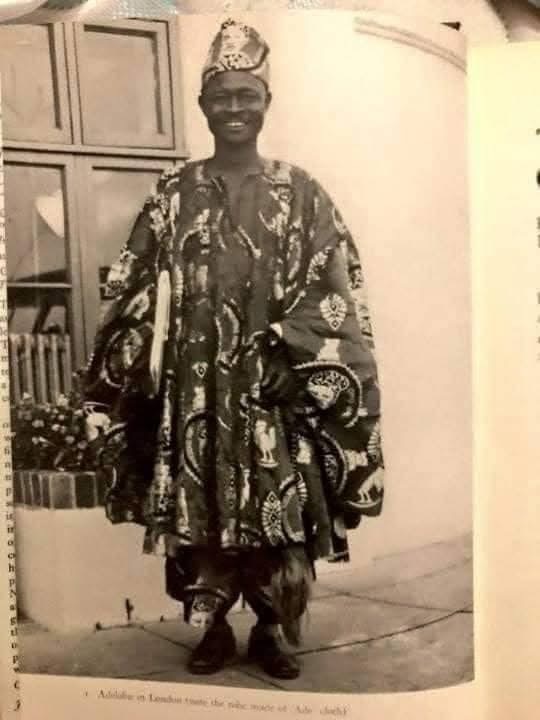
Full Name: Alhaji Adegoke Gbadamosi Adelabu
Birth Name: Gbadamosi Adegoke Akande
Date of Birth: 3 September 1915
Place of Birth: Ibadan, present-day Oyo State, Nigeria
Nickname: “The Lion of the West” — a title earned for his fearless, combative, and charismatic political style
Education:
St. David’s School, Kudeti, Ibadan (1925–1929)
Government College, Ibadan (from 1936)
Yaba Higher College (admitted on scholarship)
Intellectual Reputation:
Adelabu was renowned for his exceptional oratory, sharp intellect, and ideological boldness, making him one of the most formidable politicians of his generation.
Popular Alias:
Known among his largely non-literate supporters as “Penkelesi” — a Yorubanised version of “peculiar mess”, a phrase he frequently used in speeches, which became inseparably associated with him.
Political Affiliation:
A leading member of the National Council of Nigeria and the Cameroons (NCNC) under Dr. Nnamdi Azikiwe during the colonial era.
Political Rivalry:
He was a fierce and ideological opponent of Chief Obafemi Awolowo in the Western Region, making Western Nigerian politics highly competitive and polarized in the 1950s.
Colonial-Era Persecution:
Adelabu is widely regarded as one of the most persecuted opposition politicians of the colonial period, having faced about 18 court cases, many believed to be politically motivated.
Corporate Achievement:
He made history as the first African General Manager of the United Africa Company (UAC), a major British trading firm, marking a significant breakthrough for Africans in colonial corporate leadership.
Death:
Date: 25 March 1958
Place: Ode-Remo, Ijebu Province (present-day Ogun State)
Cause: Fatal motor accident involving his Volkswagen Beetle, alongside a Lebanese business associate and two relatives
Age at Death: 43 years old — two years before Nigeria’s independence
Family:
At the time of his death, Adelabu had 12 wives and 15 children, reflecting the social norms of his era.
Aftermath of Death:
His sudden and tragic death sparked widespread riots and unrest across Ibadan, underscoring his immense popularity and political influence among the masses.
Historical Significance:
Adelabu remains one of the most charismatic, controversial, and intellectually formidable politicians in Nigerian pre-independence history, often remembered as a symbol of radical opposition politics and mass mobilisation.
Source:
Nigerian political history archives
Ibadan colonial-era political records
Biographical accounts on Adegoke Adelabu
Yoruba political history documentation
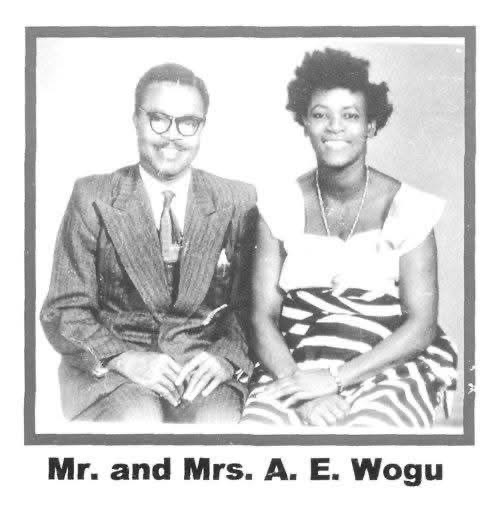
The pioneering role of Mr and Mrs A. E. Wogu in the rise of indigenous Pentecostalism
The explosive growth of Pentecostal Christianity in Nigeria during the twentieth century did not emerge overnight. Long before megachurches, crusade grounds, and global ministries, the movement was shaped by small prayer groups, radical faith, and indigenous leaders who believed that Christianity in Africa must be spiritually vibrant and culturally rooted. Among the most influential of these pioneers were Mr and Mrs Augustus Ehurie Wogu, whose quiet but profound work in Eastern Nigeria helped spark what later became one of the most significant religious revivals in Nigerian history.
By the 1930s, Nigeria was already experiencing religious ferment. Dissatisfaction with mission churches, hunger for spiritual power, and the search for an African-led Christian expression created fertile ground for Pentecostal ideas. It was within this context that the Wogus emerged as key catalysts of renewal.
Augustus Ehurie Wogu: Faith and Public Life
Augustus Ehurie Wogu (A. E. Wogu) was not a cleric by training. He was a respected civil servant, educated and deeply rooted in Christian discipline. Like many early revivalists, his spiritual influence came not from formal ordination but from conviction, prayer, and leadership within lay Christian circles.
At a time when colonial society often separated public service from spiritual enthusiasm, Wogu embodied both. His faith was intense, practical, and unapologetically Spirit-filled. He believed that Christianity should be marked by holiness, prayer, divine healing, and the active presence of the Holy Spirit—beliefs that resonated deeply with many Nigerians who felt constrained by the formality of mission Christianity.
The Pentecostal Spark: Print, Prayer, and Providence
One of the most remarkable aspects of the Nigerian Pentecostal revival was how it was ignited. Rather than beginning with foreign missionaries, the movement was sparked through printed Pentecostal literature.
In the early 1930s, Wogu and other like-minded believers encountered Pentecostal Evangel, a magazine published by the Assemblies of God in the United States. The publication circulated testimonies of revival, Spirit baptism, divine healing, and missionary zeal. For Wogu and his associates, this literature provided language and theological grounding for experiences they were already seeking.
Inspired, they began intense prayer meetings, fasting, and Bible study sessions in their homes. These gatherings soon attracted others hungry for deeper spiritual life.
The Wogu Home as a Revival Centre
The home of Mr and Mrs Wogu in Umuahia, present-day Abia State, became one of the earliest hubs of Spirit-filled Christianity in Eastern Nigeria. It functioned as:
A prayer house
A teaching centre
A refuge for believers seeking healing and renewal
These meetings were marked by fervent prayer, testimonies, and an emphasis on personal holiness. Importantly, leadership was indigenous. Nigerians taught, prayed, interpreted scripture, and organised fellowships without missionary supervision.
This approach helped dismantle the idea that spiritual authority had to come from Europe or America.
Mrs Wogu and the Role of Women in Early Pentecostalism
While historical narratives often foreground male leaders, Mrs Wogu played a crucial role in sustaining and expanding the revival. She provided spiritual support, hospitality, organisational stability, and mentorship—functions that were essential to the survival of early Pentecostal fellowships.
Her partnership with her husband reflected a pattern later seen across Nigerian Pentecostalism, where women played powerful but often understated roles as prayer leaders, organisers, and spiritual anchors.
From Fellowship to Movement: Birth of Assemblies of God Nigeria
As the revival grew, correspondence began between Nigerian believers and the Assemblies of God in the United States. This relationship eventually led to the arrival of American missionaries in the late 1930s.
Crucially, because the movement already existed before foreign involvement, the resulting church developed with a strong indigenous identity. This distinguished Assemblies of God in Nigeria from many earlier mission-founded churches.
The values emphasised by Wogu and his peers—local leadership, spiritual experience, and African agency—became foundational to the denomination’s growth.
Impact on Nigerian Christianity
The legacy of Mr and Mrs A. E. Wogu extends far beyond Umuahia or the Assemblies of God denomination. Their work helped shape:
The broader Pentecostal and Charismatic movement in Nigeria
The idea that revival could emerge from African initiative
The theology of prayer, healing, and Spirit baptism that dominates Nigerian Christianity today
Many of Nigeria’s most influential pastors and evangelists trace their spiritual heritage, directly or indirectly, to the revival culture of the 1930s.
A Lasting Legacy
A photograph dated 29 March 1959, showing Mr and Mrs A. E. Wogu, captures not just a couple but a generation of believers whose faith reshaped Nigeria’s religious landscape. By that time, the movement they helped ignite had grown beyond imagination.
Their story reminds us that history is often made not only by those on pulpits or platforms, but by faithful individuals who open their homes, pray persistently, and dare to believe that renewal is possible.
Sources
This Week in AG History
Assemblies of God Nigeria historical archives
Ogbu Kalu, African Pentecostalism: An Introduction
J. D. Y. Peel, Religious Encounter and the Making of the Yoruba (contextual reference)
Nigerian church
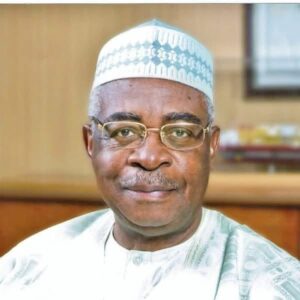
Lieutenant General Theophilus Yakubu Danjuma GCON ) is a retired Nigerian @rmy officer, billionaire businessman, and prominent philanthropist. He is considered one of Nigeria’s most influential and controversial milit@ry figures, having played a central role in several key events in the country’s post-independence history.
Born in Takum, Taraba State on December 9, 1938 , from a humble farming family.
He Attended St. Bartholomew’s Primary School and Benue Provincial Secondary School.
He received a scholarship to study history at Ahmadu Bello University but joined the Nigerian Army in 1960, the year Nigeria gained independence.
Commissioned in 1960, he served as a platoon commander in the Congo Crisîs and rose to the rank of Captain by 1966.
He is widely recognized for leading the troops that arrested and overthrew the first military Head of State, General Aguiyi-Ironsi, during the July 1966 counter-coup.
He served as the Chief of @rmy Staff from 1975 to 1979 under the milit@ry göverñmëñts of Murtala Muhammed and Olusegun Obasanjo.
After returning to public service in the democratic era, he served as Nigeria’s Minister of D£fence from 1999 to 2003 under President Obasanjo.
After returning to public service in the democr@tic era, he served as Nigeria’s Ministēr of Defēñce from 1999 to 2003 under President Obasanjo.
Following his military retirement in 1979, Danjuma became one of Africa’s wealthiest individuals through ventures in shipping and petroleum.
He owns NAL-Comet Group, A leading indigenous shipping and terminal operator in Nigeria.
Owns NAL-Comet Group, leading indigenous shipping and terminal operator in Nigeria.
South Atlantic Petroleum (SAPETRO): An oil exploration company with major interests in Nigeria and across Africa.
In 2009,he established TY Danjuma Foundation: with a $100 milliøn grant, it supports education, healthcare, and pôverty alleviation projects throughout Nigeria.
As of early 2026, he remains an active elder statesman, having celebrated his 88th birthday in December 2025.
He continues to be a vocal crìtic of Nigeria’s security situation, recently urging citizens to “rise up and DEFĒÑD themselves” against b@nditry and in$urgēncy when gøvernmēñt protection f@ils.
He remains a “towering national figure” in Taraba State, where he has recently toured ongoing construction for the T.Y. Danjuma University and Academy.
Danjuma is celebrated as a figure who transitioned from milit@ry leadership to business and philanthropy, significantly impacting Nigeria’s development.

Police bust syndicate behind nude photo blackmail in Lagos

Man in shock after lady he lodged with in a hotel in Abuja flees with his car and other valuables

US Reacts As De@th Toll In Kwara Terror Attacks Hits 200

-
Business1 year ago
US court acquits Air Peace boss, slams Mayfield $4000 fine
-

 Trending1 year ago
NYA demands release of ‘abducted’ Imo chairman, preaches good governance
-

 Politics1 year ago
Mexico’s new president causes concern just weeks before the US elections
-

 Politics1 year ago
Putin invites 20 world leaders
-

 Politics1 year ago
Russia bans imports of agro-products from Kazakhstan after refusal to join BRICS
-
Entertainment1 year ago
Bobrisky falls ill in police custody, rushed to hospital
-
Entertainment1 year ago
Bobrisky transferred from Immigration to FCID, spends night behind bars
-
Education1 year ago
GOVERNOR FUBARA APPOINTS COUNCIL MEMBERS FOR KEN SARO-WIWA POLYTECHNIC BORI