
News
Troops intercept two vans supplying logistics to ISWAP in Borno

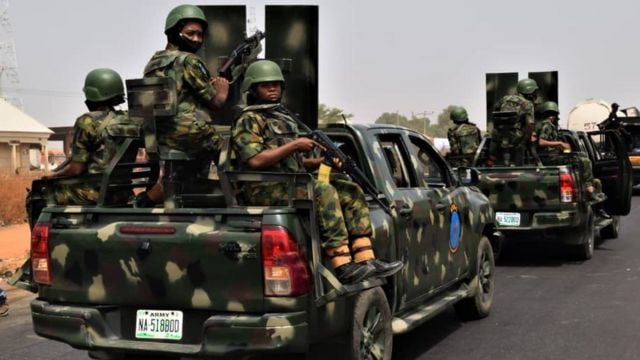
Troops of Operation Hadin Kai have intercepted two pick-up vans suspected of conveying logistics supplies to Islamic State West Africa Province terrorists in Borno State.
The Media Information Officer, Joint Task Force Operation Hadin Kai, Lt Colonel Sani Uba, disclosed this in a statement on Friday.
According to him, many items including two civilian vehicles, 31 spare tyres, 23 spare rims, two bicycles, 12 ignition key starters, three alternators, two bags of flour, one mattress, five bags of charcoal, 34 tubers of yam, two blankets, two nylons of garri, assorted adult and children clothing, one power bank, six mobile phones, and some cash of different denomination were recovered.
The statement reads, “Troops of Sector 2, Joint Task Force North East Operation HADIN KAI (OPHK), working in close coordination with the Civilian Joint Task Force (CJTF), have successfully intercepted two pick-up vans conveying logistics supplies suspected to be intended for Islamic State West Africa Province (ISWAP) terrorists in Borno State.”
Sani said the operation was conducted following credible human intelligence, which alerted the operation’s headquarters to the movement of the items from Dapchi in Yobe State towards Magumeri general area of Borno State.
“Acting promptly on the intelligence, troops deployed tactically and intercepted the vehicles along the identified route.
“Items recovered during the operation include two civilian vehicles, 31 spare tyres, 23 spare rims, two bicycles, 12 ignition key starters, three alternators, two bags of flour, one mattress, five bags of charcoal, 34 tubers of yam, two blankets, two nylons of garri, assorted adult and children clothing, one power bank, six mobile phones, and some cash of different denomination,” he said.
He added that the drivers conveying the items, along with the recovered materials, are currently in military custody for further interrogation to determine the extent of their involvement and to support ongoing counter-terrorism investigations.
“This successful interception underscores the effectiveness of intelligence-driven operations and the sustained collaboration between troops and local security partners in disrupting terrorist logistics networks,” he stated.
He assured all that the troops remain resolute in their commitment to denying terrorists freedom of movement, cutting off their supply chains, and ensuring the safety and security of law-abiding citizens across the North-East.
In January, troops of the 1 Brigade of the Joint Task Force, Operation Fasan Yamma, in collaboration with operatives of the Department of State Services intercepted a large cache of arms in Zamfara State.
This was carried out in Kaura Namoda Local Government Area following intelligence on the activities of suspected arms dealers linked to the Niger Republic.




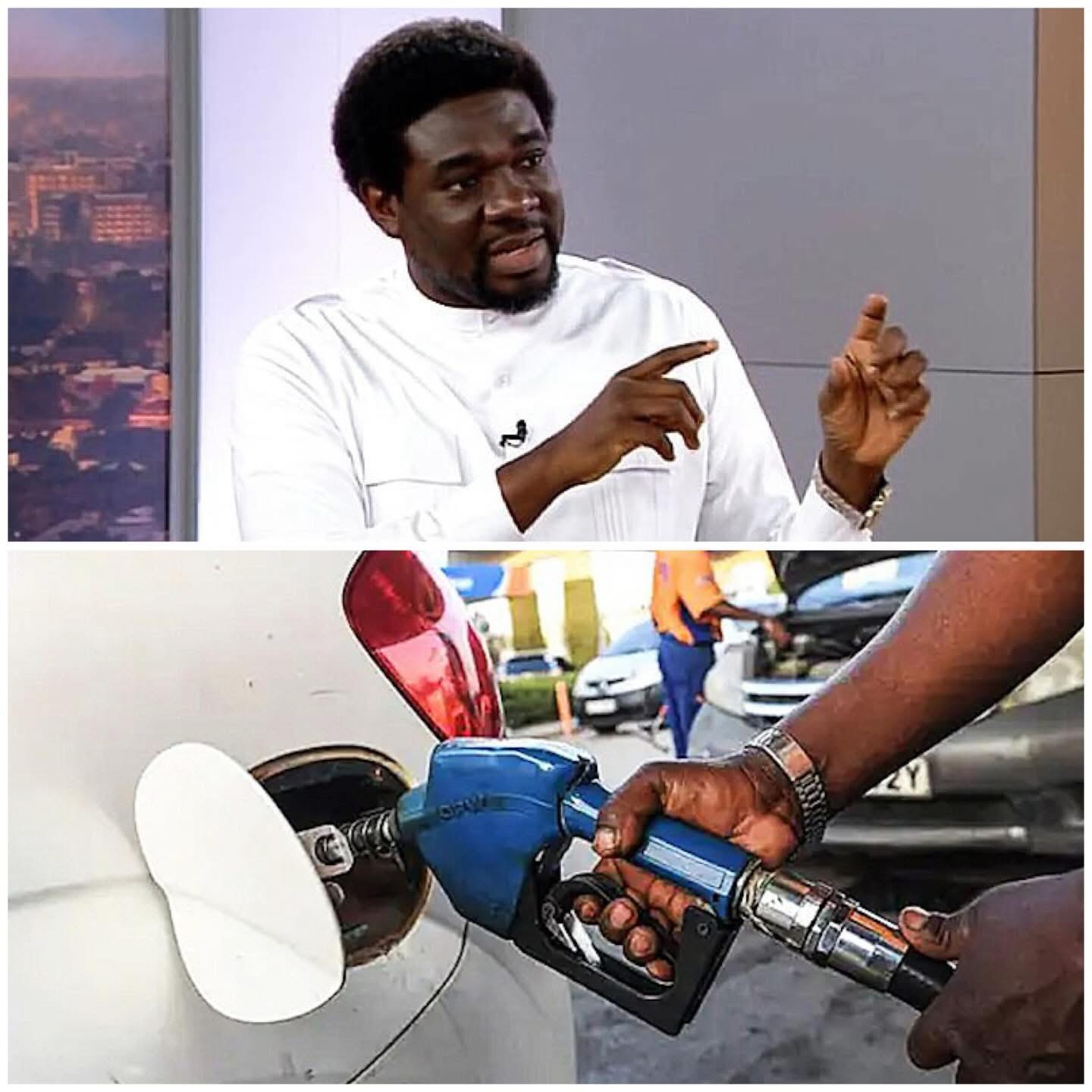
The Trade Union of Nigeria, TUC, has raised the alarm that the price of Premium Motor Spirit aka Petrol may climb to about N2,000 per litre if urgent measures are not taken to cushion the impact of rising global crude prices and the depreciating naira.
Speaking to newsmen on Thursday, April 9, the president of the TUC, Festus Osifo, called on the Federal Government to immediately deploy 60 percent of excess crude oil revenue above the 2026 budget benchmark to subsidise crude feedstock supplies to the Dangote Refinery and other modular refineries, a move it says will slash pump prices of petrol, diesel, and jet fuel within two weeks
“Today, comrades, we are seeing that the cost of petrol is edging towards N2,000 per litre depending on the part of the country that you are. Nigerian workers are already passing through excruciating pain as we speak.
The same way it is affecting transportation, it is also affecting manufacturing. The cost of diesel has also gone northward, meaning that the cost of production has increased. When production costs rise, the final price of goods on the shelves will also skyrocket.
If this continues unchecked, the inflation that we are currently celebrating as going downwards will reverse and start moving up again,” he stated.
Osifo outlined the proposal as an urgent intervention to cushion Nigerian workers from excruciating pain caused by petrol prices edging towards ₦2,000 per litre in some parts of the country
News
Cameroon’s President, Paul Biya Set To Get A Vice President For The First Time In His 43-Year Rule
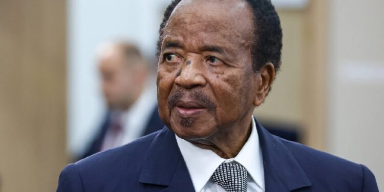
Cameroon’s president, Paul Biya, is set to get a vice president for the first time in his four-decade rule, following controversial constitutional changes backed by the parliament.
In a joint session of the ruling party-dominated National Assembly and Senate, lawmakers voted 200 to 18 in favour, with four abstentions, to pass the bill.
The bill stipulates that the vice president will automatically assume the presidency if President Paul Biya dies, resigns, or becomes incapacitated.
Biya, 93, has led the Central African country since 1982 and is the world’s oldest serving head of state. Public discussion about his health is banned.
According to the legislation, a copy of which was seen by Reuters, the vice president will be appointed and dismissed by the president, serving for the remainder of the president’s seven-year term.
However, the interim leader would be prohibited from initiating constitutional changes or running in a subsequent election.
Prior to the amendment, the constitution designated the leader of the Senate to briefly take over in case the sitting president d!es or is incapacitated. An election would then be held.
The Social Democratic Front (SDF) party, which has six representatives in parliament, boycotted the vote. It had pushed for a revision in favour of the vice-president being jointly elected with the president, rather than appointed.
The party also sought a constitutional provision that reflects the linguistic split between English and French-speaking regions. The SDF wanted the nation’s top two posts to be shared between Cameroon’s two communities, which was the position before 1972.
“This constitutional reform could have been a moment of political courage, but it is nothing less than a missed historic opportunity,” SDF chairman Joshua Osih said.
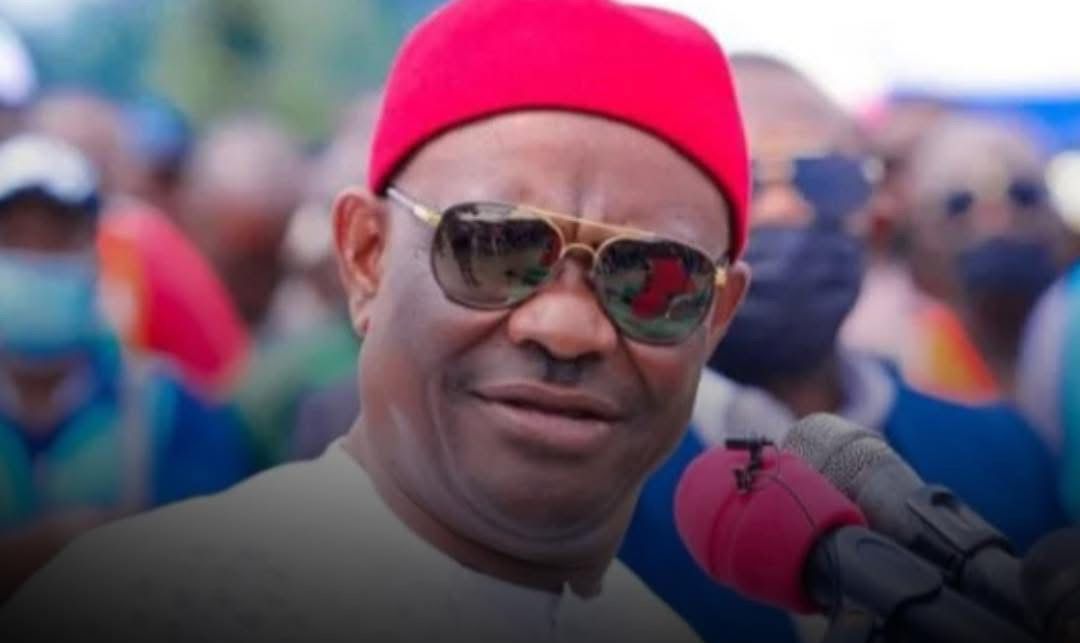
Minister of the Federal Capital Territory, Nyesom Wike, has highlighted the ongoing challenges of tax collection, pointing out the disparity between citizens’ expectations and the reality of government revenue.
Speaking with TVC NEWS live, he stressed that while Nigerians expect quality infrastructure and services, there is widespread reluctance to contribute through taxes.
On the difficulty of generating revenue, Wike said: “To collect tax, you know it’s not an easy thing. I don’t know how many of you here like to pay tax. Nigerians want everything for free. They want road, they want light. It is not easy.”
He further stated; “When I came to Abuja we were about 8, 9 billion. The money we get from the federal government is 1% of the allocation of federal government. So if federal government gets 1 trillion for example, they’ll give us one percent which is ten billion naira and that cannot carry the society. Our salary in a month is not less than 12–13 billion, so we must augment. How do we augment?”
Addressing public criticism, he added: “There’s no ab¥se that any politician has received than me. I think after the president, I’m the highest ab¥sed. There’s nothing we do that we won’t get ab¥sed. Well, what is important to me is that I want to be concentrated to do the job.”
On oversight and accountability, Wike explained how closely he monitors the finances: “The money we have gotten from tax challenge me, minister FCT, what are you doing? I’ll show you as I sit here.”

Bandits behind Ogbomoso school abduction will face full wrath of the law- President Tinubu

PDP to screen Goodluck Jonathan on Tuesday as its sole Presidential aspirant For 2027 race

Oshiomhole wins Edo APC senatorial primaries unopposed

-
Business2 years ago
US court acquits Air Peace boss, slams Mayfield $4000 fine
-

 Trending2 years ago
NYA demands release of ‘abducted’ Imo chairman, preaches good governance
-

 Politics2 years ago
Mexico’s new president causes concern just weeks before the US elections
-

 Politics2 years ago
Putin invites 20 world leaders
-

 Politics2 years ago
Russia bans imports of agro-products from Kazakhstan after refusal to join BRICS
-
Entertainment2 years ago
Bobrisky falls ill in police custody, rushed to hospital
-
Entertainment2 years ago
Bobrisky transferred from Immigration to FCID, spends night behind bars
-
Education2 years ago
GOVERNOR FUBARA APPOINTS COUNCIL MEMBERS FOR KEN SARO-WIWA POLYTECHNIC BORI