
Business
UK is SECOND most attractive country for investment according to CEOs

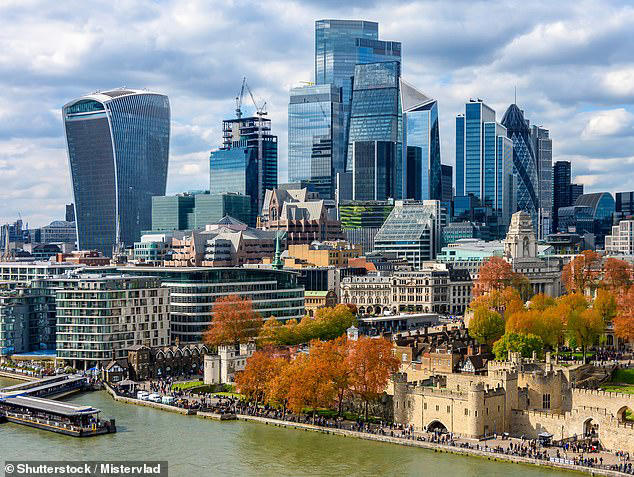
Booming Britain is the world’s second-favourite place to place to invest – just behind the USA – according to a survey of global business leaders.
Around 14 per cent of the near-5,000 corporate bosses surveyed by PwC say they expect the UK to receive the most international investment in the next year.
The survey, published as the World Economic Forum gets underway in Davos, will be a boon to Chancellor Rachel Reeves after criticism of her Autumn Budget and higher-than-expected inflation.
Experts believe that the UK’s relative stability amid global economic uncertainty makes it a favourite for additional investment – and comes ahead of an expected cut in interest rates by the Bank of England amid rising wages.
Britain’s second-place ranking in the PwC CEO Survey is its best since the poll began 28 years ago, and is two places up from fourth last year.
It came second to the US (30 per cent) – and ahead of Germany, China and India (12, nine and seven per cent respectively).
The results suggest Britain is in a prime spot for an influx of investment as competing nations face growing economic crises.
Germany is in the midst of a years-long recession, while China is battling uncertainty after the EU slapped import tariffs on cars while Donald Trumpmulls over tough taxes for Chinese goods.
Britain has been named the second best place to invest this year in a poll of 5,000 CEOs from 109 countries
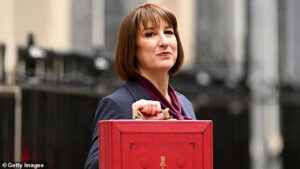
The survey has been welcomed by Chancellor Rachel Reeves, who said it was proof CEOs were ‘backing Britain’ under Labour
And 61 per cent of British CEOs say the country is in line for economic growth – up from just 39 per cent last year.
Experts speaking to MailOnline say there are a number of reasons Britain may attract investment from abroad, including in property, where prices are steady amid an ongoing housing shortage.
Jonathan Gordon, director of wealth at property investment firm IP Global, said: ‘In the context of property, the UK offers much needed stability to global investors.
‘This is not just applicable to London, but up and coming markets like Manchester and Birmingham have shown resilience in the face of global turmoil due to a constant flow of demand.’
Responding to the survey, the Chancellor said: ‘These latest results show global CEOs are backing Britain and the UK is one of the most attractive destinations for international investment.
‘And it’s this investment that will help drive economic growth and improve living standards across the UK.’
Marco Amitrano, senior partner at PwC UK, said: ‘Our CEO survey findings are a vote of confidence in the UK as a place for business and investment.
‘The UK’s relative stability at a time of instability should not be underestimated, nor should its strength in key sectors including technology.
‘However, there is no room for complacency.’
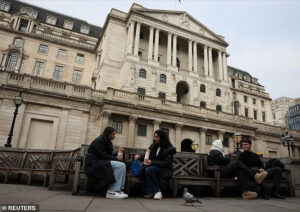
The Bank of England (pictured) is expected to announce a cut in interest rates next month amid wage growth in the private sector – a boon for business
There are concerns the UK’s economy is stalling after official figures showed it grew just 0.1 per cent in November, and a run on UK Government bonds, known as gilts.
The survey data suggests more than half of UK CEOs plan to increase the size of their workforce this year – even as the Chancellor imposes hikes in national insurance and a cut in the threshold at which NI is paid from April.
Interest rates are set to be cut next month after wages rose 5.6 per cent in the three months to November, up from 5.2 per cent the previous three months.
But British bosses are also slightly less positive about the future of their own firms than they were before Labour came in – with confidence dropping from 61 per cent in 2024 to 57 per cent now.
David Belle, a broker and founder of Fink Money, has warned that the UK’s weak pound means investors may simply be using Britain to do business on the cheap before taking their money elsewhere.
‘With a weaker sterling and almost zero demand from UK citizens to own shares in UK companies, there is no bid keeping share prices higher like there is in the US, Canada and Australia,’ he told MailOnline.
‘So any foreign investor is going to see the UK as a place where they can buy assets cheap relative to future cash flows.
‘It’s a sleight of hand to hail this as a UK win. In reality, it’s the opposite.’
Rachel Reeves is travelling to the World Economic Forum in Davos this week, where she will urge company bosses to invest in the UK – likely boosted by the survey results and an upgrade of Britain’s forecasted growth by the IMF.
The international body believes Britain will see a 1.6 per cent expansion this year – slightly up from the 1.5 per cent it pencilled in last October.
‘The time to invest in Britain is now,’ she said in a statement.
She had last been seen gallivanting in China to secure £600million of investment – criticised as a meagre amount in a country with a nominal GDP of $18.5trillion –
But Ray Dalio, billionaire founder of hedge fund Bridgewater, told the Financial Times that the UK could be heading for a debt ‘death spiral’ in which it has to borrow more to cover its rising interest costs.







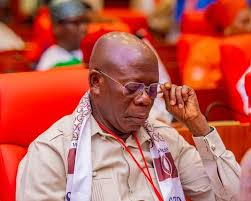


The Trade Union of Nigeria, TUC, has raised the alarm that the price of Premium Motor Spirit aka Petrol may climb to about N2,000 per litre if urgent measures are not taken to cushion the impact of rising global crude prices and the depreciating naira.
Speaking to newsmen on Thursday, April 9, the president of the TUC, Festus Osifo, called on the Federal Government to immediately deploy 60 percent of excess crude oil revenue above the 2026 budget benchmark to subsidise crude feedstock supplies to the Dangote Refinery and other modular refineries, a move it says will slash pump prices of petrol, diesel, and jet fuel within two weeks
“Today, comrades, we are seeing that the cost of petrol is edging towards N2,000 per litre depending on the part of the country that you are. Nigerian workers are already passing through excruciating pain as we speak.
The same way it is affecting transportation, it is also affecting manufacturing. The cost of diesel has also gone northward, meaning that the cost of production has increased. When production costs rise, the final price of goods on the shelves will also skyrocket.
If this continues unchecked, the inflation that we are currently celebrating as going downwards will reverse and start moving up again,” he stated.
Osifo outlined the proposal as an urgent intervention to cushion Nigerian workers from excruciating pain caused by petrol prices edging towards ₦2,000 per litre in some parts of the country

The governor of Oyo state, Seyi Makinde, has approved a N10,000 transportation allowance as a palliative for the state workforce to cushion the effects of the increase in the pump price of Premium Motor Spirit, otherwise known as petrol.
The Chairman of the Nigeria Labour Congress (NLC), Oyo State chapter, Kayode Martins, in a statement released on Monday, March 23, disclosed that the governor has granted the request of the union on the issue of transportation allowance.
The statement read
“Following the intervention and formal request made by the State Council of the Nigeria Labour Congress (NLC) earlier this morning, the state government has approved a N10,000 transportation allowance for all workers in the state.
The newly approved allowance is set to take effect from April 2026, providing much-needed relief to workers grappling with rising transportation costs amid current economic challenges.
This development comes as a direct response to sustained advocacy by the state NLC, aimed at cushioning the impact of increased living expenses on the workforce.
Further details on implementation are expected to be communicated by the relevant government authorities in due course.”
The Central Bank of Nigeria (CBN), has declared that banks and financial institutions must establish and maintain a temporary watch-list for Bank Verification Numbers (BVN) implicated in suspected fraudulent transactions.
According to the CBN in a circular dated March 12, 2026 and signed by its Director of Payments System Policy Department, Musa I. Jimoh, the apex bank said such a suspected BVN may remain on the temporary watchlist for a maximum period of twenty-four (24) hours during which the owner would be contacted to make clarifications.
The circular explained that the move is part of several new measures under a revised regulatory framework aimed at enhancing financial system stability.
“A BVN may remain on this temporary Watchlist for a maximum period of twenty-four (24) hours, during this period, the BVN owner shall be contacted to provide clarification regarding the identified transaction(s),” the circular stated.
The circular also sets an age requirement for BVN enrolment, restricting registration to individuals who have attained eighteen (18) years and above.
The CBN also added that amendments to phone numbers linked to a BVN shall be allowed only once.
“Amendments to phone numbers linked to a BVN shall be allowed only once,” the circular noted.
The apex bank stated that access to BVN databases will remain tightly controlled.
“Access to the BVN databases shall be exclusively granted to Central Bank of Nigeria (CBN) licensed financial institutions.
“Notwithstanding this provision, the Central Bank of Nigeria (the Bank) reserves the right to approve access to the BVN databases in extenuating circumstances and in accordance with the provisions of extant laws,” the circular said.
Financial institutions are expected to comply with the new requirements, and customers may be contacted by their banks if their BVNs are temporarily flagged during the new fraud monitoring process.
The new policy, as stated by the CBN, takes effect from May 1, 2026.

𝗛𝗢𝗡. 𝗧𝗢𝗦𝗞𝗔 𝗖𝗢𝗡𝗗𝗘𝗠𝗡𝗦 𝗧𝗛𝗘 𝗞𝗜𝗟𝗟𝗜𝗡𝗚𝗦, 𝗞𝗜𝗗𝗡𝗔𝗣𝗣𝗜𝗡𝗚𝗦 𝗔𝗡𝗗 𝗥𝗔𝗣𝗘𝗦 𝗜𝗡 𝗜𝗛𝗜𝗔𝗚𝗪𝗔, 𝗢𝗕𝗜𝗕𝗜𝗘𝗭𝗘𝗡𝗔, 𝗘𝗭𝗜𝗢𝗕𝗢𝗗𝗢, 𝗘𝗠𝗘𝗔𝗕𝗜𝗔𝗠, 𝗢𝗞𝗢𝗟𝗢𝗖𝗛𝗜, 𝗨𝗠𝗨𝗚𝗨𝗠𝗔, 𝗔𝗩𝗨 𝗔𝗡𝗗 𝗢𝗧𝗛𝗘𝗥 𝗖𝗢𝗠𝗠𝗨𝗡𝗜𝗧𝗜𝗘𝗦: 𝗖𝗔𝗟𝗟𝗦 𝗙𝗢𝗥 𝗜𝗠𝗠𝗘𝗗𝗜𝗔𝗧𝗘 𝗖𝗘𝗦𝗦𝗔𝗧𝗜𝗢𝗡

TENSIONS RISE IN OGUTA LGA AS CHAIRMAN MOVED AHEAD WITH Town UNION ELECTIONS AGAINST STATE DIRECTIVE

2027: More Than 50 Lawmakers Lose APC Reps Tickets in Major Primary Election

-
Business2 years ago
US court acquits Air Peace boss, slams Mayfield $4000 fine
-

 Trending2 years ago
NYA demands release of ‘abducted’ Imo chairman, preaches good governance
-

 Politics2 years ago
Mexico’s new president causes concern just weeks before the US elections
-

 Politics2 years ago
Putin invites 20 world leaders
-

 Politics2 years ago
Russia bans imports of agro-products from Kazakhstan after refusal to join BRICS
-
Entertainment2 years ago
Bobrisky falls ill in police custody, rushed to hospital
-
Entertainment2 years ago
Bobrisky transferred from Immigration to FCID, spends night behind bars
-
Education2 years ago
GOVERNOR FUBARA APPOINTS COUNCIL MEMBERS FOR KEN SARO-WIWA POLYTECHNIC BORI