
Politics
Ukraine: US and Russia’s top diplomats discuss ‘next steps’

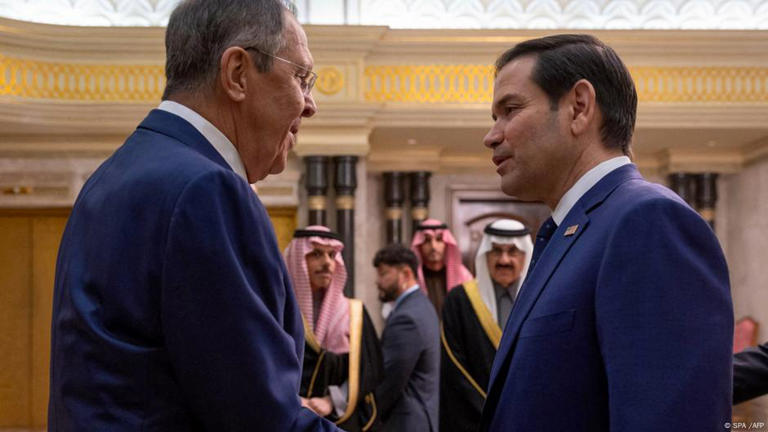
Indicating a thaw in US-Russia relations, Marco Rubio and Sergey Lavrov spoke about further efforts to ending the war in Ukraine as overnight aerial strikes continue.
US-Russia top diplomats Rubio and Lavrov, discuss ‘next steps’ on Ukraine Trump limits Kellogg’s role as special envoy to Ukraine Military meeting set for next week to support Ukraine in the event of a ceasefire with Russia Both Ukraine and Russia report overnight aerial strikes
Here’s the latest regarding Russia’s war in Ukraine on Sunday, March 16.
Russia reiterates demand that Ukraine not join NATO
Moscow will demand guarantees that NATO countries will exclude Ukraine from membership and that Ukraine will remain neutral in any peace agreement, a Russian official said in an interview with the Russian media outlet Izvestia.
“We will demand that ironclad security guarantees become part of this agreement,” Deputy Foreign Minister Alexander Grushko said.
“Part of these guarantees should be Ukraine’s neutral status, the refusal of NATO countries to accept it into the alliance,” he added.
Grushko also reiterated Russia’s opposition to the involvement of peacekeeping forces from NATO member states in Ukraine in any quality.
NATO states sending peacekeepers to Ukraine ‘means war,’ says Medvedev
Former Russian President Dmitry Medvedev has issued a scathing rebuke of a plan by European countries to deploy peacekeepers to Ukraine.
Britain and France have both said they could send peacekeepers to Ukraine as a security guarantee for Kyiv in the event of a ceasefire with Russia.
In a post on X, Medvedev accused French President Emmanuel Macron and British Prime Minister Keir Starmer of “playing dumb.”
“Time and again they are told that peacekeepers must be from non-NATO states,” he wrote.
Deploying peacekeepers from NATO member countries, for Russia, “means war with NATO,” he added.
Russia has repeatedly rejected the idea of soldiers from countries belonging to the NATO alliance being stationed in Ukraine, even if not formally sent as a part of a NATO mission.
Medvedev’s comments came after Macron told French regional newspapers that any peacekeeping force would consist of “a few thousand troops per country.”
He also said the question of whether to station troops in Ukraine was for Kyiv to decide, not Moscow.
Ukraine likely to give up territory under deal with Russia — Trump adviser
Michael Waltz, US President Donald Trump’s national security adviser, suggested that Ukraine would likely have to cede some territory to Russia while also giving up its wish to join the NATO military alliance.
Asked about speculation that a deal might require Ukraine to cede its eastern Donbas region and drop its NATO hopes, Waltz replied: “This is going to be some type of territory-for-future-security guarantees (deal) — the future status of Ukraine.”
“A permanent pathway into NATO, or permanent membership into NATO for Ukraine, is incredibly unlikely,” he said in comments made in an interview with the ABC News broadcaster.
What is Ukraine’s Donbas region?
Ukraine’s eastern Donbas is made up of the Donetsk and Luhansk regions, large swathes of which are controlled by Russian forces. Moscow claims to have annexed both regions in their entirety, alongside Zaporizhzhia and Kherson in the south, and has demanded that Kyiv recognize the annexation as part of any peace deal.
Moscow has long described Ukraine joining NATO as a red line, while Kyiv has ruled out making any territorial concessions.
The United States proposed a 30 cease-fire in the war between Russia and Ukraine after talks in Saudi Arabia earlier this week, with Kyiv accepting the proposal.
However, Russian President Vladimir Putin has not given a clear response to the US proposal, instead listing a number of conditions.
US officials have also strongly hinted that Ukraine will likely have to make some major concessions if a deal is to be reached.
As Europe rearms, will it turn away from Asia?
A few years ago, European Commission President Ursula von der Leyen declared that the EU wanted to “take a more active role in the Indo-Pacific.”
However, the future of this commitment is in doubt, as the United States under President Donald Trump has loudly mused about withdrawing security guarantees, potentially leaving European states to shoulder the burden of an uncertain ceasefire in Ukraine.
DW took a look at EU’s Indo-Pacific strategy: As Europe rearms, will it turn away from Asia?
Zelenskyy appoints new chief of staff
After a series of military setbacks, Ukrainian President Volodymyr Zelenskyy has appointed a new Chief of General Staff, General Andriy Hnatov. He was previously Deputy Chief of the General Staff.
The previous chief of staff, Anatoly Barhylevych, will become the new Inspector General of the Ministry of Defense.
No official reason was given for the need for the changes. However, Ukrainian forces have suffered significant setbacks in their fight against the Russian army in recent weeks, including a retreat in the western Russian region of Kursk.
How much will Trump White House back Ukraine?
US President Donald Trump is currently fighting on many (partly home-made) fronts at the same time: looming trade wars with China and Europe, tariff disputes with neighbors Canada and Mexico, the war in Gaza, plummeting stock markets.
Amid these crises, will the US let Ukraine fall? It seems only a matter of time before it is answered with a “yes.”
Read more here: How much will Trump White House back Ukraine?
Erdogan says he supports Trump’s peace initiatives on Ukraine
Turkish President Recep Tayyip Erdogan told his US counterpart Donald Trump that he stood behind Trump’s initiatives to bring peace to Ukraine, his office said.
According to a statement from the Turkish presidency, Erdogan told Trump in a phone call that he “supported determined and decisive efforts by American President Trump to put an end to the war between Russia and Ukraine.”
Erdogan said he backed “a just and durable peace since the start of the war and will continue to do so,” the statement said.
Since Russia launched its full-scale invasion of Ukraine three years ago, Turkey, a NATO member, has twice hosted direct talks aimed at ending the conflict, while seeking to retain good relations with both Kyiv and Moscow.
While Turkey has condemned Russia’s invasion and has provided Kyiv with military aid, it has not imposed sanctions on Russia.
Continued aerial attacks show Russia does not want to end the war, says Zelenskyy
Ukraine’s PresidentVolodymyr Zelenskyy has said the ongoing barrage of Russian airstrikes on Ukrainian cities shows that Moscow is not interested in ending the fighting in his country.
“Those who want the war to end as soon as possible do not act this way,” Zelenskyy wrote on the platform X, an allusion to recent comments by Russian President Vladimir Putin that seemed to suggest he supported the idea of a ceasefire.
Zelenskyy said that Russian forces had ” launched over 1,020 attack drones, nearly 1,360 guided aerial bombs, and more than 10 missiles of various types” over the past week.
He called on Ukraine’s international allies to continue providing air-defense systems and urged Europe and the US to exert unified pressure on Russia to end the war and work toward a just, lasting peace.
“Decisive measures are needed, including sanctions that must be not only maintained but also continuously strengthened,” he added.
Russia launched a full-scale invasion of neighboring Ukraine in February 2022 against which Kyiv’s forces have been fighting ever since with considerable assistance from the West.
Finnish President Stubb calls chances of Putin’s agreeing to ceasefire ‘abysmal’
Finnish President Alexander Stubb has said there is extremely little chance of Russian President Vladimir Putin agreeing to a ceasefire in Ukraine, calling the likelihood of his doing so “abysmal.”
“Putin doesn’t want peace,” Stubb said during an interview with British broadcaster BBC aired on Sunday.
He said Putin had not changed his long-held view that Ukraine should “cease to exist.”
According to Stubb, imposing more sanctions on Moscow, using frozen Russian assets to purchase military equipment for Kyiv and “militarizing Ukraine to the teeth” were the best ways to end the Russian invasion.
Finland shares a 1,340-kilometer (833-mile) border with Russia and became a NATO member almost two years ago in the face of Moscow’s aggression against Ukraine.
Turkey condemns Russian annexation of Crimea
Turkey again condemned Russia’s annexation of Crimea from Ukraine, saying it is a violation of international law.
“We reiterate that [Turkey] does not recognize the de facto situation in Crimea, which constitutes a violation of international law, and that we support the territorial integrity and sovereignty of Ukraine,” the Turkish Foreign Ministry said.
It released the statement to mark the anniversary of an internationally panned referendum held by Russia in Crimea on March 16, 2014.
Despite the lack of international recognition, the peninsula’s majority ethnic Russian population voted in favor of joining Russia, and Moscow took control of Crimea.
“We will continue to closely monitor developments in Crimea, particularly the situation of the Crimean Tatar Turks, the indigenous people of the peninsula, and we will keep them on the agenda of the international community.”
Crimean Tatars, a Muslim ethnic minority indigenous to Crimea, have been resisting Russian occupation, with some of them fighting in the Ukrainian armed forces.
Crimean Tatar belongs to the Turkic language family, making it a close relative of Turkish.
Steve Witkoff says he expects Trump-Putin talks this week
Donald Trump’s envoy Steve Witkoff has said he expects the US president to hold “really good and positive” talks this week with his Russian counterpart, Vladimir Putin, about ending the war in Ukraine.
“I expect that there will be a call with both presidents this week, and we’re also continuing to engage and have conversation with the Ukrainians,” he told US broadcaster CNN.
Witkoff himself held talks with Putin in Moscow on Thursday, describing them as “positive” and saying he was optimistic that there would be real progress on ending the conflict.
Witkoff said that although the situation was very complicated, “We’re bridging the gap between two sides.”
Russia evacuates hundreds of people from Kursk
Russia announced it has evacuated 371 civilians from areas it regained from Ukrainian forces in the Kursk region.
Kursk is part of western Russia that borders the Sumy region of Ukraine. The Russian military has regained control over several towns in Russia’s Kursk region, which Ukrainian forces had held after a surprise incursion into Russian territory last August.
However, fierce fighting between Russian and Ukrainian troops is ongoing.
Kursk region governor Alexander Khinshtein wrote on the Telegram messaging app, “371 people have been moved, including 14 children,” from the region since Wednesday.
He added 220 of the civilians had been placed in temporary accommodation, while the rest were staying with relatives.
Russia, Ukraine trade strikes; Injuries reported in Belgorod
Both Russia and Ukraine launched aerial strikes on one another from Saturday into Sunday.
Ukraine’s air defense units shot down 47 of 90 drones launched by Russia in an overnight attack, the air force said.
Damage was reported in four regions, but the air force didn’t provide details.
Separately, Russia’s defense ministry said its air defense destroyed 31 Ukrainian drones over Russian territory, including 16 in Voronezh, nine in Belgorod, and the rest in Rostov and Kursk regions.
In Belgorod, three people were injured in the attack, including a 7-year-old, according to regional Governor Vyacheslav Gladkov.
Trump narrows responsibilities of special envoy Kellogg to Ukraine
After reported complaints from Russia, US President Donald Trump has narrowed the role of Keith Kellogg, who will now serve solely as his special envoy on Ukraine.
Kellogg has previously been described as a special envoy for Ukraine and Russia.
“I am pleased to inform you that General Keith Kellogg has been appointed Special Envoy to Ukraine,” Trump wrote on his Truth Social platform.
A former national security adviser during Trump’s first term, Kellogg was excluded from recent talks in Saudi Arabia on ending the war.
He was also not involved in the talks with Russia that followed, with US Special Envoy Steve Witkoff visiting Moscow instead to discuss a possible ceasefire.
US broadcaster NBC, citing a senior Russian official, reported that the Kremlin had put pressure on Trump because President Vladimir Putin considered Kellogg pro-Ukraine.
Kremlin spokesman Dmitry Peskov dismissed the report, telling reporters on Friday Moscow has no intention of interfering.
Rubio and Lavrov discuss ‘next steps’ on Ukraine
US Secretary of State Marco Rubio and Russia’s Foreign Minister Sergey Lavrov spoke on Saturday about ending the war in Ukraine.
The US State Department said the top diplomats “discussed next steps” after the two countries’ meetings in Saudi Arabia and “agreed to continue working towards restoring communication between the United States and Russia.”
Despite recent tensions between US President Donald Trump and Ukrainian President Volodymyr Zelenskyy, Kyiv has agreed to a US-brokered 30-day ceasefire if Moscow halts its attacks, but Russian President Vladimir Putin has set conditions beyond the US-Ukraine agreement.
The State Department gave no details on when the next round of US-Russia talks would begin.
Rubio also updated Lavrov on military activity in the Middle East, where US forces carried out strikes against Houthi rebels Yemen.
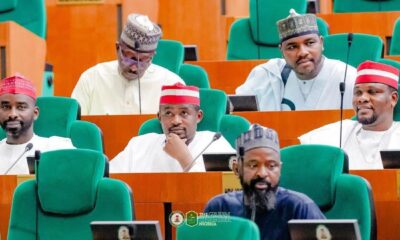
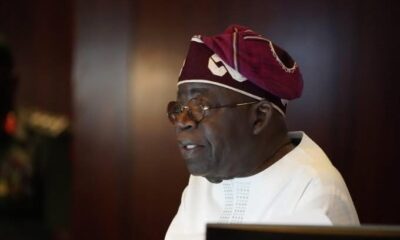

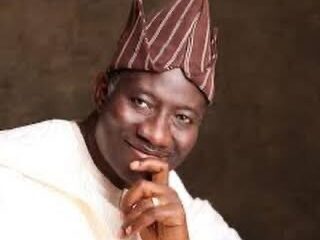


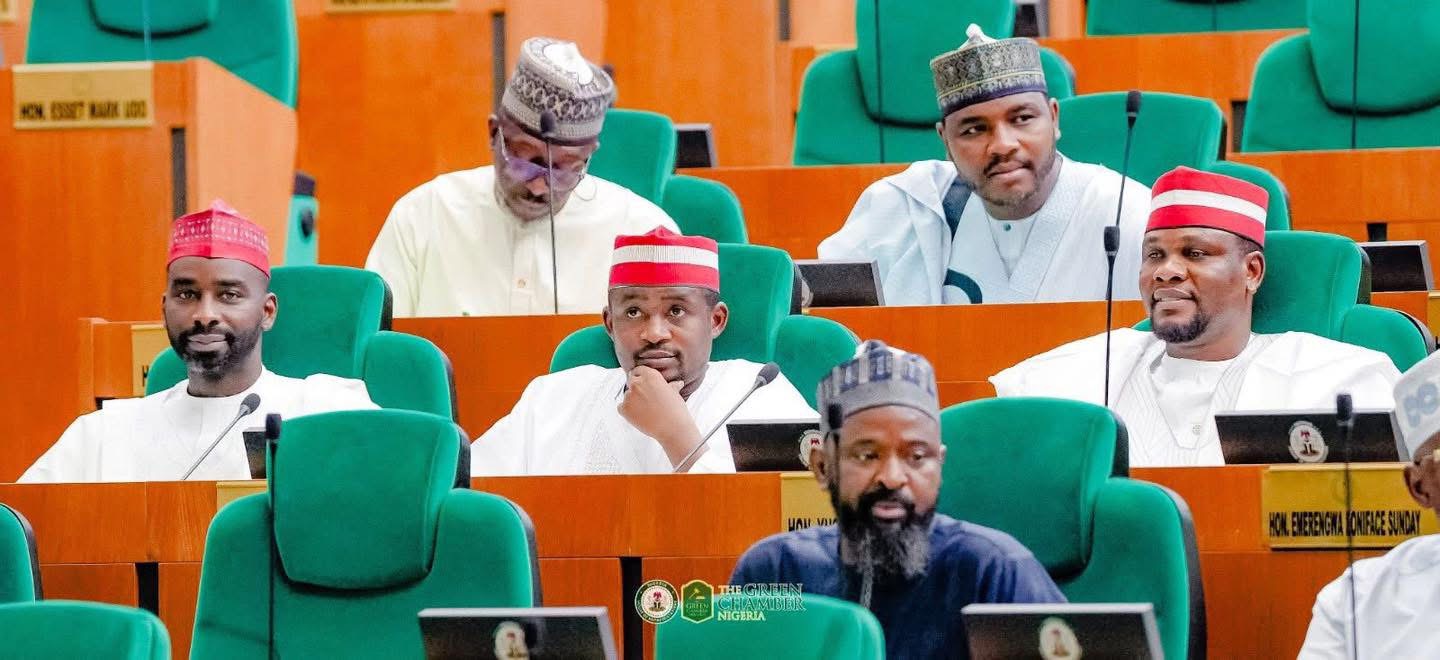
No fewer than 50 members of the 10th House of Representatives are unlikely to be part of the 11th Assembly after losing out in the All Progressive Congress (APC) primaries held on Saturday.
This marks one of the largest turnovers of sitting federal lawmakers since 2015 and signals intensifying internal competition within the ruling party eight months to the 2027 general elections.
While House Speaker Tajudeen Abbas (Kano) and Deputy Speaker Benjamin Kalu (Abia) successfully defended their tickets, several ranking and long-serving lawmakers were defeated, exposing strong anti-incumbent sentiment and the decisive role of state governors in candidate selection.
Major casualties
One of the biggest upsets was the defeat of House Majority Leader Julius Ihonvbere in Edo State’s Owan Federal Constituency. He polled 1,005 votes out of 7,587 cast, finishing third behind Andrew Ijegbia, who scored 3,695 votes. Abdul Oroh placed second with 1,740 votes.
In Delta State, veteran lawmaker Nicholas Mutu, who has represented Bomadi/Patani Federal Constituency since 1999, lost his re-election bid. Ngozi Okolie also lost the Aniocha/Oshimili ticket to former House Minority Leader Ndudi Elumelu.
Cross River State recorded one of the highest casualty rates, with five of eight incumbents failing to secure re-nomination.
They include three-term member Mike Etaba (Obubra/Etung), Godwin Offiono (Ogoja/Yala), Emil Inyang (Akamkpa/Biase), and Bassey Akiba (Odukpani/Calabar Municipality).
Only Peter Akpanke, Joseph Bassey, and Victor Abang won return tickets.
In Plateau State, conflicting results in Pankshin/Kanke/Kanam Federal Constituency triggered early confusion. One returning officer declared challenger John Tongshinen winner with 29,968 votes against incumbent Yusuf Gagdi’s 5,849.
The APC Plateau State primaries committee, chaired by Stella Okotete, later dismissed that declaration as unauthorised and affirmed Mr Gagdi as the authentic winner with 29,207 votes.
At a press briefing, Mrs Okotete stated that Nandom Kura was the recognised returning officer. “The returning officer approved by my committee that has gone to do fake declaration is null and void,” she said.
Other significant losses occurred in Ogun State (at least five incumbents, including Deputy Chief Whip Ibrahim Isiaka and Tunji Akinosi) and Ekiti State (three sitting members).
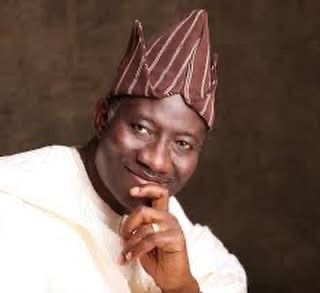
The Peoples Democratic Party (PDP), led by Tanimu Turaki, SAN, has scheduled to screen former president Goodluck Jonathan tomorrow, Tuesday, aMay 19, as the lone presidential candidate of party.
According to a statement from the PDP faction backed by the Oyo State Governor, Seyi Makinde, Former Vice-President Namadi Sambo, former governor of Plateau State, Jona Jang and a former Minister of Foreign Affairs, Tom Ikimi have been listed among a committee of 14 members to screen Jonathan described as a lone candidate by the party.
Other members of the committee were Chief Olabode George, Babangida Aliyu, Maryam ciroma, Zainab Maina, Josephine Anenin, Dr. Abdul Bulama, Dr. Esther Uduehi, Edo State PDP chairman, Tony Aziegbemi, Dr. Sunday Solarium and Chief Anicho Okoro, who would serve as administrative secretary of the committee.
Last week, the national Publicity Secretary of the faction, Ini Ememobong, disclosed that former president Jonathan has successfully registered as a member of the party in the fresh digital registration exercise directed by INEC.
The PDP faction also announced that it was set to screen 748 house of representatives aspirants, 198 senatorial aspirants, and 112 governorship aspirants.
The screening committee would screen 2122 states houses of assembly aspirants. The exercise will commence tomorrow, Tuesday in different states.
According to the statement, the screening exercise would take place nationwide on Tuesday, May 19, 2026, at 10:00 a.m.
The statement said the Interim National Working Committee (iNWC) has also released the names of members to serve on the Screening Committees and Screening Appeal Panels.
It added that the publication of the screening details “is in accordance with the party’s guidelines and timetable for the conduct of the 2027 general elections.”
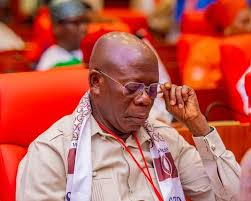
A former governor and incumbent Senator, Adams Oshiomhole, along with his counterpart Senator Joe Ikpea, sailed through the All Progressives Congress senatorial primary in Edo unopposed, and securing their tickets without a single vote cast against them.
Also Omoregie Ogbeide-Ihama emerged the winner in the APC primary for the Edo South senatorial district.
Ogbeide-Ihama won in the seven local government areas of Edo South in the results announced by the Chairman of APC National Assembly Primary Election, Muhammed Ajana at the Urokpota Hall, Benin.
He polled 27,154 votes while his opponents, Senator Neda Imasuen, got 13,580, and Pastor Osagie Ize-Iyamu got 6785.
The elections were hitch-free in Edo North and Edo Central, where there was no contest against the incumbents, Senators Oshiomhole of Edo North and Ikpea of Edo Central, respectively.
Ajana at the Urokpota Hall said the collation arose from votes cast in the seven local government areas made up of 77 wards where elections were conducted by members of the committee.
He said, “There are seven local governments that make up the Edo South Senatorial District. We have heard from the Returning officers from the seven local government areas. From the collation, the cumulative result we have for Edo South Senatorial District is this; Ogbeide-Ihama with 27,154 votes, Imasuen with 13,580 votes and Ize-Iyamu with 6, 785.
“This is the total reflection of what has transpired from the ward level to the local government and the Edo South senatorial district collation centre. With this we await further directives from the National Secretariat, we have done our best by collating the results which is our mandate, to collate the results and send them to the National Secretariat.”
However, it was gathered that Ize-Iyamu emerged as the APC candidate for Edo South Senatorial race. He claimed to have clinched the party’s ticket after defeating Ogbeide-Ihama and Imasuen.
It was claimed that the Chief Returning Officer, Abubakar Muhammad Kabiru, officially declared Ize-Iyamu the winner after securing the highest number of votes cast.
On his part, the senator representing the district condemned the exercise describing it as a sham allegedly designed to favour a preferred aspirant.
Imasuen spoke while reacting to events at his polling unit in Umagbae North Ward 5, Urhokuosa where he said he was denied the opportunity to vote following what he described as a chaotic and manipulated process.
The lawmaker accused leaders of the party of openly adopting a preferred candidate ahead of the exercise and intimidating members into supporting that aspirant.
He said, “There is nothing satisfactory about this sham of election they did today and it is very unfortunate because as a loyal party member, I expected something better than this.”
He said the warning signs emerged days before the primary when some ward chairmen allegedly informed him that they had been directed not to receive him during consultations.
Imasuen claimed that some ward leaders openly told him the party had already adopted a preferred aspirant, identified as Hon. Omoregie Ogbeide-Ihama, making further consultations unnecessary.

𝗛𝗢𝗡. 𝗧𝗢𝗦𝗞𝗔 𝗖𝗢𝗡𝗗𝗘𝗠𝗡𝗦 𝗧𝗛𝗘 𝗞𝗜𝗟𝗟𝗜𝗡𝗚𝗦, 𝗞𝗜𝗗𝗡𝗔𝗣𝗣𝗜𝗡𝗚𝗦 𝗔𝗡𝗗 𝗥𝗔𝗣𝗘𝗦 𝗜𝗡 𝗜𝗛𝗜𝗔𝗚𝗪𝗔, 𝗢𝗕𝗜𝗕𝗜𝗘𝗭𝗘𝗡𝗔, 𝗘𝗭𝗜𝗢𝗕𝗢𝗗𝗢, 𝗘𝗠𝗘𝗔𝗕𝗜𝗔𝗠, 𝗢𝗞𝗢𝗟𝗢𝗖𝗛𝗜, 𝗨𝗠𝗨𝗚𝗨𝗠𝗔, 𝗔𝗩𝗨 𝗔𝗡𝗗 𝗢𝗧𝗛𝗘𝗥 𝗖𝗢𝗠𝗠𝗨𝗡𝗜𝗧𝗜𝗘𝗦: 𝗖𝗔𝗟𝗟𝗦 𝗙𝗢𝗥 𝗜𝗠𝗠𝗘𝗗𝗜𝗔𝗧𝗘 𝗖𝗘𝗦𝗦𝗔𝗧𝗜𝗢𝗡

TENSIONS RISE IN OGUTA LGA AS CHAIRMAN MOVED AHEAD WITH Town UNION ELECTIONS AGAINST STATE DIRECTIVE

2027: More Than 50 Lawmakers Lose APC Reps Tickets in Major Primary Election

-
Business2 years ago
US court acquits Air Peace boss, slams Mayfield $4000 fine
-

 Trending2 years ago
NYA demands release of ‘abducted’ Imo chairman, preaches good governance
-

 Politics2 years ago
Mexico’s new president causes concern just weeks before the US elections
-

 Politics2 years ago
Putin invites 20 world leaders
-

 Politics2 years ago
Russia bans imports of agro-products from Kazakhstan after refusal to join BRICS
-
Entertainment2 years ago
Bobrisky falls ill in police custody, rushed to hospital
-
Entertainment2 years ago
Bobrisky transferred from Immigration to FCID, spends night behind bars
-
Education2 years ago
GOVERNOR FUBARA APPOINTS COUNCIL MEMBERS FOR KEN SARO-WIWA POLYTECHNIC BORI