
Business
Wales ‘should get a lot more’ of UK’s rail cash

The Welsh economy is losing out because of a lack of rail investment, a transport expert has said.
Prof Mark Barry said Wales should be getting a lot more money, but because spending was controlled from Whitehall, England was more of a priority.
The first minister said she was doing everything she could to get more cash for the country’s railways.
The Welsh Conservatives said Wales should be getting its fair share of HS2 funding.
The Labour UK government said investment was key to its priorities, but rail investment was run from the Department for Transport in London rather than the Welsh government.
Prof Barry, from Cardiff University, said that meant Wales was down the queue for cash.
He said: “We get about 1 to 2% of the funding available but should get a lot more.
“In an ideal world you’d be looking at 5 or 6% of the total UK investment in rail enhancement, but if you don’t invest in essential economic infrastructure – specifically in energy, transport and housing – then you can’t really expect your economy to turn a corner.”
He said the amount of cash Wales was asking for was tiny compared with what had already been committed to English railways.
“The TransPennine Express Group Upgrade is a £10bn capital programme over 15 years,” he said.
“In Wales we’ve worked up over the last five years £2-3bn in very good business cases for rail investment, and the challenge is how is that going to get funded?”

Earlier this year Welsh ministers confirmed they would not go to court to seek billions of pounds extra to spend following high speed rail investment in England
© PA Media
In recent years the biggest argument has been about extra funding for Wales from the HS2 project.
In opposition, Labour said the HS2 rail link should be an England only scheme and Wales should get money as a result.
First Minister Eluned Morgan said she had spoken to the UK chancellor about a dividend for Wales.
Opposition parties want to see Wales press for the cash, an estimated £4-5bn, which they have said would pay for much improvement.
Leader of the Welsh Conservatives, Andrew RT Davies MS said: “We need to make sure that happens so that we can spend it on infrastructure and improvement in our transport operations here in Wales, and that needs to happen, and we were told that it was a turning of the page if Labour came into government on 4 July.
“Well if that page is turned, let’s have that money, and let Eluned Morgan live up to what she’s professing to do, which is to stand up for Wales.”
‘Investment in Welsh rail’
But the UK government’s Welsh secretary Jo Stevens seemed to close the door on that idea when she was asked about it in Parliament earlier this month.
Plaid Cymru’s parliamentary leader, Liz Saville-Roberts, told the Commons: “The truth is that the railways are broken and Labour’s plan fails to address the chronic underfunding that is the cause, particularly in Wales.
“In 2022, the secretary of state – then the shadow secretary of state – said that it was ‘utterly illogical’ to designate HS2 as an England and Wales project, and called on the Conservatives to ‘cough up’ the billions owed to Wales.
“Will she cough up now?”
In response, Ms Stevens said: “We cannot go back in time and change the way a project was commissioned, managed and classified by the previous Conservative government.
“They need to accept responsibility for the chaos, delay and waste on their watch.
“What we can do though is work closely with our Senedd and local authority colleagues to develop and invest in transport projects that improve services for passengers right across Wales.”
In a statement, Ms Stevens’ department the Wales Office reaffirmed what she had said in the Commons and added: “Following years of neglect, this new UK government recognises the importance of investing in rail infrastructure in Wales.
“The Welsh secretary has already met with the transport secretary to discuss investment in Welsh rail.”
It added that Ms Stevens was working closely with the Welsh government to identify a range of improvements.
“Alongside this the transport secretary is currently carrying out a review of the previous government’s transport commitments which will ensure our transport infrastructure portfolio drives economic growth and delivers value for money for taxpayers.”
In just over a month, the Chancellor Rachel Reeves will deliver a Budget which is expected to set the course for what the government plans to do on investment.








The Central Bank of Nigeria (CBN), has declared that banks and financial institutions must establish and maintain a temporary watch-list for Bank Verification Numbers (BVN) implicated in suspected fraudulent transactions.
According to the CBN in a circular dated March 12, 2026 and signed by its Director of Payments System Policy Department, Musa I. Jimoh, the apex bank said such a suspected BVN may remain on the temporary watchlist for a maximum period of twenty-four (24) hours during which the owner would be contacted to make clarifications.
The circular explained that the move is part of several new measures under a revised regulatory framework aimed at enhancing financial system stability.
“A BVN may remain on this temporary Watchlist for a maximum period of twenty-four (24) hours, during this period, the BVN owner shall be contacted to provide clarification regarding the identified transaction(s),” the circular stated.
The circular also sets an age requirement for BVN enrolment, restricting registration to individuals who have attained eighteen (18) years and above.
The CBN also added that amendments to phone numbers linked to a BVN shall be allowed only once.
“Amendments to phone numbers linked to a BVN shall be allowed only once,” the circular noted.
The apex bank stated that access to BVN databases will remain tightly controlled.
“Access to the BVN databases shall be exclusively granted to Central Bank of Nigeria (CBN) licensed financial institutions.
“Notwithstanding this provision, the Central Bank of Nigeria (the Bank) reserves the right to approve access to the BVN databases in extenuating circumstances and in accordance with the provisions of extant laws,” the circular said.
Financial institutions are expected to comply with the new requirements, and customers may be contacted by their banks if their BVNs are temporarily flagged during the new fraud monitoring process.
The new policy, as stated by the CBN, takes effect from May 1, 2026.
NNPC Reduces Fuel Price
The Nigerian National Petroleum Company Limited has reduced the pump price of Premium Motor Spirit, also known as petrol, at its retail stations in Lagos and Abuja.
The adjustment took effect on Wednesday as the national oil company reduced the price to N1,130 per litre in Lagos and N1,165 per litre in Abuja.
The new price means motorists in Lagos are now paying N100 less than the previous pump price of N1,230 per litre.
In Abuja, the new rate represents a reduction of N95 from the former price of N1,260 per litre.
Checks showed that the new price was already in place at several NNPC filling stations in Lagos, including outlets located along Isheri Oshun Road, Apple Junction and Ago Palace Way.
The same adjustment was also recorded in the Federal Capital Territory, where NNPC stations in areas such as Jabi and Wuse began selling petrol at N1,165 per litre.
The reduction comes at a time when many private oil marketers have not yet adjusted their pump prices to match the recent drop in the gantry price announced by the Dangote Petroleum Refinery.
Dangote Refinery had earlier lowered its gantry price for petrol by N100 per litre, bringing it down to N1,075 per litre.
The change followed a fall in international crude oil prices.
Global oil prices had earlier risen sharply due to tensions in the Middle East involving the United States, Iran and Israel.
The crisis raised fears of possible disruption to oil supply, especially around the Strait of Hormuz, an important route for global crude shipments.
Prices later began to fall after the President of the United States, Donald Trump, indicated that the conflict might end soon.
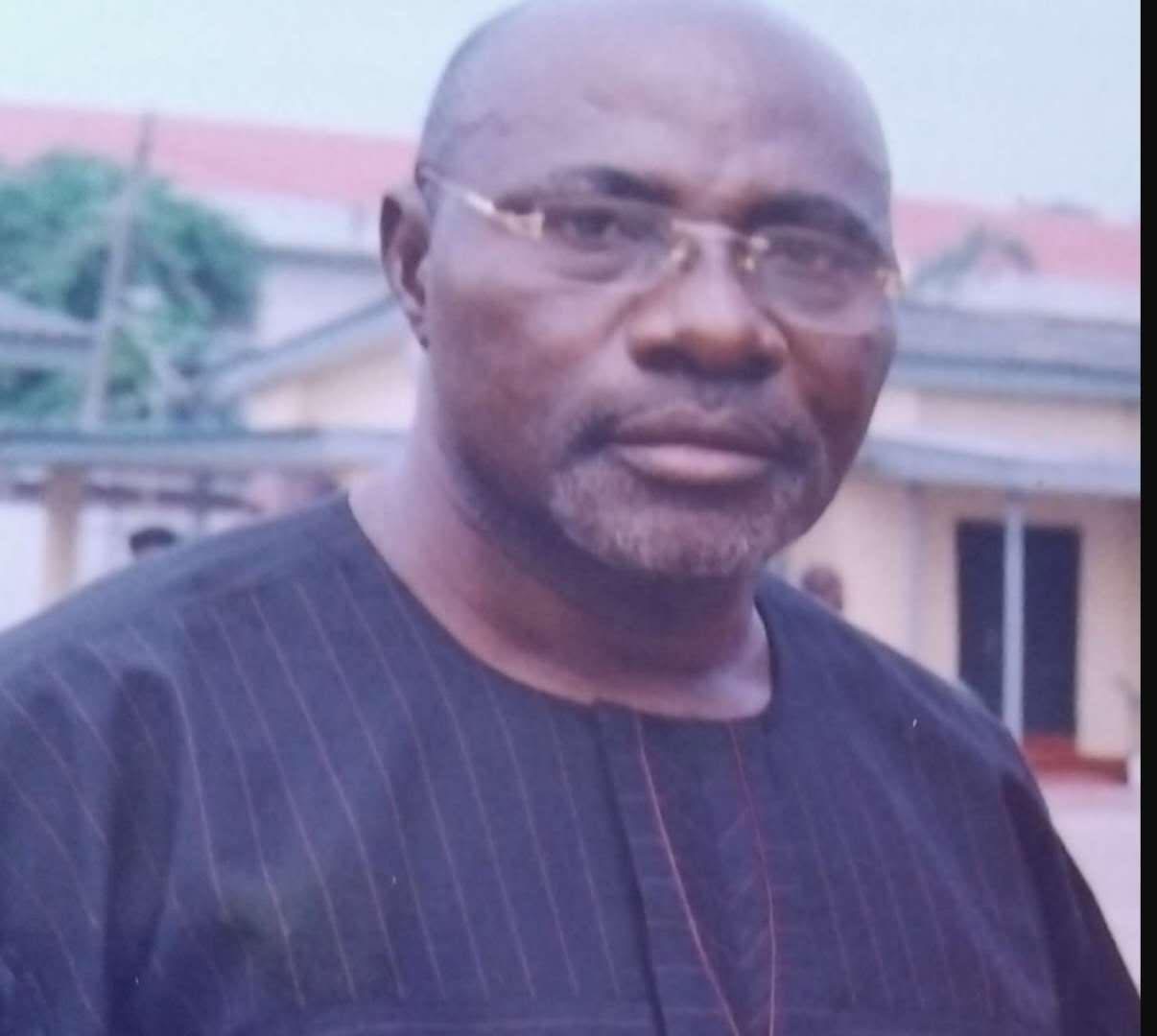
Grief has swept through the business and faith communities following the passing of Sir Innocent Chinedu Onuoha, the respected entrepreneur and Executive Chairman of InnoChris Group. He died peacefully in his sleep on December 11, 2025, at his home in Lagos. He was 71.
Born in 1954 in Umuoma Umuaro II Autonomous Community, Isiala Mbano Local Government Area of Imo State, Onuoha grew to become a symbol of enterprise, generosity, and unwavering faith. A devoted member and evangelist in the Anglican Communion, he lived a life that blended business success with service to God and humanity.
Long before many came to know his vast business interests, the name Innochris had already echoed in popular culture. In the 1990s, legendary Ogene music maestro Oliver De Coque famously chanted “Ugbo ndi oma Innochris eh!” in one of his songs — a line that celebrated the Onuoha brothers and helped make Sir Innocent Onuoha and his brother Christian Onugha widely known during that era.
Onuoha’s entrepreneurial journey began after years of professional experience working as secretary to a former Chief Engineer at Flour Mills of Nigeria. With determination and vision, he went on to establish InnoChris Group, a conglomerate that grew to include InnoChris Transport, InnoChris Computers, and InnoChris Spare Parts, serving customers across Nigeria.
Continues in comments below

Benita Enwonwu in the 1970s: Model, Actress, and Daughter of Ben Enwonwu

Kidnappers Took Loan With My Phone – Victim Recounts Ordeal

11 more arrested over Ozoro “r@ping festival”

-
Business1 year ago
US court acquits Air Peace boss, slams Mayfield $4000 fine
-

 Trending1 year ago
NYA demands release of ‘abducted’ Imo chairman, preaches good governance
-

 Politics1 year ago
Mexico’s new president causes concern just weeks before the US elections
-

 Politics1 year ago
Putin invites 20 world leaders
-

 Politics1 year ago
Russia bans imports of agro-products from Kazakhstan after refusal to join BRICS
-
Entertainment1 year ago
Bobrisky falls ill in police custody, rushed to hospital
-
Entertainment1 year ago
Bobrisky transferred from Immigration to FCID, spends night behind bars
-
Education2 years ago
GOVERNOR FUBARA APPOINTS COUNCIL MEMBERS FOR KEN SARO-WIWA POLYTECHNIC BORI