
EVENTS
‘We are opposed to youth confab, regionalism’ – MBF President, Bitrus

President of the Middle Belt Forum, MBF, Dr Pogu Bitrus has dismissed President Bola Ahmed Tinubu’s proposed 30 days conference with the youth contained in his Independence Day speech as a political jamboree only meant to win the support of the youth for the president’s political ambition.
Bitrus, in an interview with DAILY POST, also spoke on returning the country to regionalism, the move to strip the Nigeria Ports Authority, NPA, Nigeria Maritime Administration and Safety Agency, NIMASA, and Nigeria Customs Service, NCS of the revenue collection powers, the effect of the hike in electricity bill on minimum wage earners’ income and the role of the police in the recently held local government election in Rivers State, among others.
Proposed National Confab:
According to the MBF president, “It will amount to nothing. We have had national conferences in the past. The last one was the 2014 confab which gave us a blueprint on the way forward on how to achieve a better Nigeria for all Nigerians.
“Things have been addressed across board, including even things that have to do with the youths. Rather than creating another bureaucracy for political reasons, I think the government needs to look at the 2014 confab report as it affects our youths and other areas to ensure that constitutional amendment gets to a level where a lot of the problems that Nigerians are facing can be addressed. But as far as I am concerned, the proposed 30 days youth conference is a political jamboree.
“Mr President is just trying to appeal to the youths for political support otherwise things pertaining to the youths have been spelt out. Let those things be implemented so that we can have a better Nigeria where our youths can be tutored to take over from the older generation, so that there will be some mentoring along the line.
“But to just go and have a conference with the youths, to me, is a political gimmick to gain support and have a support base from the youths for the government rather than improving governance in Nigeria.”
Federal Government’s plan for FIRS, NPA, NIMASA and NCS:
Bitrus had this to say: “Although I have not studied the nitty-gritty of the government’s intentions, anything or any process that will improve the revenue collection system is a welcome development in Nigeria.
“
If you look at the report that has not been implemented, with regard to streamlining activities of the government agencies, ministries and others, the intention is to reduce the cost and ensure effectiveness of governance. So, anything that will improve the performance of the government and reduce bureaucracy is a welcome thing in this country.
The question we should be asking is: how will it be implemented? Will the implementation result in achieving the objectives of reducing the cost of governance, improving efficiency in governance, and increasing the revenue collections?
“These are the key factors. So, if it will reduce the cost of doing government business, then it is welcome. If it will reduce the bureaucracy in governance, it is equally welcome.
“But if while doing this, it only creates or multiplies the bureaucracy, because it may be taken from one hand and given out on the other hand, then there is a problem.
“This is because when it is streamlined, what happens to the agencies that have been stripped of their responsibilities? Will they just be there doing nothing?
“Will they be given other responsibilities or will the bureaucracies in those organisations be reduced since a big chunk of their work has been given to somebody else?
“These are some of the things that we have to study very carefully before making a comment about what the government has done.”
The President’s proposal for a return to regionalism:
While noting that nobody is opposed to regionalism, Bitrus noted that, “today, we have something which is not in the constitution but we follow it.
“We have the six geopolitical zones that are not in the constitution, but we base the sharing of appointments and infrastructure on that arrangement, which is not a constitutional provision.
“If regionalism will help us, it doesn’t mean that the states will be abrogated; that’s not what it means. It means that within a particular region, those states will exist.
“But as a region being a larger component, together with the states can perform better in terms of amenities and other infrastructure as a collective. Now, some of us are saying that we have a cumbersome system of government.
“With the presidential system, the government is too costly to run and some people are even talking about parliamentary system. All these are debates that have advantages and disadvantages, looking at whichever one you want to consider.
“But certainly, no system is perfect, and we in the Middle Belt zone are not opposed to having regionalism reintroduced in Nigeria. What we are saying is that if it is going to be reintroduced, we don’t want to be with our far northern brothers.
“Let them stay where they are and let us stay where we are. In the 2014 confab report, we advocated for a Middle Belt East, Middle Belt West, North East and North West and also four regions in the South.
“So, all these are possibilities that can take place. Some people are afraid because they feel that when a collection of persons in one region has so many commonalities, it can lead to secession.
“But whether there is regionalism or not, if people want to secede they will secede. We have had a civil war in this country because of secession; if Nigeria doesn’t work, it will fail.
“So, the important thing is whatever that will improve and take Nigeria to the Promised Land of development is welcomed by us. Some people are even talking of rotational presidency; yes if that is going to address our plurality, it is welcomed.
“Anything that will move us forward is welcomed. The problem in this country is that we have not yet become a nation. Every part is just thinking about its own people and all that and it doesn’t help anybody. So, we are not opposed to regionalism.
“However, in regionalism, we are opposed to the four regions which were there before the military coup of January 15, 1966.
“And we are saying that we, in the Middle Belt, don’t want to remain in the same bloc with our northern brothers because staying with them has been counterproductive and we would want to develop on our own.”
He emphasized that “We are saying that those of us in the Middle Belt want to remain separate from the far north. That is what we are saying in the regionalism arrangement.
“The geopolitical zones were a creation of the late Sani Abacha’s regime and it is serving some purpose. However, it doesn’t solve the problems which we are facing.
“For instance, in the Southern part of Borno State where I come from, there is so much disparity. Right from the time when our Vice President was Borno State Governor, people in the local governments of Southern Borno have been receiving different salaries from the people of Central and Northern Borno.
“You can investigate that because you are a journalist. As we speak, there are people receiving N9000 per month in Southern Borno as salaries in the local government system, different from Kanuri areas of Central and Northern Borno.
“Why should we stay together with such people? There are so many atrocities being committed in this country because some people think they have to lord it over others.
“So, why do we want to stay with such people? If today, a region is going to be formed, we in Southern Borno will say, no we are not joining with these people.
“Let them be on their own and let us be on our own so that everybody will work for the development of their area and not to be exploited by others. So, we are for regionalism, however, we don’t want to be with the far north.
“Benue and Plateau are in the North Central geopolitical zone. The Middle Belt is beyond North Central.
“The Middle Belt comprises peoples who were independent of the Caliphate and the Sultanate of Borno when the British came to colonise Nigeria, and we are found in the Middle Belt zone of Nigeria. Southern Borno, Gombe, Taraba, Adamawa, Benue, Plateau and Southern Kaduna as well as Southern Kebbi were all part of the Niger Province.
“They were taken to North West only because of the recommendation of a panel report which said that Sokoto State which was to be created then was devoid of manpower and those people should be shifted to North West, in this case, Sokoto, so that they would provide the necessary manpower.
“That was why they left Niger Province into that place; they are not part of it. They are part of the Middle Belt. So, those of us in the Northern part of this country that were independent of the Caliphate and the Sultanate of Borno when the British came are the Middle Belters and we cut across all the three Northern geopolitical zones, North East, North West and North Central.
“So, we are the Middle Belters. That is why someone like me from Chibok, who in 1902 when the British came to negotiate us into the protectorate just like any other person can now say I am a Middle Belter.
“When the British came to that side of the country, they went to Biu and from Biu to Chibok; unfortunately our forebears refused and challenged the British, leading to a protracted engagement that lasted from 1906 to early 1907 before our people were conquered.
“The Indirect Rule then took us to be under Borno Province and under Borno Emirate. So, but for Indirect Rule, we have nothing to do with them.
“Majority of the people within the Middle Belt are people who were subdued and subjugated through the Indirect Rule under the system of the Caliphate and the Sultanate of Borno. So, we are Middle Belters; we are who we are.”



EVENTS
EID-EL-FITR: IGP DISU FELICITATES MUSLIM FAITHFUL, ORDERS NATIONWIDE DEPLOYMENT OF TACTICAL ASSETS
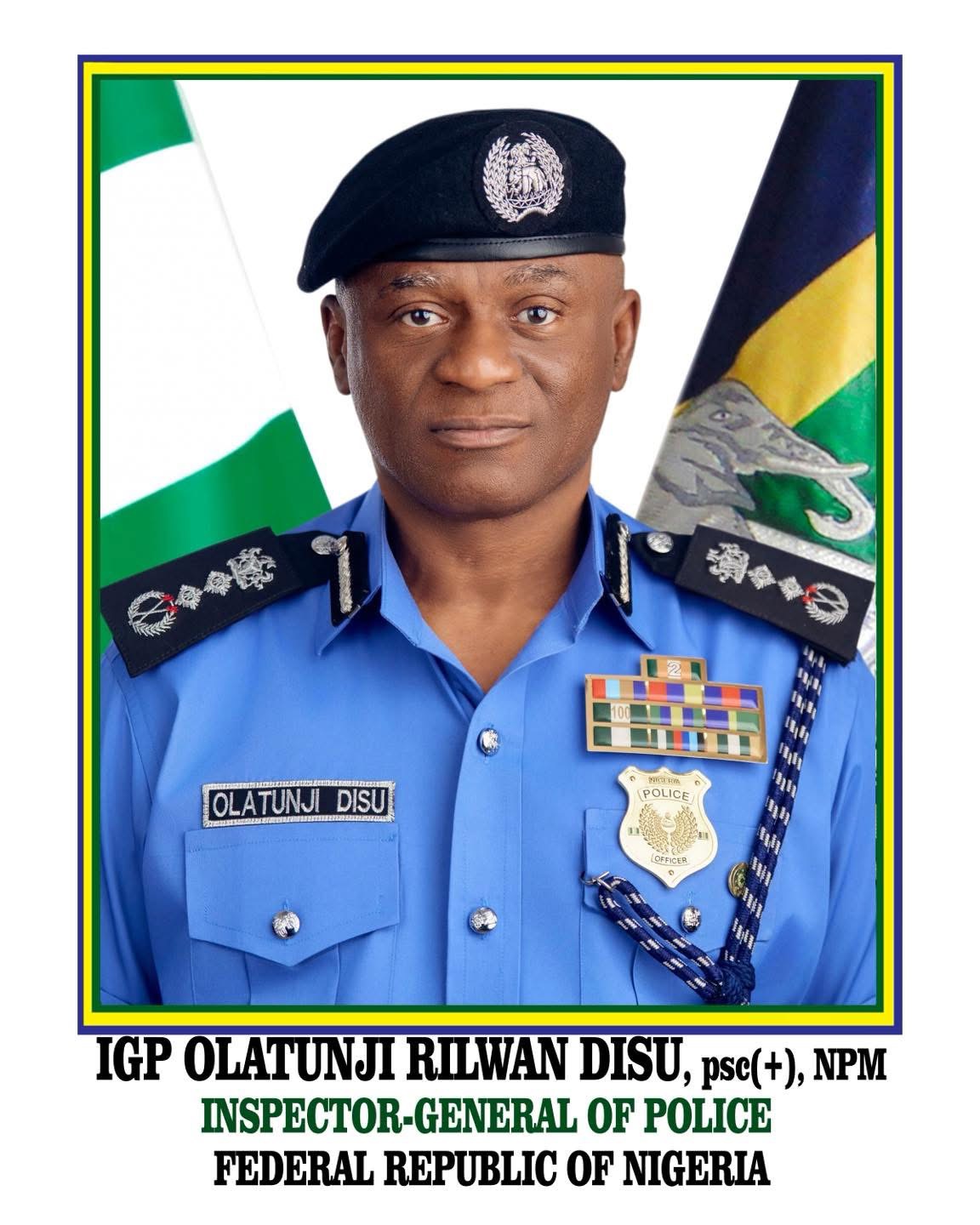
The Inspector-General of Police, IGP Olatunji Rilwan Disu, psc(+), NPM, has extended warm felicitations to the Muslim faithful across Nigeria on the successful completion of the holy month of Ramadan and the celebration of Eid-el-Fitr.
In furtherance of his commitment to ensuring a safe and secure environment during the festive period, the Inspector-General has directed Commissioners of Police and Tactical Commanders across all states of the Federation and the Federal Capital Territory to implement robust security arrangements.
Operational measures include:
Strategic deployment of tactical teams and intelligence operatives.
Deployment of the Special Intervention Squad and conventional police personnel to Eid prayer grounds and critical infrastructure.
Increased presence at highways, motor parks, recreational centers, and other public spaces to ensure peaceful, hitch-free celebrations.
The IGP has also ordered heightened visibility policing, coordinated patrols, enhanced surveillance operations, and intelligence-led stop-and-search duties. These actions are aimed at proactively deterring criminal activities and ensuring a swift response to any emerging threats.
IGP Disu calls on members of the public to remain vigilant, cooperate with law enforcement agencies, and promptly report any suspicious activities to the nearest police station or through the following emergency lines:
08057000001, 08057000002, 09133333785, and 09133333786.
IGP Tunji Disu wishes all Muslim faithful a peaceful and joyous Eid-el-Fitr.

DCP ANTHONY OKON PLACID psc(+) mni
Force Public Relations Officer
Force Headquarters, Abuja
20th March, 2026
EVENTS
Hon Success Opara celebrates Mothering Sunday with St. Peter women, hails them as the ‘neck that controls the household
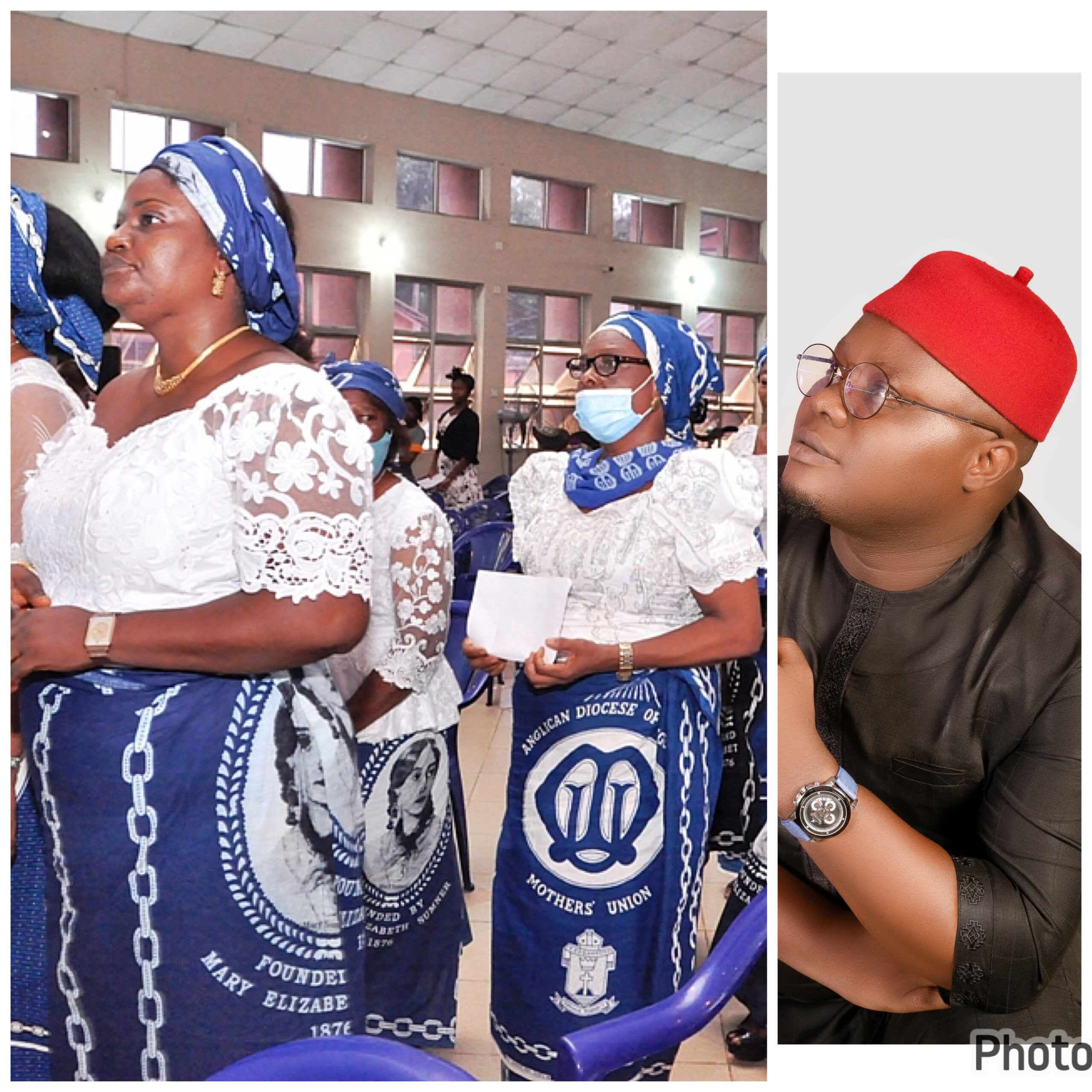
Hon Success Opara, former councilorship candidate for Ikenegbu Ward 2, celebrated Mothering Sunday with the women of St. Peter Anglican Church, Ikenegbu, extolling them as the backbone of their households.
He described them as the “neck that controls the household,” acknowledging their vital role in shaping families and communities.
Opara’s gesture is seen as a testament to his commitment to uplifting and empowering women.
The celebration, which coincided with the Christian observance of Mothering Sunday, featured fellowship and words of encouragement from Opara, who prayed for the women’s well-being.
This event highlights the importance of recognizing and appreciating mothers and mother figures in Nigerian society.
EVENTS
“Early marriage is better than fornication” – Mixed reactions as young Nigerian couple trends after welcoming a child
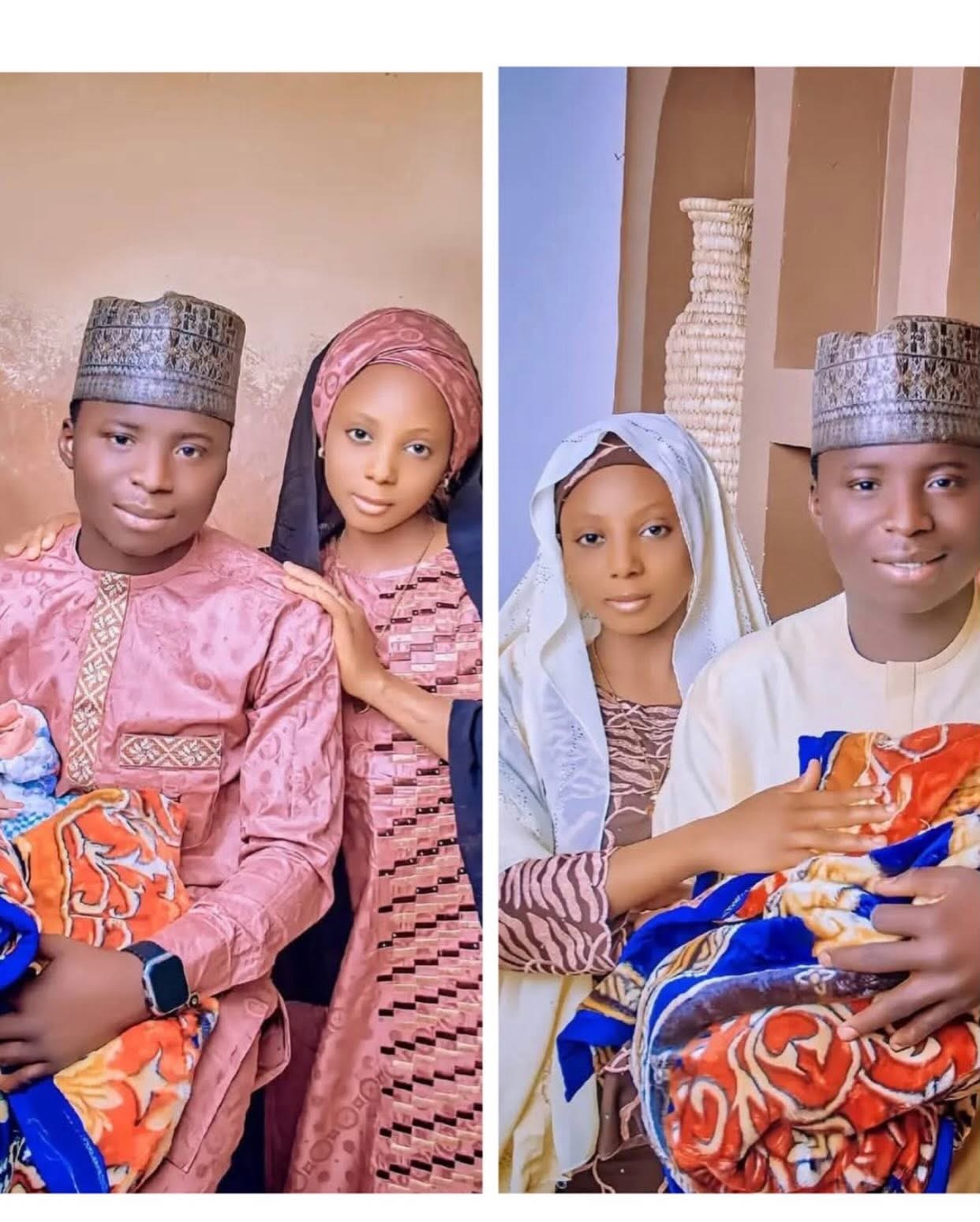
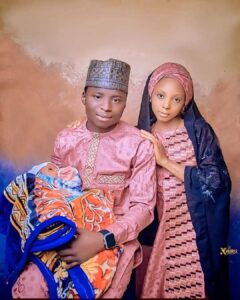
A young Nigerian couple are currently trending on Arewa social media circles after they welcomed their first child.
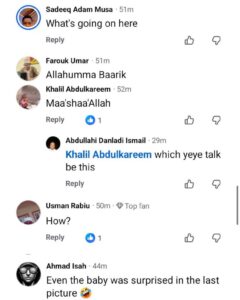
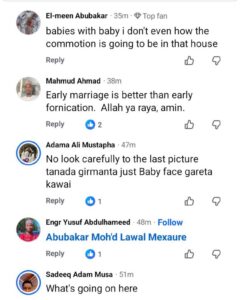
The pictures taken by a Kaduna-based photographer have sparked mixed reactions, with some people saying that the girl is underaged and not old enough to be a wife and mother.

David Mark Holds Secret Meeting With PRP Leaders as ADC Crisis Deepens

Chaos As Military Officers Exchange Blows During Tinubu’s Visit To Bayelsa (Videos)

HRH Ekwueme of Ochia Kingdom Iynched & kiIIed in Imo.

-
Business2 years ago
US court acquits Air Peace boss, slams Mayfield $4000 fine
-

 Trending2 years ago
NYA demands release of ‘abducted’ Imo chairman, preaches good governance
-

 Politics2 years ago
Mexico’s new president causes concern just weeks before the US elections
-

 Politics2 years ago
Putin invites 20 world leaders
-

 Politics2 years ago
Russia bans imports of agro-products from Kazakhstan after refusal to join BRICS
-
Entertainment2 years ago
Bobrisky falls ill in police custody, rushed to hospital
-
Entertainment2 years ago
Bobrisky transferred from Immigration to FCID, spends night behind bars
-
Education2 years ago
GOVERNOR FUBARA APPOINTS COUNCIL MEMBERS FOR KEN SARO-WIWA POLYTECHNIC BORI