
Politics
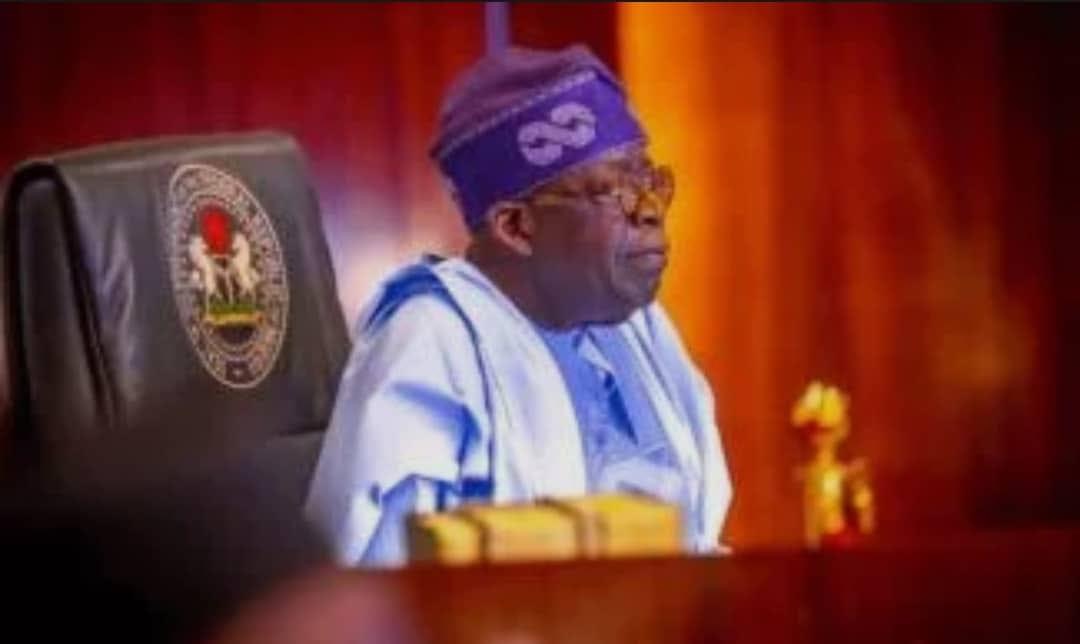
Where Is Tinubu? – Nigerians Lambast Presidency For Keeping Mute On Leader ‘Absent Without Official Leave’

May 4, 2024
NEWS
SaharaReporters had on Thursday exclusively reported Tinubu’s unannounced trip to Paris, France in what multiple sources confirmed was for medical reasons.
The silence of Nigeria’s presidency about President Bola Tinubu’s unofficial trip to France has revived raging debates over concerns and secrecy of the president’s state of health.
SaharaReporters had on Thursday exclusively reported Tinubu’s unannounced trip to Paris, France in what multiple sources confirmed was for medical reasons.
“The President is in France to see his doctors,” a source had said.
An investigation by SaharaReporters had revealed that a Nigerian presidential aircraft, a Gulfstream Aerospace GV-SP (G550) with registration number 5N-FGW and serial number 5310 (Mode-S 0640F2) with Tinubu onboard arrived at Paris Airport-Le Bourget, France around 04:00pm on Thursday from an airport in London.
The President on Tuesday morning left Saudi Arabia – where he attended the World Economic Forum – for London.
A statement issued last week by the Special Adviser to the President on Media and Publicity, Ajuri Ngelale said the special WEF meeting in Riyadh would end on Monday, April 29.
“After his engagements in the Netherlands, President Tinubu will proceed to attend a special World Economic Forum (WEF) meeting scheduled for April 28-29 in Riyadh, Saudi Arabia,” the statement had read.
Meanwhile, in the statement, the Presidency carefully left out information about when Tinubu was expected back in Nigeria after the international forum or that he would visit the UK and France after leaving Saudi Arabia.
Also, the Presidency has been silent on President Tinubu’s whereabouts since the international summit ended on Monday, April 29.
Efforts to reach Mr Bayo Onanuga, Special Adviser to the President on Information & Strategy, for comments and clarification failed as he did not answer calls from SaharaReporters. He also did not reply to messages sent to his mobile phone.
However, SaharaReporters learnt that the 5N-FGW (Gulfstream Aerospace) which was operated as Nigerian Air Force 1 – meaning the President was on board – left Riyadh International Airport on Tuesday, April 30 at 12:05 am (02:05 am Saudi Arabian time) and arrived at Stansted Airport, London at 06:35 am, UK time.
EXCLUSIVE: Tinubu Lands In France ‘For Medical Reasons’ As Presidency Keeps Mute On His Whereabouts Since World Economic Forum Ended Monday In Saudi
May 02, 2024
Image
The jet was used to replace the Boeing Business Jet (Boeing 737-700) 5N-FGT that is still in Germany for repairs.
Meanwhile, some Nigerians have taken over the social media to demand the whereabouts of Tinubu who has not been seen in public since he met with Microsoft Founder and Philanthropist, Bill Gates at the World Economic Forum Special Meeting in Riyadh, Saudi Arabia last Sunday, April 28.
The president who was supposed to make a public address to Nigerian civil servants on May 1 workers’ day was nowhere in sight.
Also, the President didn’t attend the last Federal Executive Council, FEC meeting.
Recently, the Vice President, Kashim Shettima has been attending and taking charge in so many occasions where Tinubu himself should have shown up.
Meanwhile, some Nigerians have declared the President Absent Without Official Leave (AWOL).
They wondered why Tinubu has refused to return to Nigeria after the WEF meeting ended in Saudi Arabia on Monday.
Some of them who took to the social media platform, X (formerly Twitter) said:
Paul Ibe, @OfficialPaulIbe said, “The whereabouts of Nigerian president must never be a subject of speculation. If Tinubu is in France for medicals, as reported by @SaharaReporters, or elsewhere, Nigerians deserve to know. After all, he is our property and is spending state resources.”
Tweet URL
DauDuSheshi, @MrGEO01 wrote, “The citizens must be allowed to know the status of their President and his medical conditions.
Every citizen is entitled to lead the Nation but it will be wrong for the President to be under serious medical need and keep that hidden from the citizens. We cant keep staying in dark.”
Tweet URL
Abayomi, @thebearsze said, “The president has been AWOL for a week. LMAO. This is what you people fought for? What you destroyed friendships and community for?The more things change, the more they stay the same.”
CHIDYE, @gentlechidye wrote, “This is why there was no address on Workers Day!”
Rhatti Bwoy, @donballen wrote, “Who knew our president has been awol for a week lol.”
Eighth wonders of the world, @gabrielonyebu10 wrote, “”I built Lagos” don run go hide for France for medical reason. Them no dey build hospital for Lagos? Ndi mgbu”
Tweet URL
Thomas NOT Sankara, @Isidore0001 said, “We knew he is awol for medical check up. This is no news, rather a pattern.”
Tweet URL
@ajaGunSEgun_ wrote, “For whatever reason, if Nigerians continue to allow political office holders to travel abroad for medical treatment or send their children to foreign universities, etc., meaningful development in both sectors will be impossible.”
john_though, @hey_watever wrote, “Tinubu’s first year: The dollar soars, petrol prices skyrocket, and the cost of living is unbearable. The minimum wage barely covers a bag of rice.
What progress has been made? Where is the ‘work’ we were promised?”
Tweet URL
Before the 2023 general elections, Tinubu’s health was a source of concern for many Nigerians.
SaharaReporters had reported how the former Lagos governor spent over four months patronising hospitals in France, the United States and the United Kingdom where he underwent several surgeries between 2020 and 2022.
He was flown out of the country some days before Christmas in 2020 to Paris, France. The President returned to Nigeria on January 24, 2021, after a month’s absence from Nigeria.
He also went for a medical check-up in France in June 2021 and was conspicuously absent from a one-day working visit of then-President Muhammadu Buhari to Lagos State. Tinubu, amidst death rumours, was forced to return to the country on Tuesday, June 15, 2021.
SaharaReporters also reported that Tinubu was hospitalised in Maryland, the United States in July 2021. On August 9, the APC leader had another knee surgery at the Johns Hopkins University Hospital in Maryland, U.S.
The APC chieftain, it was learnt, left the U.S. for the United Kingdom on crutches, a few days after the surgery
Sources close to Tinubu had told SaharaReporters that he wanted the surgery in Paris, France but changed his plan over rumours of his death.
In August, his predecessor, President Buhari paid a visit to Tinubu in London and the latter was seen with a walking stick during Buhari’s visit, confirming SaharaReporters’ story that he had undergone surgery in the US.
Upon his return in October 2022, Tinubu confirmed that he underwent surgery on his right knee as well as post-surgery physiotherapy on the said knee during his medical trip abroad.
SaharaReporters also reported how the President, after the May 29, 2023 swearing-in became exhausted and went on a bed rest.
SaharaReporters also exclusively reported that Tinubu returned to France to see his doctors, weeks before his inauguration on May 29.




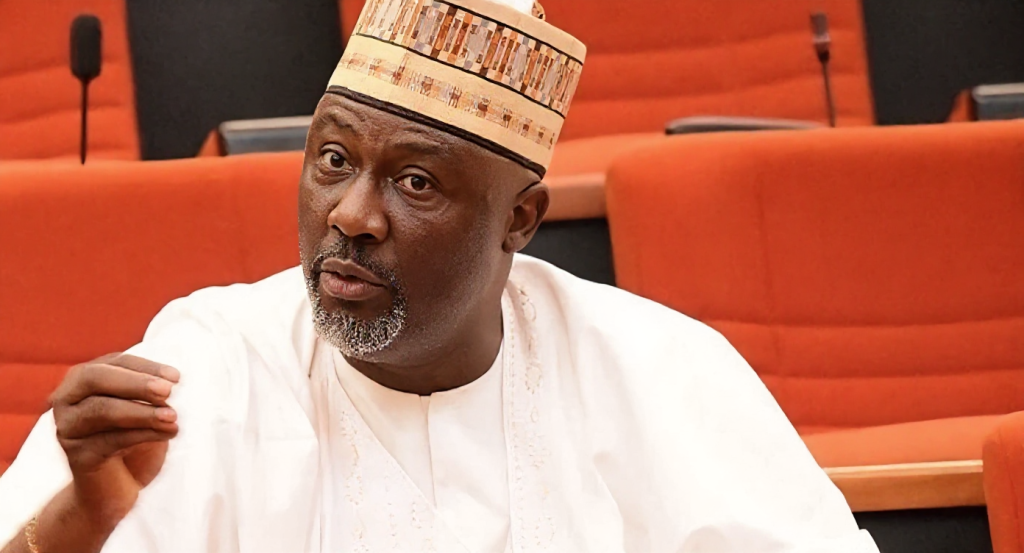
Former lawmaker, Dino Melaye Esq, has raised concerns over the Senate’s reported rejection of the electronic transmission of election results.
The move, according to Melaye, is a clear endorsement of election rigging and an indication of a sinister plan to rig the 2027 elections.
In a statement on Friday, the former lawmaker criticized the Senate’s decision, stating that it undermines the credibility of the electoral process.
The African Democratic Congress, ADC chieftain, also stated that the move opens the door for electoral manipulation and fraud.
He further warned that the rejection of electronic transmission of results is a step backwards for democracy in Nigeria.
Melaye called on lawmakers and citizens to stand up against “this blatant attempt to undermine the will of the people and ensure that future elections are free, fair, and transparent”.
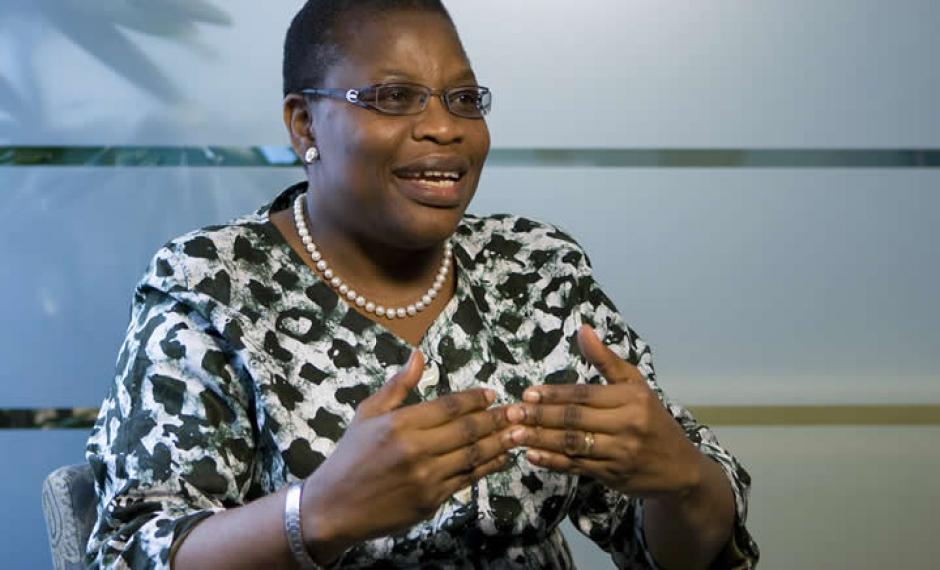
Former Minister of Education, Oby Ezekwesili, has said Nigerians have every reason to be mad at the Senate over the ongoing debate on e-transmission of election results.
Ezekwesili made this known on Friday when she featured in an interview on Arise Television’s ‘Morning Show’ monitored by DAILY POST.
DAILY POST reports that the Senate on Wednesday turned down a proposed change to Clause 60, Subsection 3, of the Electoral Amendment Bill that aimed to compel the electronic transmission of election results.
Reacting to the matter, Ezekwesili said, “The fundamental issue with the review of the Electoral Act is that the Senate retained the INEC 2022 Act, Section 60 Sub 5.
“This section became infamous for the loophole it provided INEC, causing Nigerians to lose trust. Since the law established that it wasn’t mandatory for INEC to transmit electoral results in real-time, there wasn’t much anyone could say.
“Citizens embraced the opportunity to reform the INEC Act, aiming to address ambiguity and discretionary opportunities for INEC. Yet, the Senate handled it with a “let sleeping dogs lie” approach. The citizens have every reason to be as outraged as they currently are.”
Politics
Electoral act: Senate’s action confirms Nigeria ‘fantastically corrupt’, ‘disgraced’ – Peter Obi
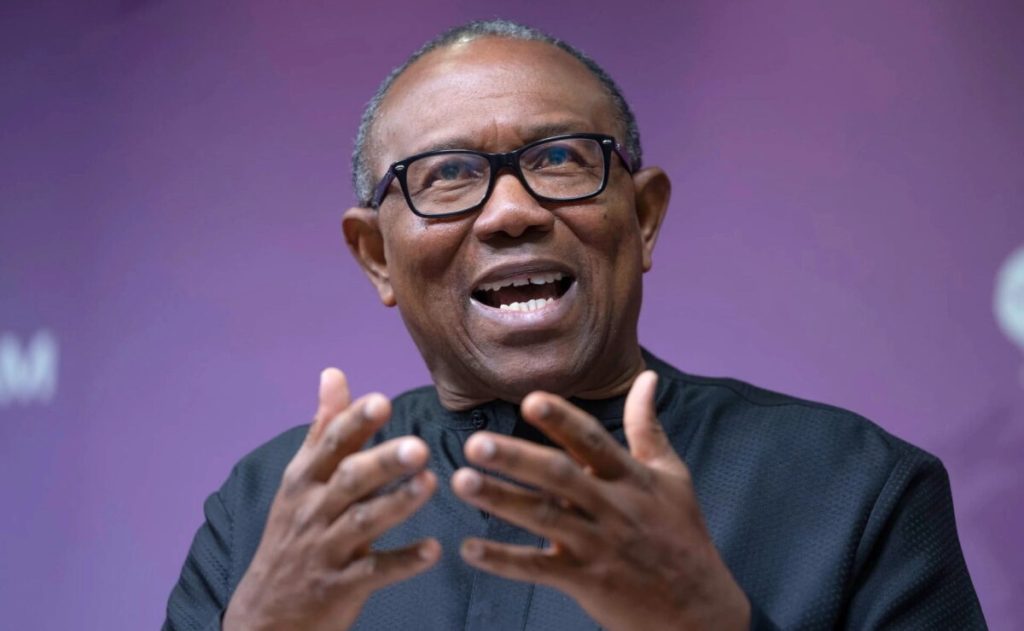
Former Labour Party presidential candidate, Peter Obi, has condemned the Senate’s refusal to make electronic transmission of election results mandatory, saying the move further exposes Nigeria as a fantastically corrupt and disgraced country.
Obi expressed his views in a statement shared on X on Friday, where he accused lawmakers of deliberately weakening Nigeria’s democratic process ahead of the 2027 general elections.
He explained that his reaction came after a brief pause to mourn victims of a deadly tragedy in Kwara State, where over 150 people reportedly lost their lives.
“Let us first pray for the souls of the innocent Nigerians lost in Kwara. That painful incident is why I delayed responding to the shameful development surrounding our electoral system,” he wrote.
Describing the Senate’s decision as intentional and dangerous, Obi said rejecting mandatory electronic transmission was not a simple oversight but a calculated attempt to block transparency.
“The Senate’s open rejection of electronic transmission of results is an unforgivable act of electoral manipulation ahead of 2027,” he said.
According to him, the action strikes at the heart of democracy and raises serious questions about the true purpose of governance in Nigeria.
“This failure to pass a clear safeguard is a direct attack on our democracy. By refusing these transparency measures, the foundation of credible elections is being destroyed. One must ask whether government exists to ensure justice and order or to deliberately create chaos for the benefit of a few.”
The former Anambra State governor linked the post-election controversies of the 2023 general elections to the failure to fully deploy electronic transmission of results, insisting that Nigerians were misled with claims of technical failures.
“
The confusion, disputes and manipulation that followed the 2023 elections were largely due to the refusal to fully implement electronic transmission,” he said.
He added that the so-called system glitch never truly existed.
Obi compared Nigeria’s electoral process with those of other African countries that have embraced technology to improve credibility, lamenting that Nigeria continues to fall behind.
“Many African nations now use electronic transmission to strengthen their democracy. Yet Nigeria, which calls itself the giant of Africa, is moving backwards and dragging the continent along.”
He criticised Nigeria’s leadership class, saying the country’s problems persist not because of a lack of ideas but because of deliberate resistance to meaningful reform.
“We keep organising conferences and writing policy papers about Nigeria’s challenges. But the truth is that the leaders and elite are the real problem. Our refusal to change is pushing the nation backwards into a primitive system of governance.”
Warning of the dangers ahead, Obi said rejecting electronic transmission creates room for confusion and disorder that only serves the interests of a small group.
He also recalled past remarks by foreign leaders who described Nigeria as corrupt, arguing that actions like this continue to justify those statements.
“When a former UK Prime Minister described Nigeria as ‘fantastically corrupt,’ we were offended. When former US President Donald Trump called us a ‘disgraced nation,’ we were angry. But our continued resistance to transparency keeps proving them right.”
Obi warned that Nigerians should not accept a repeat of the electoral irregularities witnessed in 2023.
“Let there be no mistake. The criminality seen in 2023 must not be tolerated in 2027.”
He urged citizens to be ready to defend democracy through lawful and decisive means, while also calling on the international community to closely monitor developments in Nigeria’s electoral process.
“The international community must pay attention to the groundwork being laid for future electoral manipulation, which threatens our democracy and development,” Obi stated.
He concluded by expressing hope that change is still possible if Nigerians take collective responsibility.
“A new Nigeria is possible but only if we all rise and fight for it.”

Police bust syndicate behind nude photo blackmail in Lagos

Man in shock after lady he lodged with in a hotel in Abuja flees with his car and other valuables

US Reacts As De@th Toll In Kwara Terror Attacks Hits 200

-
Business1 year ago
US court acquits Air Peace boss, slams Mayfield $4000 fine
-

 Trending1 year ago
NYA demands release of ‘abducted’ Imo chairman, preaches good governance
-

 Politics1 year ago
Mexico’s new president causes concern just weeks before the US elections
-

 Politics1 year ago
Putin invites 20 world leaders
-

 Politics1 year ago
Russia bans imports of agro-products from Kazakhstan after refusal to join BRICS
-
Entertainment1 year ago
Bobrisky falls ill in police custody, rushed to hospital
-
Entertainment1 year ago
Bobrisky transferred from Immigration to FCID, spends night behind bars
-
Education1 year ago
GOVERNOR FUBARA APPOINTS COUNCIL MEMBERS FOR KEN SARO-WIWA POLYTECHNIC BORI