When Nigerians mention Julius Berger, many immediately think of bridges, highways, government buildings and major infrastructure projects. The name has become so familiar that it is sometimes used almost interchangeably with construction itself.
But Julius Berger was originally the name of a German entrepreneur whose life began long before the company bearing his name entered Nigeria.
His story is also one of business ambition, international expansion and a tragic end during the Holocaust.
From a small German town to the construction industry
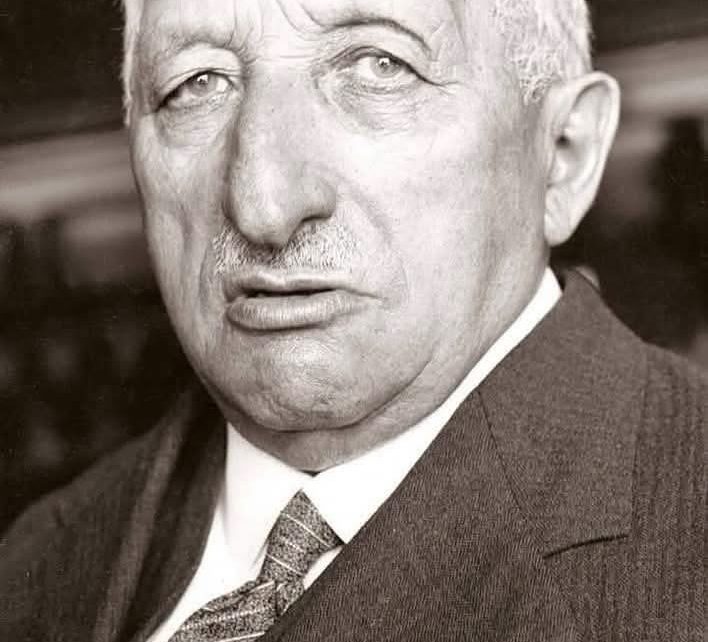
Julius (Juda) Berger was born on 22 September 1862 in Zempelburg, a town in West Prussia that is now known as Sępólno Krajeńskie in Poland.
He came from a family involved in the transport business. As a young boy, he went to Berlin to undertake a commercial apprenticeship at a leather wholesale firm. However, he did not complete the training. In 1878, he returned home and joined his father’s transport business.
The family enterprise initially transported agricultural goods and other materials. Over time, Berger became increasingly involved in transporting gravel, stones and other building materials for road and railway construction. This brought him into closer contact with the construction industry and influenced the direction of his career.
In 1885, he secured an early construction contract to build a road. He subsequently developed his business, taking on more substantial projects and expanding beyond his hometown.
In 1905, he established Julius Berger Tiefbau AG, a civil engineering company that grew into a significant construction business in Germany. Its work eventually extended beyond the country into international markets.
The company enters Nigeria
Although Julius Berger died before the company began operating in Nigeria, his name and business legacy eventually became part of the country’s infrastructure history.
The company’s Nigerian story began in 1965, when Julius Berger Tiefbau AG secured the contract for the construction of the Second Mainland Bridge in Lagos, now popularly known as Eko Bridge.
This was a major engineering undertaking. Construction began in 1965, and the bridge was commissioned in 1968. It became one of the company’s defining early projects in Nigeria.
In 1970, Julius Berger Nigeria Limited was incorporated as a Nigerian company. From its initial involvement in bridge construction, the company expanded into roads, ports, dams, industrial facilities and major buildings.
Major projects associated with Julius Berger in Nigeria
Over the decades, Julius Berger has been involved in several important infrastructure and construction projects across the country.
Among the projects documented in the company’s historical records are:
Eko Bridge, Lagos: The company’s first major Nigerian project, awarded in 1965 and commissioned in 1968.
Tin Can Island Port, Lagos: The company undertook the construction of the port, which was commissioned in 1977.
New Carter Bridge, Lagos: Julius Berger records the completion of this major bridge project in 1986.
Ajaokuta Steel Plant: The company undertook substantial civil works and construction activities connected with the steel complex during the development of Nigeria’s industrial sector.
Itakpe–Ajaokuta Railway: Julius Berger’s records document its involvement in the railway project, which was intended to connect the iron ore mines at Itakpe with the Ajaokuta steel complex.
Abuja infrastructure: As the Federal Government developed Abuja into Nigeria’s new capital, Julius Berger became involved in major construction and infrastructure works, including roads, bridges and buildings.
National Assembly projects: The company undertook construction work on additional office wings and other facilities within the National Assembly complex.
Central Bank of Nigeria headquarters: Julius Berger was awarded the contract for the construction of the bank’s headquarters in Abuja in 2000.
Admiralty–Alexander Link Bridge, Lagos: The company received the contract for this Lagos bridge project in 2009.
Nnamdi Azikiwe International Airport, Abuja: Julius Berger completed construction work associated with the airport in 1998 and later undertook emergency runway and taxiway rehabilitation in 2016.
These projects illustrate the company’s expansion from its initial bridge contract into a wide range of construction and engineering activities.
It is important, however, to distinguish between projects the company completed, projects in which it undertook specific construction work and projects that remained under development. For instance, the Ajaokuta Steel Plant and its associated railway should not be described as fully completed simply because Julius Berger participated in their construction.
The man behind the name
While the company became increasingly prominent in Nigeria, the founder’s personal history followed a very different course.
Julius Berger was Jewish. During the Nazi era in Germany, he was forced out of his business because of his Jewish background. He and his wife, Flora, were deported to the Theresienstadt concentration camp in September 1942.
Julius Berger was murdered there on 13 July 1943. He was 80 years old.
His death was part of the persecution and murder of European Jews under Nazi rule. His wife, Flora, had been murdered at Theresienstadt in October 1942.
The history of the man whose name would later become familiar to millions of Nigerians is therefore also connected to one of the darkest chapters of twentieth-century European history.
A name that became part of Nigeria’s infrastructure history
Julius Berger Nigeria has grown considerably since its arrival in 1965. Its activities now extend across civil engineering, building construction, industrial projects and related services. The company has also become one of the major private-sector construction employers in Nigeria.
The name Julius Berger is now associated with some of the country’s most recognisable infrastructure projects. Yet the Nigerian company is not the same thing as the man who founded the original German construction business.
The distinction matters: Julius Berger, the German entrepreneur, died in 1943, while the company bearing his name began its Nigerian operations in 1965.
From a small transport business in West Prussia to major construction contracts in Nigeria, the history behind the name stretches across continents and generations.
Sources
– Julius Berger Nigeria Plc, Profile and History
– Julius Berger Nigeria Plc, 50th Anniversary Brochure
– Institute of Developing Economies, Japan External Trade Organization, African Growing Enterprises: Julius Berger Nigeria Ltd
– Stolpersteine in Berlin, Julius Berger
– Friedrich Ebert Foundation, German biographical index, Berger, Julius
– Berlin-Brandenburg Economic Archives, historical material on Julius Berger