An account from Ibrahim Badamasi Babangida’s autobiography, A Journey in Service.
In his autobiography, A Journey in Service, former Nigerian Head of State General Ibrahim Badamasi Babangida recounts how his late wife, Maryam, formerly known as Maria, embraced Islam after they decided to marry.
Babangida explains that he had made up his mind to marry Maria even before he was discharged from hospital. Once he was released, he travelled to Kaduna, where she lived with her mother and uncle, eager to tell her that he had chosen her as his future wife.
He admired her reserved nature, upbringing and character. However, convincing her to accept his proposal was not immediate.
According to Babangida, Maria was initially sceptical about marrying him. She knew about his reputation as a sociable young man and was uncertain whether he was ready for the responsibilities of marriage. Some people around her also questioned his seriousness.
Her family, however, had no major objections to the relationship because they knew him. Babangida recalled receiving support from members of her family, including Garba Duba’s father, who was Maria’s uncle and helped persuade her to consider the proposal.
Eventually, Maria accepted that he was serious about marrying her.
A conversation about faith and marriage
Before their wedding, Babangida made it clear that Islam was an important part of his life and that he wanted his wife to embrace the faith.
He explained that Maria had been born into a family with both Christian and Muslim influences and was already living in a Muslim household. As a result, he believed that embracing Islam was not entirely unfamiliar to her.
In his account, Maria accepted the decision and adapted to married life as a Muslim.
Babangida also recalled making another promise during their courtship: he would not take multiple wives. Having witnessed the difficulties that polygamous family arrangements could create among colleagues and members of his extended family, he said he wanted a marriage built around one lifelong partner.
He believed that avoiding polygamy would give them a better chance of building a stable family together.
Their wedding in Kaduna, 1969
After Maria agreed to marry him, Babangida returned briefly to the war front during the Nigerian Civil War. While there, he was promoted to the position of Brigade Major.
He later returned to Kaduna, where preparations for the wedding continued. By then, Maria had adopted the name Maryam in preparation for their marriage.
The couple got married on 6 September 1969, at the marriage registry in Kaduna. Babangida was 28, while Maryam was approaching her 21st birthday.
Because she had embraced Islam before the wedding, the civil ceremony at the registry was followed by Islamic marriage rites.
Babangida wrote warmly about his wife in his autobiography, describing her as someone who surpassed the hopes and expectations he had held when he was a young man beginning married life.
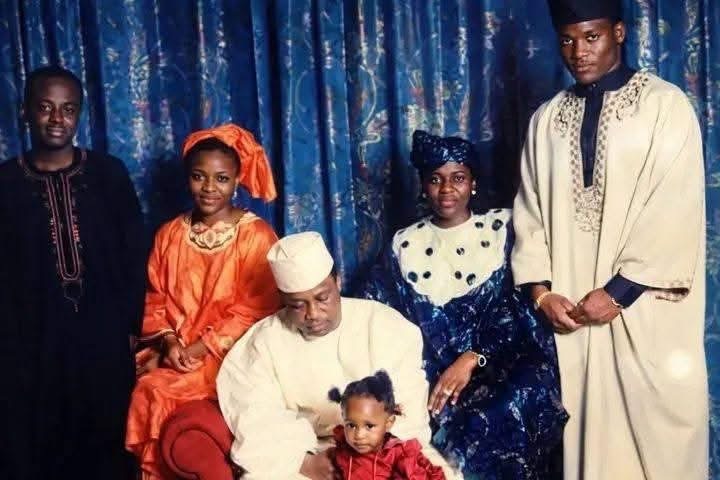
Their marriage lasted for decades, and Maryam remained an important part of his personal and family life until her death in December 2009.
A personal account of faith and companionship
Beyond the story of how they met and married, Babangida’s recollection offers a personal account of the conversations and decisions that shaped their relationship.
It records how they discussed religion before marriage, how Maria became Maryam, and how they agreed on the kind of family life they wanted to build.
The account is drawn from Babangida’s own recollections in A Journey in Service, providing his perspective on a significant chapter of their family history.
Source: Ibrahim Badamasi Babangida, A Journey in Service.