
Columns
Former Nigerian Vice President Alex Ekwueme played a key role in shaping ideas about Nigeria’s political structure during the 1995 Constitutional Conference convened by the military government of Sani Abacha.

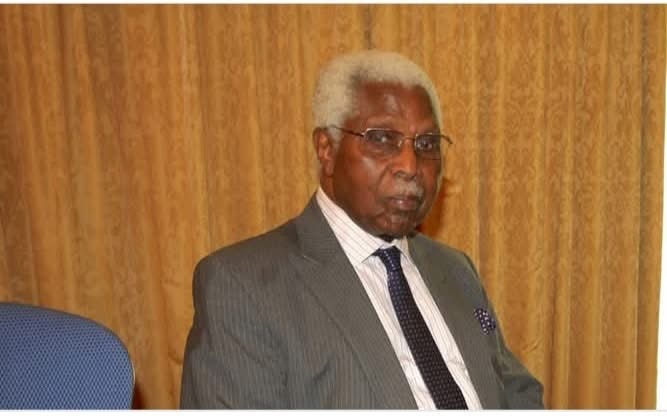
At the conference, Ekwueme proposed dividing the country into six geopolitical zones: North-Central, North-East, North-West, South-East, South-South, and South-West. This framework was designed to promote balance, equity, and fair representation among Nigeria’s diverse regions and has since become a widely recognized way of organizing the country politically and administratively.
Ekwueme also suggested a presidential system with a single, nonrenewable five-year term for the President. In his proposal, the President would be supported by six Vice Presidents—each representing one of the six geopolitical zones, including the President’s own zone. The same single five-year term structure was also proposed for state governors.
Additionally, he recommended that if the President died, resigned, or was removed from office, the Vice President from the President’s geopolitical zone would complete the remainder of the President’s term.
This arrangement was intended to maintain regional balance and political stability within the proposed system.
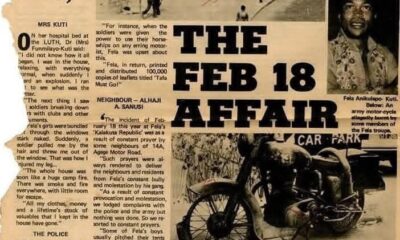



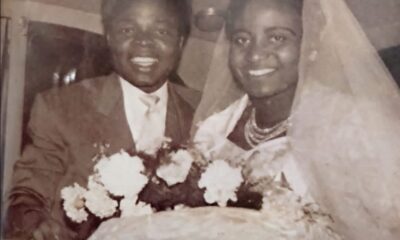

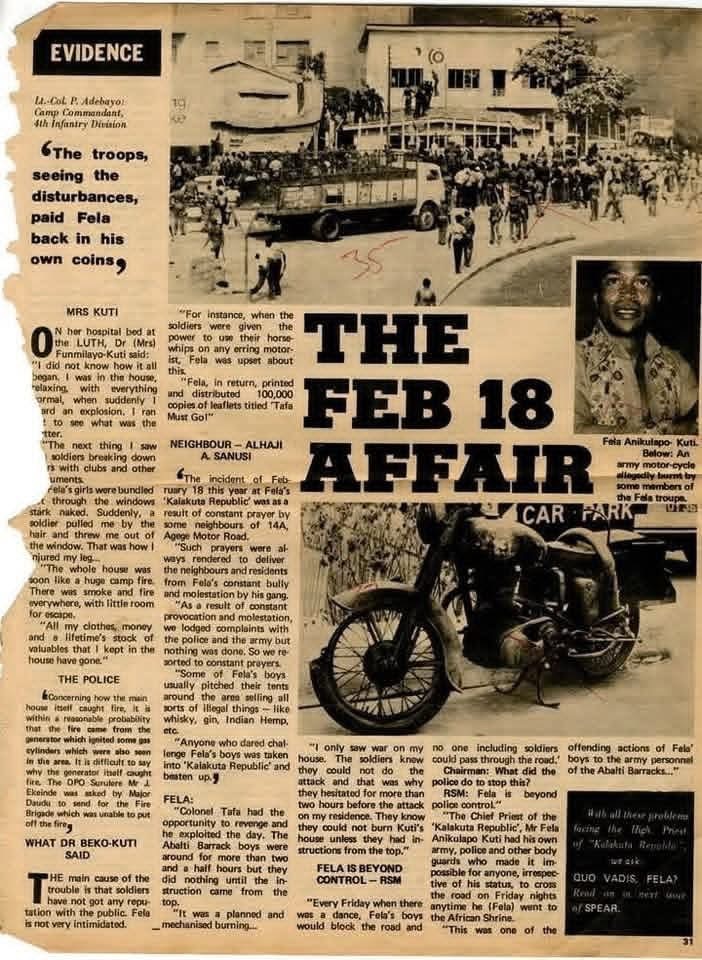
A tragic moment in Nigerian history when a military raid on Fela Kuti’s Kalakuta Republic led to the assault of the renowned activist Funmilayo Ransome-Kuti.
A Harrowing Testimony
One of the most disturbing accounts from the 1977 raid on Kalakuta Republic comes from Funmilayo Ransome-Kuti, one of Nigeria’s most influential activists and the mother of Fela Kuti.
Recounting the attack, she reportedly stated:
“Suddenly a soldier pulled me by the hair and threw me out of the window. That was how I injured my leg.”
This violent act occurred during a military assault on Kalakuta Republic, the communal residence and political headquarters of Fela Kuti and his associates in Lagos.
The incident became one of the most controversial episodes in Nigeria’s cultural and political history.
Funmilayo Ransome-Kuti: Pioneer of Nigerian Activism
Funmilayo Ransome-Kuti (1900–1978) was a prominent Nigerian feminist, teacher, and political activist from Abeokuta.
She played a major role in the Abeokuta Women’s Revolt of the 1940s, mobilising thousands of women to protest colonial taxation policies and the authority of traditional rulers allied with colonial administration.
Her activism made her one of the earliest female political leaders in Nigeria. Over the decades, she advocated for:
Women’s political participation
Social justice
Anti-colonial resistance
By the 1970s, she had become an elder stateswoman of Nigerian activism and was living with her son Fela at Kalakuta Republic.
FESTAC 77 and Rising Tensions
The events leading up to the raid were closely connected to the political atmosphere surrounding Second World Black and African Festival of Arts and Culture, widely known as FESTAC 77.
Held between January and February 1977 in Lagos, FESTAC was one of the largest cultural festivals ever organised in Africa. The event brought together artists, performers, and scholars from across the African diaspora.
Initially, Fela Kuti served on the festival’s planning committee. However, he later clashed with the committee chairman, Ibrahim Babangida Haruna (often referred to as Maj.-Gen. I.B. Haruna), after his proposals for improving the festival were rejected.
Fela subsequently withdrew his support and publicly criticised the festival, describing it as a political spectacle rather than a meaningful cultural event.
The Shrine Versus FESTAC
During FESTAC 77, Fela intensified his criticism of the Nigerian government through performances at his famous nightclub, the Afrika Shrine.
The Shrine quickly became an alternative cultural hub during the festival. Many visitors and music enthusiasts began attending Fela’s performances instead of official FESTAC events.
Through his music and speeches, Fela openly condemned military rule and government corruption, drawing large crowds and international attention.
This growing popularity reportedly increased tensions between Fela and the authorities.
The Raid on Kalakuta Republic
Shortly after FESTAC 77 ended, in February 1977, a large number of soldiers raided Kalakuta Republic, the compound where Fela lived with his family, band members, and followers.
During the raid:
The compound was destroyed and burned
Residents were beaten and assaulted
Musical instruments and recordings were destroyed
It was during this assault that Funmilayo Ransome-Kuti was thrown from a window, sustaining severe injuries.
The attack shocked many Nigerians and attracted international criticism.
Fela’s Response: “Unknown Soldier”
Following the destruction of Kalakuta Republic, Fela responded through music.
In 1979, he released the protest song Unknown Soldier, which directly criticised the government’s official explanation of the attack.
Authorities had claimed that the destruction of the compound was carried out by an “unknown soldier.”
Through the song, Fela sarcastically rejected this explanation and described the violence inflicted on him, his family, and his community.
The Tragic Consequence
The injuries sustained by Funmilayo Ransome-Kuti during the raid had severe long-term consequences. She never fully recovered from the trauma and died in 1978, about a year after the attack.
Her death marked a tragic end to the life of one of Nigeria’s most important political activists.
Historical Significance
The Kalakuta raid remains one of the most discussed incidents in Nigeria’s cultural and political history.
It highlights several themes:
The tensions between artists and military governments
The role of music as political resistance
The vulnerability of civil activists during military rule
For many historians, the event symbolises the intense confrontation between Fela Kuti’s radical artistic activism and the authoritarian political environment of Nigeria during the 1970s.
Sources
Spear Magazine, July 1977
Nigerian cultural archives on Fela Kuti
Historical documentation of the Second World Black and African Festival of Arts and Culture (FESTAC 77)
Nigerian Nostalgia Project historical archives.
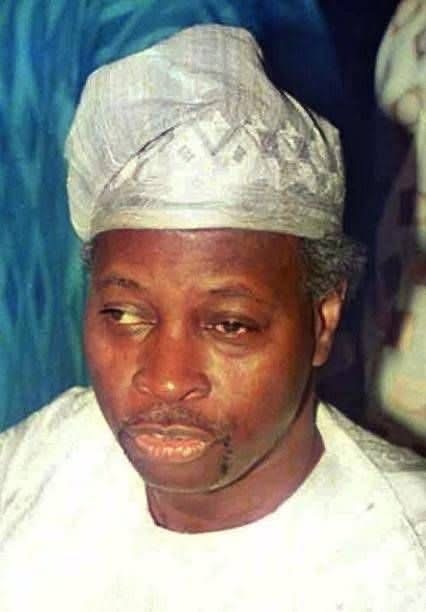
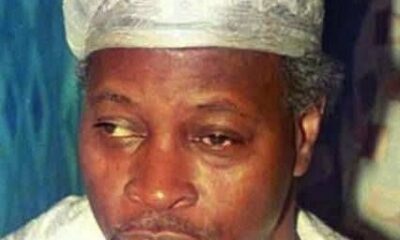
Technocrat, civil servant, and presidential candidate whose role in Nigeria’s democratic transition remains widely discussed.
Early Life and Education
Olu Falae (born 21 September 1938) is a Nigerian economist, public administrator, and politician from Akure. Over several decades, he has built a reputation as one of Nigeria’s notable technocrats who transitioned into national politics.
Falae was born into a Yoruba family known for valuing education and public responsibility. His early schooling took place in southwestern Nigeria before he proceeded to the University of Ibadan, one of Nigeria’s oldest universities, where he studied Economics.
After completing his undergraduate studies, he furthered his education in the United States at Yale University, where he pursued postgraduate training that strengthened his expertise in finance, administration, and economic policy.
Career in Civil Service and Economic Administration
Before entering partisan politics, Falae built a distinguished career in Nigeria’s public administration and financial sector. Known for his analytical skills and administrative discipline, he rose steadily through the ranks of government service.
His most prominent appointment came during the military administration of Ibrahim Babangida, when he served as Secretary to the Military Government and Head of the Civil Service of the Federation from 1986 to 1990.
This role placed him at the centre of major policy decisions at a time when Nigeria was undergoing significant economic restructuring. During this period, the government introduced the Structural Adjustment Programme (SAP), a series of economic reforms aimed at stabilising Nigeria’s economy, restructuring government spending, and addressing financial imbalances.
SAP was one of the most controversial economic policies in Nigeria’s history. While supporters argued it was necessary to stabilise the economy and attract international financial support, critics believed it led to social and economic hardship for many citizens.
Minister of Finance
In 1990, Falae briefly served as Nigeria’s Minister of Finance, further reinforcing his role as a key figure in economic governance during the Babangida era.
Although his tenure was relatively short, he was involved in managing fiscal policies and advising the government on economic reform strategies during a challenging period for the Nigerian economy.
His reputation as a technocrat and administrator continued to grow within both government and private sector circles.
Entry into Democratic Politics
Nigeria’s return to civilian rule in the late 1990s opened a new chapter in Falae’s career. After decades of military rule, the country prepared for democratic elections in 1999.
During this transition, two major opposition parties — the Alliance for Democracy (AD) and the All Peoples Party Nigeria (APP) — formed a political alliance and adopted Falae as their joint presidential candidate.
He contested the election against Olusegun Obasanjo, the candidate of the People’s Democratic Party Nigeria (PDP).
The election was historically significant because it marked Nigeria’s transition from military rule to a democratic government after years of dictatorship.
The 1999 Presidential Election
The 1999 Nigerian presidential election remains one of the most consequential elections in Nigeria’s political history.
According to official results released by the Independent National Electoral Commission (INEC), Obasanjo won the election and was subsequently sworn in as Nigeria’s President on 29 May 1999, beginning the Fourth Republic.
However, Olu Falae and many of his supporters have consistently disputed the official outcome. Over the years, he has maintained that the figures declared did not reflect the actual votes cast.
In interviews given decades later, Falae stated that his legal team reviewed the election results and concluded that he had won by more than one million votes. According to him, the decision not to challenge the result in court was influenced by concerns about maintaining national stability.
He later explained that many political leaders at the time believed that disputing the result could threaten Nigeria’s fragile transition to democracy after years of military rule.
Personal Life
Beyond his professional and political life, Olu Falae is known as a family-oriented individual. He is married to Mrs. Rachael Falae, and together they have children who have pursued various professional careers.
He is also known for his strong religious faith and disciplined lifestyle, which he has often credited as a source of resilience throughout his career in public service and politics.
Kidnapping Incident in 2015
In September 2015, Falae was kidnapped on his farm in Akure by armed men believed to be criminal herders.
The incident attracted nationwide attention and raised serious concerns about security in rural Nigeria. After several days in captivity, he was eventually released following negotiations and intervention by security authorities.
The episode highlighted the growing challenges of insecurity affecting many parts of the country.
Legacy and Influence
At more than eight decades old, Olu Falae remains an influential voice in conversations about governance, democracy, and economic management in Nigeria.
His career spans several important phases in the country’s modern history:
Senior civil servant during military rule
Key participant in Nigeria’s economic reforms
Presidential candidate during the transition to democracy
Whether or not his claims regarding the 1999 election are ever proven, his role in Nigeria’s political evolution remains part of the broader story of the country’s democratic journey.
Sources
Vanguard Nigeria – Interviews and reports on Olu Falae’s political career
The Punch – Coverage of Falae’s statements regarding the 1999 election
Historical election reports from the Independent National Electoral Commission
Biographical information from public records and academic references on Nigerian political history.

At a quiet yet dignified location stands the bust of His Royal Majesty, Obi Joseph Okwudili Onyejekwe, a respected monarch who reigned as Obi of Onitsha from 1962 to 1970. Sculpted by renowned artist Felix Anyaduba, and donated by the Ezudimkpa Age Grade (1937), the monument serves as a lasting tribute to a ruler whose reign coincided with one of the most pivotal decades in Nigeria’s history.
Royal Leadership in a Turbulent Era
Obi Joseph Okwudili Onyejekwe ascended the revered throne of Onitsha during a time of both national optimism and political unrest. His reign covered the critical post-independence period and included the years of the Nigerian Civil War (1967–1970), during which the Southeast region, including Onitsha, faced immense upheaval.
As a traditional ruler, Obi Onyejekwe provided stability and cultural continuity for the Onitsha people, serving not only as a political figure but also as a spiritual and moral compass in the face of national turmoil.
A Gift from a Grateful Generation
The bust was donated by the Ezudimkpa Age Grade (1937), a generational group that likely saw his reign as formative to their upbringing and civic identity. Their gesture of remembrance speaks volumes about the deep respect and affection the people of Onitsha held for their monarch.
Sculptural Excellence

Sculpted by Felix Anyaduba, the bust captures both the majesty and calm wisdom of Obi Onyejekwe. The artistry reflects traditional Igbo reverence for ancestors and leadership, where sculpture is not merely art, but a symbolic medium for memory, honor, and continuity.

The 1977 Kalakuta Raid and the Assault on Funmilayo Ransome-Kuti

Olu Falae: The Banker–Politician Who Says He Won the 1999 Presidential Election

Honoring Royalty: The Bust of Obi Joseph Okwudili Onyejekwe

-
Business1 year ago
US court acquits Air Peace boss, slams Mayfield $4000 fine
-

 Trending1 year ago
NYA demands release of ‘abducted’ Imo chairman, preaches good governance
-

 Politics1 year ago
Mexico’s new president causes concern just weeks before the US elections
-

 Politics1 year ago
Putin invites 20 world leaders
-

 Politics1 year ago
Russia bans imports of agro-products from Kazakhstan after refusal to join BRICS
-
Entertainment1 year ago
Bobrisky falls ill in police custody, rushed to hospital
-
Entertainment1 year ago
Bobrisky transferred from Immigration to FCID, spends night behind bars
-
Education2 years ago
GOVERNOR FUBARA APPOINTS COUNCIL MEMBERS FOR KEN SARO-WIWA POLYTECHNIC BORI